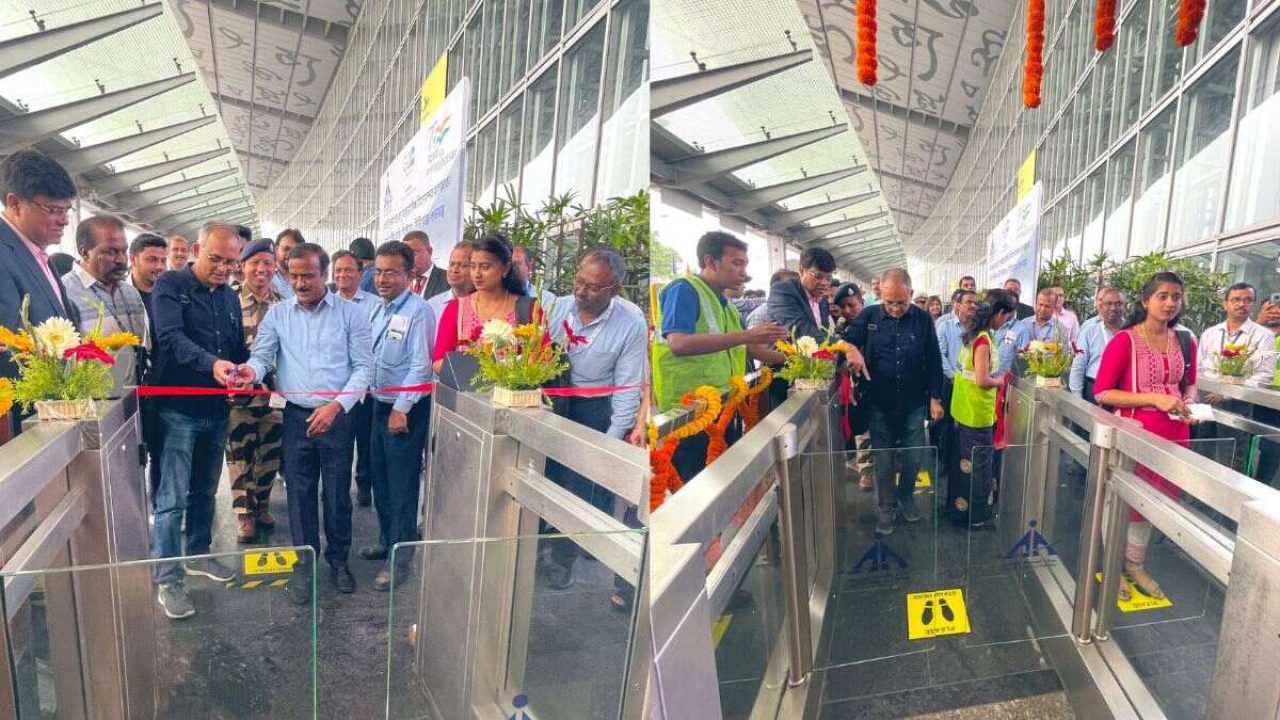
A prolonged Digi Yatra glitch disrupted passenger movement at Kolkata’s primary aviation hub on Sunday, forcing hundreds of domestic flyers into extended queues as biometric e-gates stopped functioning during peak hours. The breakdown, which began early morning and stretched into the afternoon, underscored the growing dependence of Indian airports on centralised digital systems and raised fresh questions around technological resilience in critical urban infrastructure.
Airport officials confirmed that the disruption stemmed from a technical fault in the central server supporting the Digi Yatra ecosystem. As the facial recognition system struggled to authenticate registered users, automated entry and boarding gates were rendered ineffective, compelling authorities to revert to manual document checks. For frequent travellers accustomed to seamless biometric clearance, the sudden suspension of digital access created uncertainty and congestion. Security personnel redirected passengers to conventional verification counters, slowing entry into the terminal and lengthening security wait times. The situation intensified during the morning rush when passenger volumes surged. The Digi Yatra programme, introduced in Kolkata in 2023 as part of India’s aviation modernisation drive, is designed to enable contactless airport transit through facial recognition technology. Passengers complete Aadhaar-linked verification on a mobile application and upload boarding details, allowing biometric authentication at terminal entry, security screening and boarding gates.
The system is promoted as a time-saving and paperless solution that improves operational efficiency. Sunday’s incident, however, demonstrated the vulnerability of centralised digital stacks when redundancy protocols are limited. Aviation infrastructure experts note that airports increasingly operate as data-driven urban nodes. When biometric systems falter, the ripple effect extends beyond inconvenience to operational throughput, airline schedules and even retail footfall inside terminals. Urban mobility planners say that as Indian cities pursue smart infrastructure integrating AI, biometrics and cloud-based services system resilience must be treated as essential public infrastructure. “Digital transformation improves efficiency, but contingency planning must be equally robust,” said one senior aviation consultant. “In high-density urban environments, even short system failures can strain crowd management and security operations.”
The disruption also renewed debate on balancing innovation with reliability. India’s metropolitan airports are expanding rapidly to accommodate rising passenger volumes, positioning themselves as economic gateways that support tourism, trade and real estate growth around aerotropolis corridors. Technology-led passenger processing is central to managing that scale sustainably, reducing paper use and streamlining energy-intensive terminal operations. By mid-afternoon, partial restoration of the system eased pressure, though some passengers continued to report intermittent authentication failures. Authorities indicated that the technical issue had been escalated to the central support team overseeing the Digi Yatra network. As Indian airports accelerate digitisation to match global standards, Sunday’s Digi Yatra glitch serves as a reminder that smart city infrastructure must be paired with redundancy, transparency and crowd-responsive management to ensure reliability in moments that matter most.