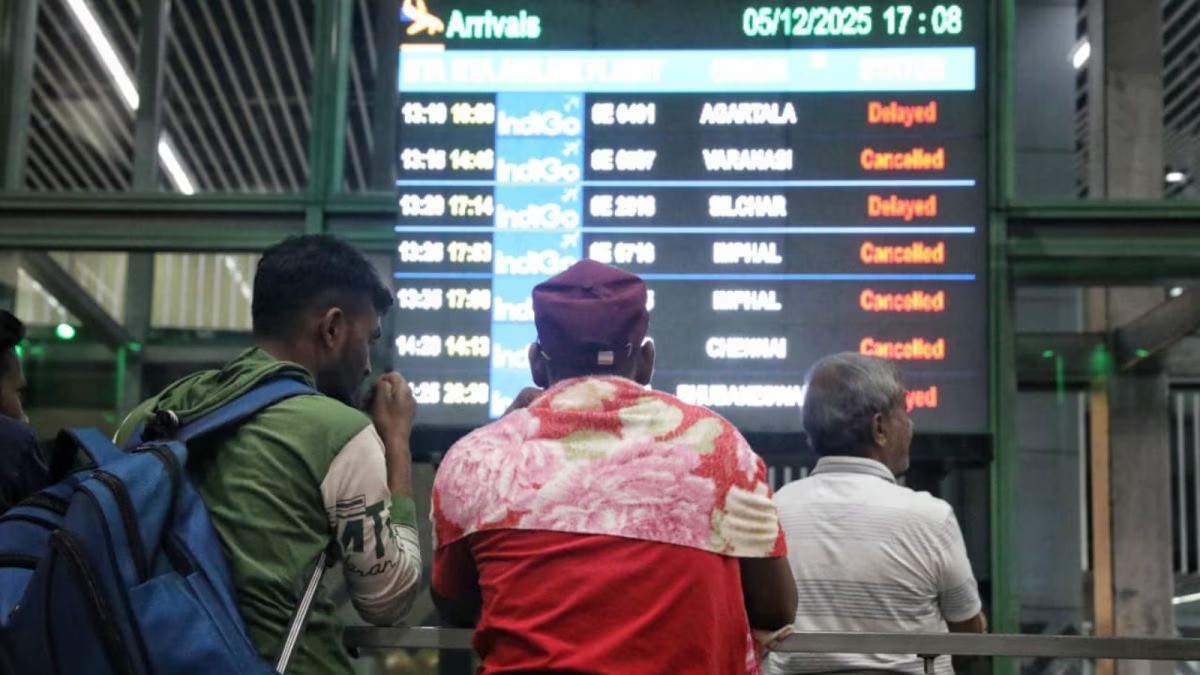
Operations at Netaji Subhas Chandra Bose International Airport faced renewed turbulence on Tuesday as 10 international services were withdrawn amid the escalating conflict in West Asia. Five departures and five arrivals linking Kolkata to Gulf transit hubs were called off, compounding cancellations reported a day earlier. The sudden Kolkata airport disruptions highlight how geopolitical instability can quickly ripple through India’s urban aviation gateways and disrupt economic linkages.
Airport officials confirmed that multiple carriers operating between Kolkata and cities such as Dubai, Doha and Abu Dhabi suspended both inbound and outbound services at short notice. Industry executives attributed the schedule adjustments to airspace restrictions and operational risk assessments linked to hostilities involving Iran and allied forces in the region. For eastern India, the implications extend beyond stranded passengers. Gulf hubs serve as critical transit points for migrant workers, students, small exporters and business travellers. Kolkata’s connectivity to these centres underpins remittance flows, cargo movement and corporate travel that support the region’s service economy and manufacturing supply chains. Aviation analysts note that Kolkata has been steadily rebuilding international capacity after pandemic-era contraction. Any prolonged Kolkata airport disruptions could slow route recovery and dent investor confidence in expanding long-haul operations from the city.
Travel and hospitality operators also face uncertainty, particularly during the pre-summer outbound rush when passenger volumes typically strengthen. At the national level, hundreds of international flights have reportedly been rescheduled or cancelled as airlines recalibrate routes to avoid conflict-affected air corridors. Rerouting around restricted airspace increases fuel burn and operating costs, with potential downstream effects on ticket pricing. For price-sensitive Indian travellers, this could translate into higher fares or limited seat availability in the coming weeks. Urban mobility experts say the episode underscores the vulnerability of city economies to external shocks. Airports today function not merely as transport nodes but as economic ecosystems tied to trade, tourism and global talent mobility. Disruptions at a single international gateway can cascade through hospitality, logistics, and commercial real estate markets located around aerotropolis zones.
Passengers have been advised to check directly with airlines before travelling to the airport. Meanwhile, civil aviation authorities are monitoring developments and coordinating with carriers to restore normal schedules once regional airspace conditions stabilise. As cities like Kolkata position themselves as eastern India’s growth engines, resilience planning for aviation infrastructure is becoming increasingly critical. Diversified route networks, flexible scheduling frameworks and stronger regional connectivity could help cushion future shocks. For now, the focus remains on restoring stability and ensuring that essential mobility links are maintained without compromising passenger safety.