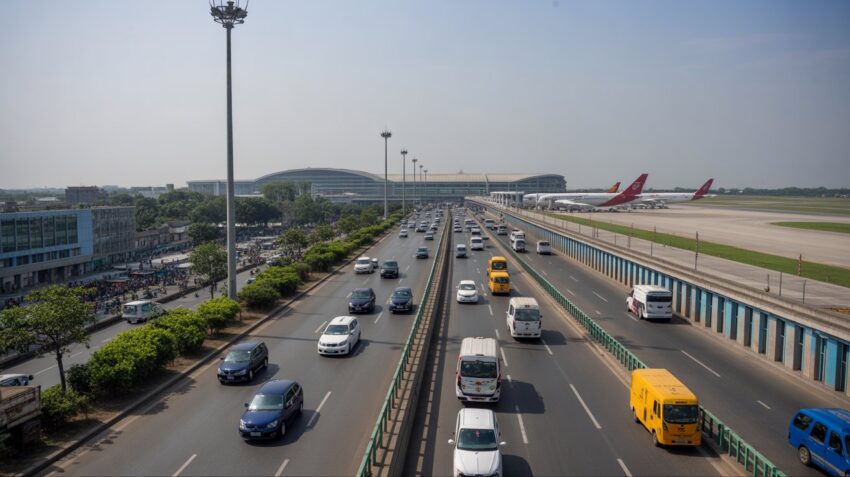
Kolkata’s northern growth corridor is poised for a mobility reset, with the upgraded Kalyani Expressway expected to become fully operational in early March. The 44.2-km, signal-free stretch is designed to sharply reduce travel time between the metropolitan core and emerging institutional hubs such as AIIMS Kalyani, potentially transforming daily commutes and regional economic flows.
State public works officials indicate that the redesigned Kalyani Expressway integrates 21 flyovers and multiple grade-separated crossings to eliminate traffic halts across a corridor long associated with bottlenecks. Urban transport planners say the redesign could bring travel time between central Kolkata and Kalyani down to under an hour a substantial improvement over earlier peak-hour journeys that often exceeded two hours. The infrastructure push comes at a time when the city’s northern and north-eastern peripheries are witnessing steady residential and institutional expansion. Improved connectivity is expected to enhance access not only to healthcare and education facilities but also to logistics and small-scale industrial clusters in Nadia and Hooghly districts. For commuters from Howrah and Burdwan, the corridor offers a direct alternative to congestion-prone town centres such as Barasat.
A notable engineering feature is the elevated connector at the Zero Point junction in North Dum Dum, linking the expressway seamlessly to the Belgharia Expressway. Transport analysts note that grade separation at this busy interchange could significantly ease airport-bound traffic, especially during peak travel seasons. Faster airport access from satellite towns may also reshape real estate demand along the corridor, with developers closely tracking land values near interchanges. Beyond speed, planners argue the signal-free design of the Kalyani Expressway has broader urban implications. Reduced idling at intersections can lower vehicular emissions, contributing incrementally to air quality improvements in a region grappling with pollution concerns. While expressways are not substitutes for mass transit, mobility experts suggest that smoother traffic flow and better road engineering can reduce fuel consumption per trip, supporting incremental climate resilience goals.
The project, executed by the state’s public works department, includes underpasses, pedestrian crossings, drainage structures and roadside amenities intended to improve safety and usability. Urban designers emphasise that long-term success will depend on maintenance standards, traffic enforcement and integration with public transport services feeding into the corridor. As Kolkata expands outward, infrastructure such as the Kalyani Expressway is increasingly shaping how citizens live, work and access essential services. The coming months will reveal whether the upgraded artery delivers not only faster journeys but also more balanced regional growth across the metropolitan edge.