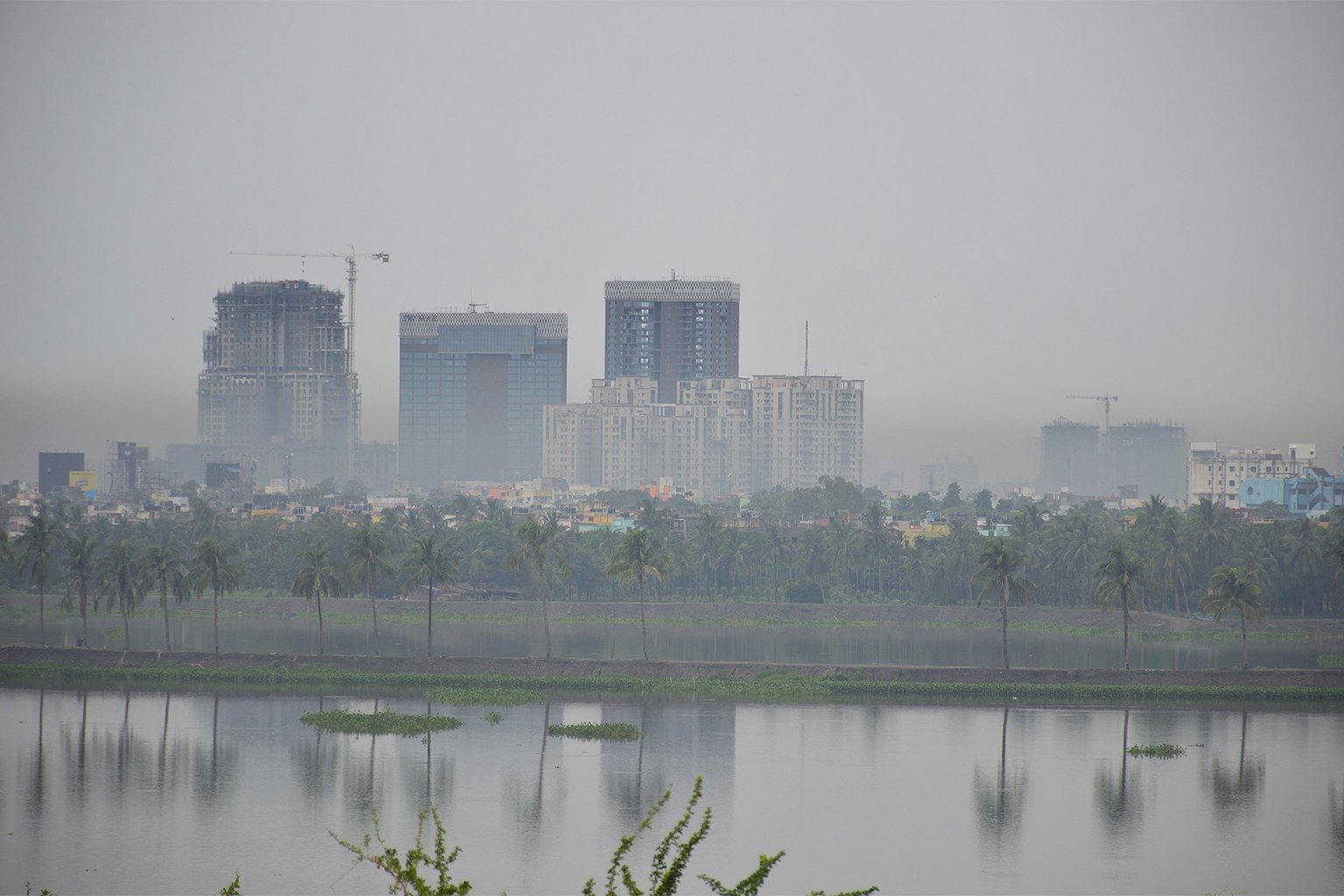
Kolkata recorded one of the highest winter air pollution levels among India’s state capitals during the 2025–26 season, highlighting persistent urban environmental challenges linked to rapid city growth and rising emissions.
Data compiled from national air monitoring stations show that the city’s winter particulate pollution remained significantly above the country’s prescribed safety limits, raising concerns for urban planners and public health authorities.Air quality monitoring across the October to February period indicates that Kolkata air pollution remained elevated throughout the winter months. The city registered an average fine particulate matter (PM2.5) concentration of around 78 micro grams per cubic meter during the season. This figure is almost double India’s National Ambient Air Quality Standard of 40 micro grams per cubic meter, underscoring the continuing difficulty in reducing particulate pollution across large metropolitan areas.
PM2.5 refers to extremely small airborne particles capable of entering the lungs and bloodstream, making them particularly harmful to human health. Urban environmental researchers note that winter conditions often trap pollutants close to the ground due to temperature inversions and weaker atmospheric circulation. As a result, emissions from vehicles, construction activities, industrial operations and residential fuel use accumulate more easily during colder months.Across India, the seasonal pattern of deteriorating air quality was evident in several major cities. Analysis of monitoring data from hundreds of urban centers shows that a large majority exceeded national air quality limits during the winter period. Experts say this trend reflects a combination of urban expansion, rising vehicle ownership, and incomplete implementation of pollution mitigation strategies in many cities.Despite some year-to-year fluctuations, Kolkata air pollution levels have remained consistently above recommended standards over the past several winters. Environmental analysts suggest that the rebound in pollution this season after a relatively lower period highlights how fragile air quality improvements can be without sustained structural changes in urban management.The situation is particularly relevant for fast-growing metropolitan regions where economic activity, transportation demand, and real estate expansion continue to intensify. Urban planning specialists emphasis that addressing air pollution requires coordinated action across sectors, including cleaner public transport systems, tighter industrial emission controls, dust management at construction sites, and expanded green infrastructure within cities.The findings also show that while many Indian cities struggle to meet national standards, even fewer approach the far stricter air quality guidelines recommended by global health authorities. This gap indicates the scale of transformation needed to align urban development with long-term environmental sustainability.
For Kolkata, strengthening pollution monitoring networks, improving public transit, and accelerating clean energy adoption could become central to reducing winter pollution spikes. As Indian cities continue to expand, balancing economic growth with cleaner air and climate-resilient infrastructure will remain a critical challenge for urban governance.
Kolkata Pollution Levels Surge In Winter Months.