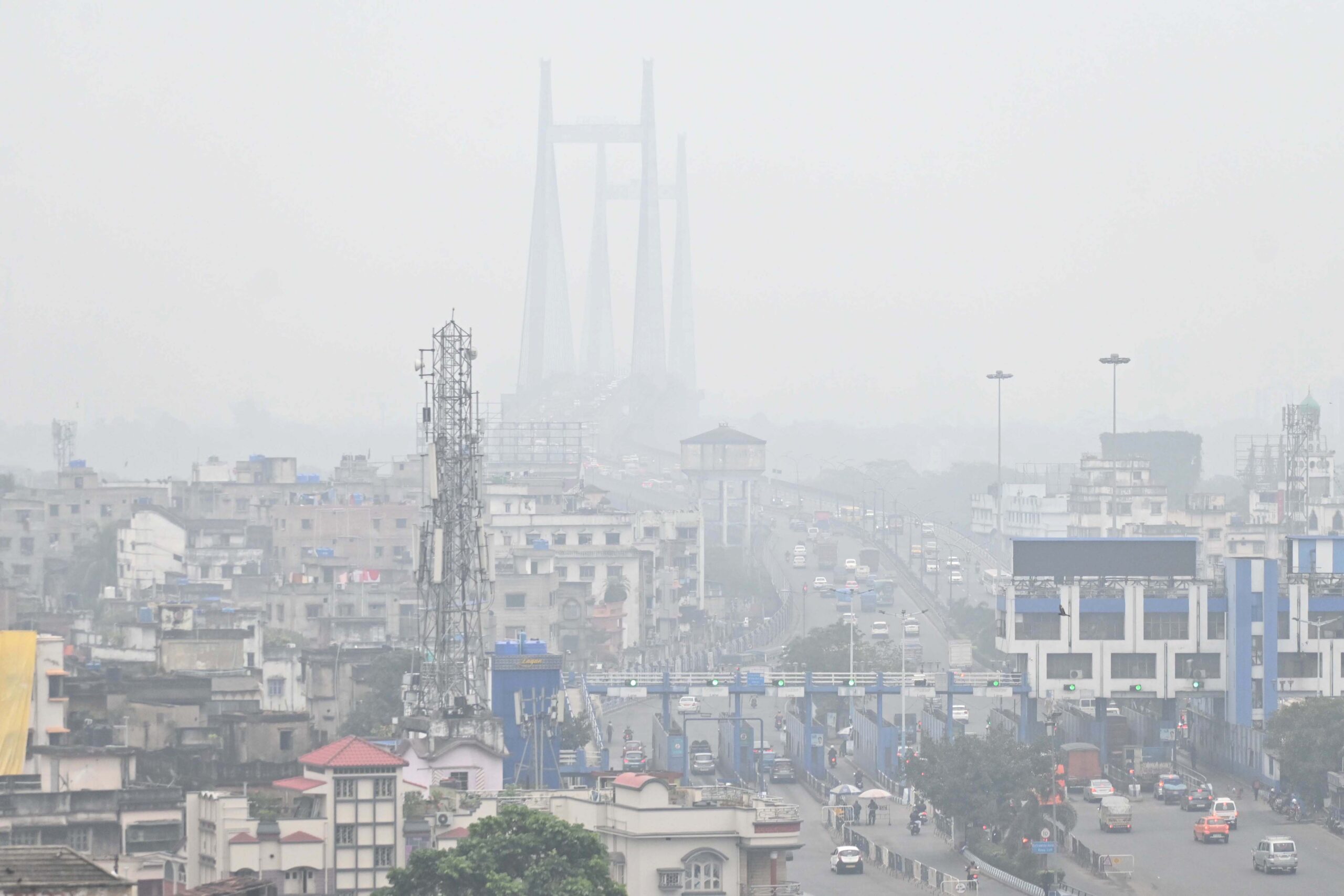
Kolkata has recorded higher air pollution levels than Delhi for an entire week, prompting experts to call for a rapid expansion of air quality monitoring infrastructure. Environmentalists emphasise the need for additional automatic stations in densely populated and traffic-heavy zones to accurately assess the city’s deteriorating air quality and guide public health measures.
Currently, Kolkata operates seven automatic monitoring stations, most of which are located in eco-sensitive areas that do not reflect conditions in crowded neighbourhoods. “Stations in high-traffic and densely populated areas such as Moulali and Shyambazar are essential for real-time, actionable data,” an environmental technology specialist said. Without these, authorities rely on manual readings, which may not capture sudden spikes in pollutant levels. Data from December 6 to 11 shows Kolkata consistently exceeded Delhi’s pollution levels. On 11 December at 6.04 p.m., the city’s Air Quality Index (AQI) hit a hazardous 439, surpassing Delhi’s highest AQI of 345 for the same day. Later that night, Kolkata’s AQI surged to 558, with PM10 levels at 239 units and PM2.5 at 188 units, both far above permissible limits of 100 and 60 units respectively. This represents one of the worst pollution episodes in the city’s history.
The deteriorating air quality has triggered warnings from health and civic organisations. The West Bengal Science Forum urged the State Pollution Control Board, health authorities, and labour departments to issue immediate public advisories and implement protective measures, particularly for outdoor workers, children, women, and the elderly. The forum’s general secretary highlighted the risk of respiratory illnesses and other severe health impacts if the pollution persists. Urban planners and environmental experts argue that addressing Kolkata’s air quality crisis requires both immediate monitoring enhancements and long-term sustainable interventions. Expanding automatic monitoring stations across high-density corridors would provide granular data to inform policy measures, while complementary initiatives, including traffic management, industrial regulation, and urban greening, could mitigate pollution at its source.
Kolkata Air Pollution Hits Hazardous Levels Exceeds Delhi Urgent Monitoring Needed Residents are advised to continue using masks in heavily trafficked areas and reduce outdoor exposure during peak pollution hours. Authorities are evaluating the deployment of at least 20 additional automatic monitoring stations to enable real-time surveillance and more precise public health guidance. Kolkata’s recent air quality surge highlights the urgent need for integrated urban planning that balances industrial activity, mobility, and environmental health. Without swift action, the city risks recurring pollution crises that could affect millions of residents and compromise sustainable urban development.
Kolkata Air Pollution Hits Hazardous Levels Exceeds Delhi Urgent Monitoring Needed