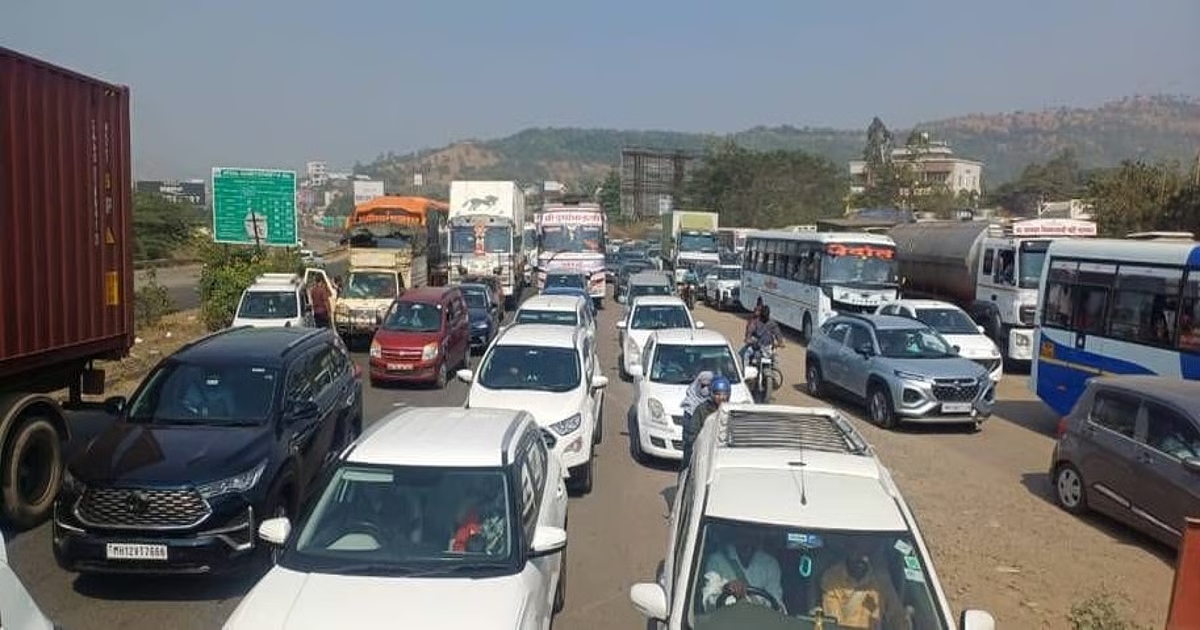
Kolhapur Incident Disrupts Pune Bengaluru Highway Traffic
A container truck overturning on the Pune–Bengaluru National Highway caused a temporary disruption of traffic for about 30 minutes near Ajara Ghat, drawing attention to the fragile balance between freight movement, road safety and uninterrupted urban-regional connectivity. While no major injuries were reported, the incident underscores persistent challenges in maintaining resilience and safety on India’s critical long-distance corridors amid increasing logistics pressure.
The incident occurred on the Pune–Bengaluru stretch of National Highway 48 — a key connective artery between western and southern India — when a fully loaded container truck lost balance negotiating a curve near Ajara ghats, blocking one lane. Emergency responders and highway patrols rapidly redirected vehicles, clearing space to restore flow. The truck was uprighted and moved to the hard shoulder after about half an hour, enabling traffic to resume with minor delays.As India’s freight volumes surge with expanding manufacturing, e-commerce and inter-state trade, highways like this double as lifelines for goods movement and regional mobility. However, safety metrics show that accidents involving heavy vehicles disproportionately contribute to congestion and roadside risk, particularly on stretches featuring sharp gradients, limited overtaking zones and high traffic density. Urban and transport planners argue that such incidents — even when brief — highlight the need for integrated road safety frameworks that align infrastructure design with vehicle dynamics, enforcement and driver training.
For local commuters and intercity travellers, the event offered a reminder of the fragility of road links upon which economic activity and daily life increasingly depend. A delay of 30 minutes on a major highway — even when short — can ripple across schedules, freight timetables and passenger connections, particularly in peak travel seasons or festive windows when volumes swell. Businesses that rely on timely deliveries — from agri-produce to industrial components — may face escalated costs if delays accumulate or become systemic. Kolhapur district authorities emphasise that no casualties were reported, and expressed relief that swift coordination between police and emergency services mitigated potential secondary incidents. Yet road safety advocates stress that reactive responses, while necessary, must be complemented by proactive measures — including improved signage, designated truck lanes in ghats and accident-response infrastructure — to enhance corridor resilience. These measures are consistent with broader national road safety aspirations under transport policy frameworks seeking to reduce fatalities and congestion.
Environmental implications also accompany highway disruptions. Events that stall long-distance traffic can temporarily increase idling emissions, raising local air quality concerns, especially in ecologically sensitive ghat zones. Sustainable mobility planners note that infrastructure upgrades should factor in emission-reduction strategies, such as dedicated pull-overs for freight checks, extended hard shoulders for safer breakdown management, and real-time traffic updates to optimize flow.
For now, the Pune–Bengaluru Highway incident remains a cautionary indicator rather than a systemic breakdown. How authorities integrate lessons from such disruptions into wider road safety, freight management and resilience planning will shape the future reliability of India’s arterial highways — vital for economic linkages, regional cohesion and sustainable transport networks.