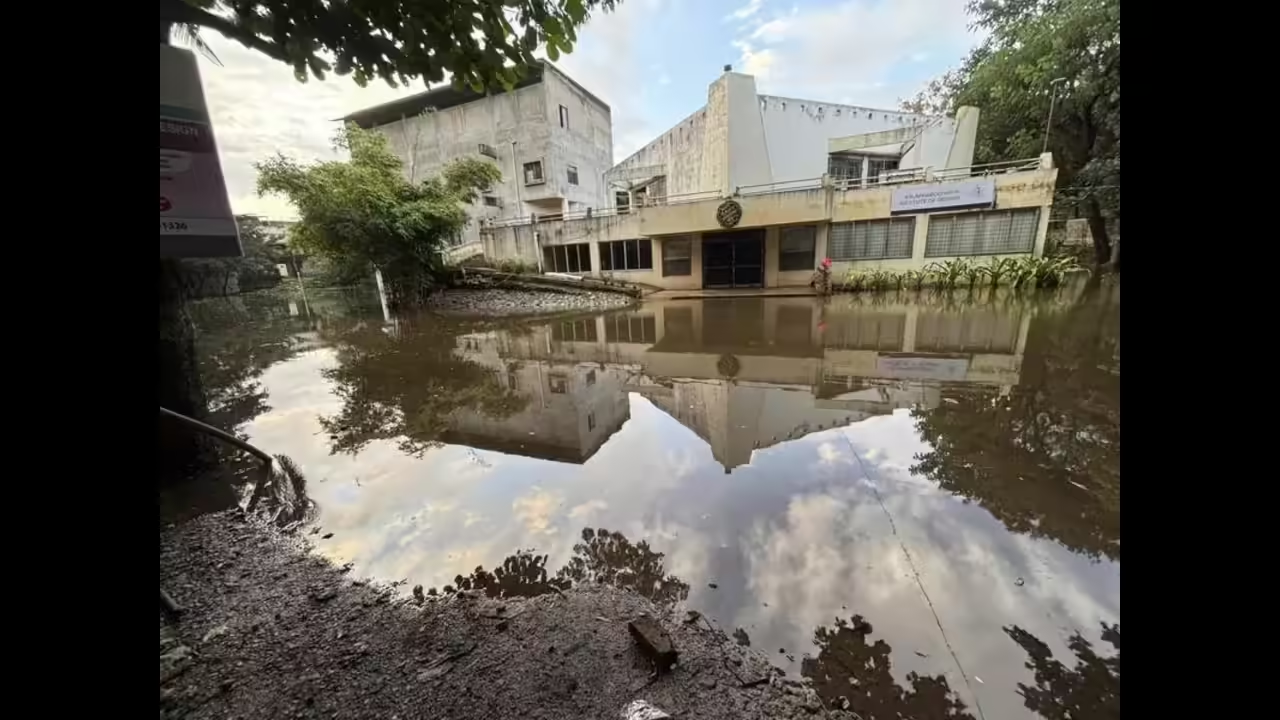
Kolhapur Highways Reopen As Floodwaters Steadily Recede
Kolhapur and Sangli districts are witnessing gradual relief as water levels in major rivers continue to fall following the closure of discharge gates at the Koyna and Radhanagari dams. Authorities confirmed that highways connecting Kolhapur with Ratnagiri, Radhanagari, and Devgad have reopened, restoring vehicular movement that had been cut off for several days.
The resumption of traffic on key stretches, including the vital link between Kasba Bawda and Shiye village that connects to the Pune–Bengaluru National Highway, has come as a major relief to residents and businesses. Local traders said the reopening will help normalise supply chains disrupted during the floods, particularly for perishable farm produce moving out of the region.
While overall conditions have improved, parts of Shirol region in Kolhapur remain waterlogged, with the Krishna river still flowing above its seasonal average. Several villages and the historic Nrusinhawadi Datt temple continue to be submerged, underscoring the vulnerability of floodplains in the Krishna basin. Residents said repeated inundations have disrupted livelihoods and intensified demands for long-term rehabilitation planning. In Sangli, the Krishna river level fell by 12 feet in 24 hours, measured at 30 feet 9 inches at Irwin Bridge, well below the danger threshold. Similarly, the Panchaganga river in Kolhapur dropped below its warning mark, flowing at 38 feet 9 inches on Saturday evening, aided by controlled discharge from the Rajaram Barrage.
Officials emphasised that the immediate task is to prevent the outbreak of waterborne diseases as stagnant pools remain in low-lying areas. Teams have been instructed to undertake cleaning operations, spray disinfectants, and restore essential services in affected localities. The administration has also initiated assessments of crop and property damage, with compensation proposals expected once water recedes from farmlands. Authorities highlighted the need for both temporary relief shelters and permanent relocation measures in flood-prone zones. Drawing lessons from the devastating floods of 2019 and 2021, experts have recommended a hybrid model that combines resilient housing, early-warning systems, and sustainable land-use planning to minimise future risks.
Officials also acknowledged that climate variability and extreme rainfall events have been intensifying flood cycles across western Maharashtra. Urban expansion along riverbanks, encroachments, and inadequate drainage further compound the problem. Environmentalists argue that river basin management must include eco-restoration, green buffer zones, and strict regulation of construction in vulnerable belts to align with sustainable development goals. As floodwaters retreat, the focus now shifts to rebuilding infrastructure, supporting displaced families, and strengthening resilience in rural and urban settlements. For Kolhapur and Sangli, the challenge lies not only in recovery from the present deluge but in preparing for a climate future where such events may become increasingly frequent.