


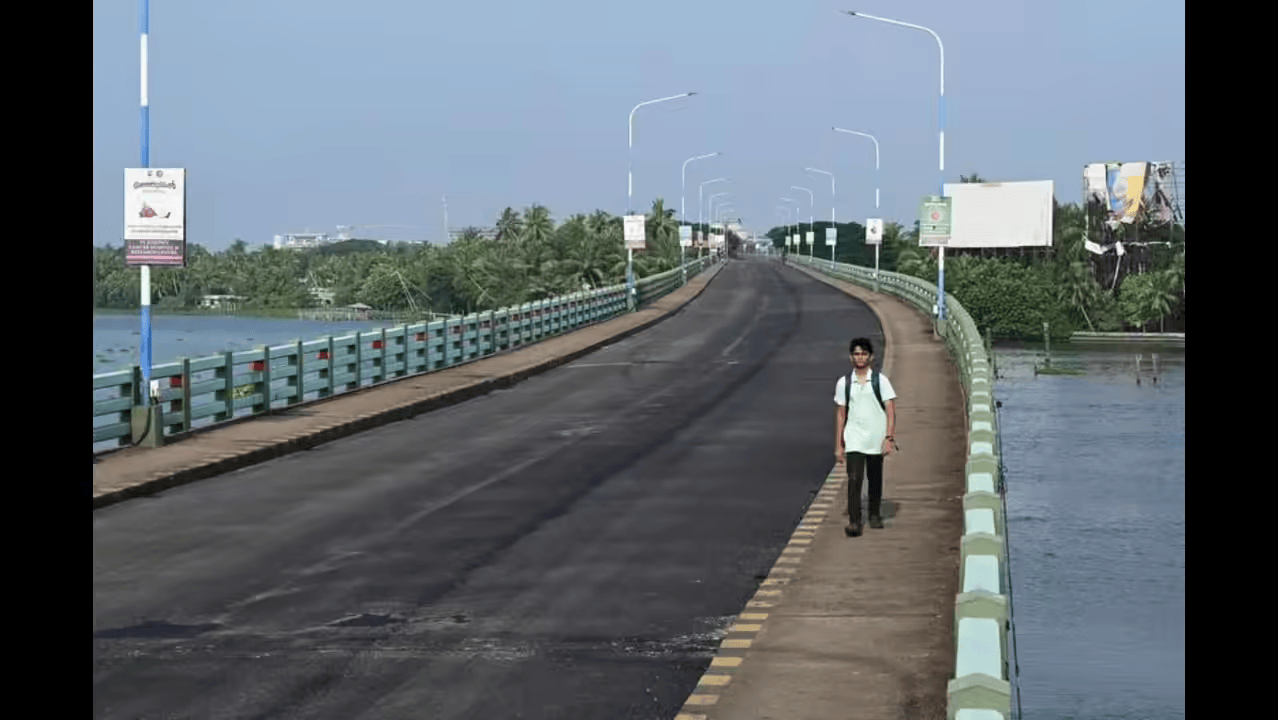
Kochi is poised for a significant infrastructure enhancement as land acquisition procedures commence for the long-anticipated Kumbalam-Thevara bridge. This vital link, once operational, is projected to slash travel distance by nearly 10 kilometres and considerably ease traffic congestion on key city routes. The project’s progression underscores a commitment to fostering a more sustainable, efficient, and equitable urban transport network for the city’s growing population.
The proposed Kumbalam-Thevara bridge, a critical piece of urban infrastructure for Kochi, is finally moving towards its construction phase, with the revenue department issuing notifications for the necessary land acquisition. This development marks a pivotal moment for a project that has faced considerable delays despite receiving budgetary allocation from the state government as far back as 2016. The Kerala Road Fund Board (KRFB), serving as the implementing agency, has indicated that the land acquisition for the approach road, a modest 0.04 hectares, is expected to conclude swiftly, paving the way for construction to commence within weeks. This expedited timeline brings a long-awaited solution to a persistent urban mobility challenge.
The bridge’s significance extends beyond mere connectivity; it is poised to deliver substantial benefits for commuters and the city’s overall traffic management. By directly linking Kumbalam and Thevara, the new structure is projected to reduce travel distance between these two points by approximately 10 kilometres. Such a reduction is not merely a matter of convenience; it translates directly into tangible environmental and economic advantages. Shorter travel distances mean reduced fuel consumption and lower vehicular emissions, contributing directly to the city’s zero net carbon aspirations and fostering a healthier, eco-friendly urban environment. This efficiency gain is crucial for sustainable urban development, particularly in a rapidly expanding metropolis like Kochi.
Furthermore, the bridge is anticipated to significantly alleviate traffic congestion at a minimum of four major traffic signals along existing routes. This decongestion will improve traffic flow, reduce idling times for vehicles, and enhance the overall efficiency of the city’s road network. Reduced congestion also translates into less noise pollution and a more predictable commuting experience, improving the quality of life for residents. The benefits will be particularly pronounced for communities in Kumbalam, Aroor, Nettoor, and Thevara, who currently endure longer travel times and more arduous journeys due to the circuitous routes necessitated by the absence of this direct link.
The project’s journey has not been without its hurdles. Despite its clear public utility and early budgetary support, the bridge faced significant opposition from the Inland Waterways Authority of India, leading to considerable delays. This highlights the complexities inherent in large-scale infrastructure projects that often intersect with multiple regulatory bodies and diverse interests. However, the subsequent revision of the proposal and the current progress in land acquisition demonstrate a concerted effort by the authorities to overcome these challenges and deliver a project that serves the larger public interest. The imminent completion of the land acquisition process will remove the final administrative hurdle, allowing the physical construction to begin.
From the perspective of creating equitable cities, the Kumbalam-Thevara bridge is a vital investment. Improved connectivity benefits all segments of society by providing more efficient access to employment centres, educational institutions, healthcare facilities, and recreational spaces. For individuals relying on public transport, a more direct route means shorter journey times and potentially more reliable services. This enhanced accessibility contributes to a more gender-neutral urban environment, empowering women and other vulnerable groups with safer and more efficient travel options, thereby fostering greater social inclusion and participation in urban life.
The commencement of construction on the Kumbalam-Thevara bridge is a testament to Kochi’s ongoing commitment to modernising its infrastructure in a manner that supports sustainable growth and improves the liveability of its urban spaces. By strategically investing in projects that reduce travel burdens, mitigate environmental impacts, and enhance connectivity for all residents, the city is steadily progressing towards its vision of becoming a smart, green, and inclusive urban centre. This bridge, therefore, is not merely a physical structure but a symbol of progress towards a more integrated and sustainable future for Kochi.
Also Read :Chabbewal Launches ₹9 Crore Road Expansion, Improves Access to Key Villages
