


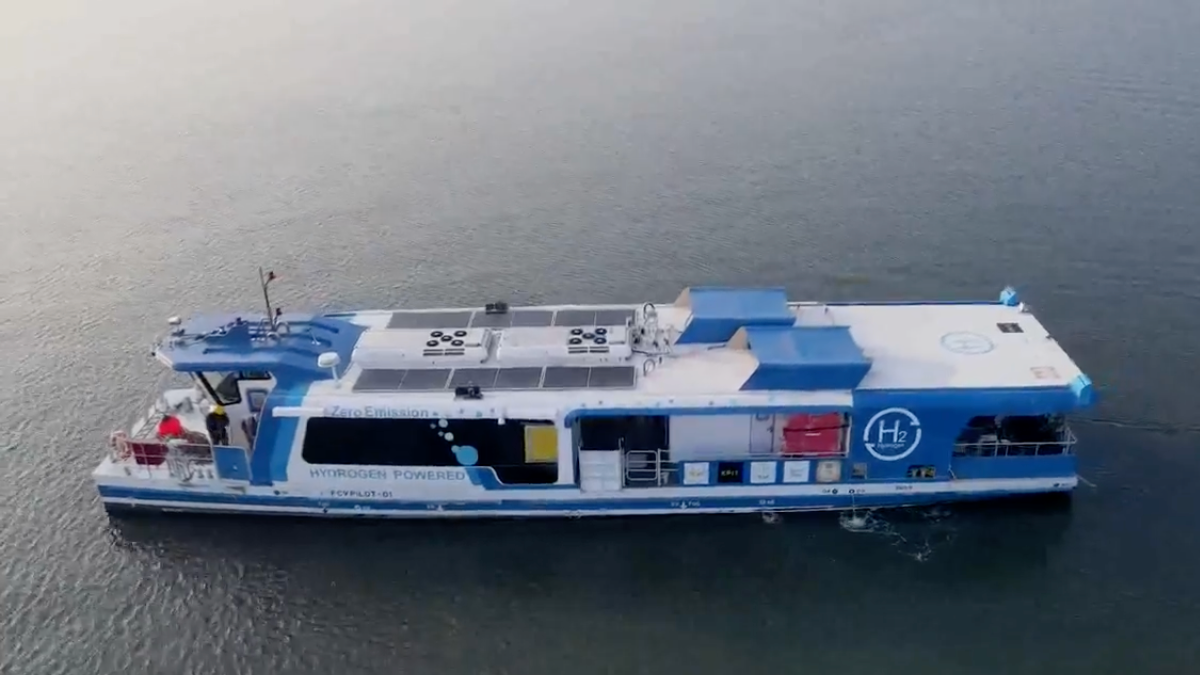
The Kochi Water Metro is preparing to introduce hydrogen hybrid boats on its proposed airport corridor, positioning Kochi at the forefront of low-emission urban mobility. The plan, currently under evaluation, aims to connect the city’s inland waterways network with Cochin International Airport using cleaner propulsion technology, reducing reliance on conventional diesel-powered vessels.
Officials involved in the project said feasibility assessments are underway to examine operational viability, safety protocols and infrastructure requirements for hydrogen storage and refuelling. The hydrogen hybrid boats would combine hydrogen fuel cells with battery systems, enabling reduced emissions while maintaining operational flexibility on longer routes. The proposed airport link is seen as a strategic extension of the existing water metro system, which already operates electric boats across key stretches of the city’s backwaters. By shifting to hydrogen hybrid boats for longer intermodal routes, planners aim to address range limitations associated with fully electric vessels while retaining environmental benefits. Transport economists say airport connectivity through waterways could diversify access options and reduce pressure on road corridors leading to the airport. Kochi’s road network, particularly during peak tourist and business travel seasons, experiences periodic congestion. A water-based alternative may offer predictable travel times while supporting the city’s climate commitments.
Hydrogen hybrid boats, if implemented, would mark one of the first such deployments in India’s urban public transport sector. Experts caution, however, that hydrogen ecosystems require robust safety standards, specialised storage facilities and reliable supply chains. Capital costs for fuel cell systems also remain higher than conventional marine engines, although lifecycle emissions and long-term fuel efficiencies can offset initial expenditure. Urban planners argue that infrastructure decisions taken now will shape Kochi’s carbon trajectory for decades. Integrating hydrogen hybrid boats into the water metro framework aligns with broader national ambitions to expand green hydrogen production and reduce fossil fuel dependency. The airport corridor, with its predictable passenger demand and defined route length, could serve as a controlled pilot environment. From a real estate perspective, improved airport access through clean transport links can influence land values along waterfront nodes. Transit-oriented development around water metro terminals has already begun to reshape certain precincts. Expanding the network with advanced propulsion technology may further enhance the appeal of mixed-use waterfront projects.
Officials indicate that detailed project reports and technical partnerships are being examined before final procurement decisions are made. Environmental clearances and maritime safety certifications will form a critical part of the approval process. If realised, the hydrogen hybrid boats initiative would reinforce Kochi’s reputation as a test bed for sustainable urban mobility. The next phase will hinge on cost modelling, inter-agency coordination and integration with existing metro and road systems — determining whether the city can translate technological ambition into everyday commuter reliability.
Also Read: Pune Metro Phase Two Expands Eastern Connectivity
Kochi Water Metro Plans Hydrogen Hybrid Boats
