


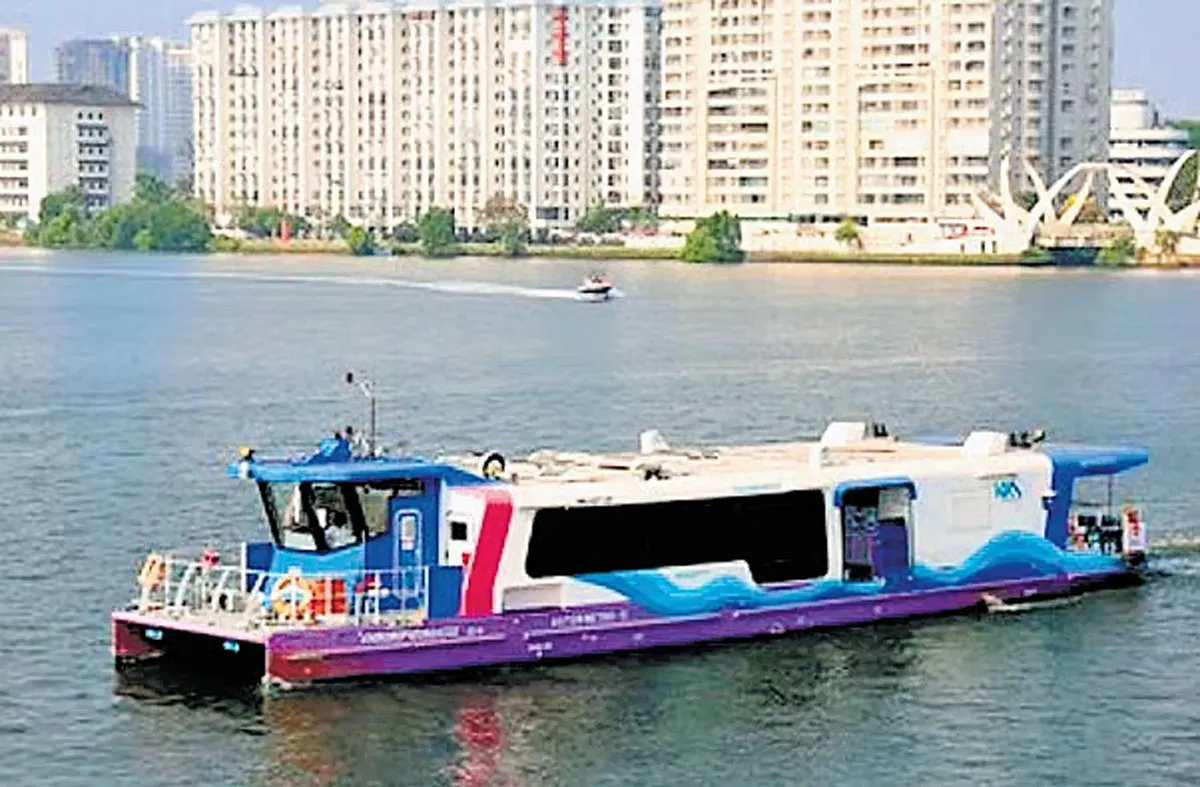
KOCHI — A maritime public transit initiative originally designed to link island communities across Kochi’s backwaters is now shaping national urban mobility planning, with central authorities signalling plans to replicate the Kochi water metro model in at least 21 cities with navigable waterways. This represents a pivotal moment in India’s pursuit of climate-resilient, equitable urban transport that leverages natural assets for mass connectivity and economic opportunity.
City officials point to sustained ridership growth and the integration of electric vessels as evidence that water-based transport can reduce road congestion, lower emissions and broaden access to jobs and services — particularly for communities historically underserved by conventional rail or bus networks. Urban planners say that replicating this approach could reshape mobility paradigms for other mid-sized and coastal cities. Commissioned in 2023 as India’s first organised water transit system, the Kochi water metro operates a fleet of electric ferries across multiple routes connecting Enmakulam, Vypeen, and other island suburbs with the urban core. The system has steadily expanded, now serving millions of passengers and steadily improving frequency and coverage. Officials working on scaling the model describe its appeal in economic and environmental terms. Battery-powered vessels emit substantially less greenhouse gas than diesel-ferry alternatives and relieve pressure on congested roads, aligning with broader goals for zero-carbon and climate-resilient cities. Analysts also note that investments in adapted infrastructure — such as jetties, ticketing systems, and last-mile e-mobility linkages — can catalyse local job creation and stimulate real-estate development around nodes of connectivity.
Yet replicating a system originally tailored to Kochi’s unique backwaters presents challenges. Urban transport experts emphasise that successful adoption elsewhere will require context-specific feasibility assessments, particularly regarding waterway navigability, seasonal variability, and integration with existing transit networks. Feasibility studies already underway in several cities aim to refine routes, vessel designs and cost models before full implementation. For inland cities with rivers, such as those in North and East India, water metros could provide a compelling alternative to costly elevated rail or road expansion. Such systems may help decentralise economic activity by connecting peripheral districts and reducing commuting times, potentially boosting local labour markets and housing affordability near waterfront hubs. However, governance coordination across municipal, state and federal tiers remains a key operational hurdle. Finance and sustainability experts also highlight carbon credit mechanisms — where verified reductions in emissions can be monetised — as an emerging revenue stream for public transit operators. Such mechanisms enhance the fiscal viability of green infrastructure while embedding environmental accountability in project outcomes.
As replication plans crystallise, observers stress that robust community engagement and gender-inclusive design — ensuring safe, reliable access for all riders — are vital. These elements are especially pivotal in cities where water transport has historically been informal or under-utilised. In the coming years, the extent to which cities can adapt the Kochi water metro framework will offer valuable insights into sustainable transit’s role in future urbanisation. Continuous evaluation of ridership patterns, integration with complementary services, and equitable planning will determine whether water metros can become mainstream features of India’s urban landscape.
Also Read: Bengaluru Metro Fare Revision Reshapes Daily Commuting
Kochi Water Metro Model Expands Across India
