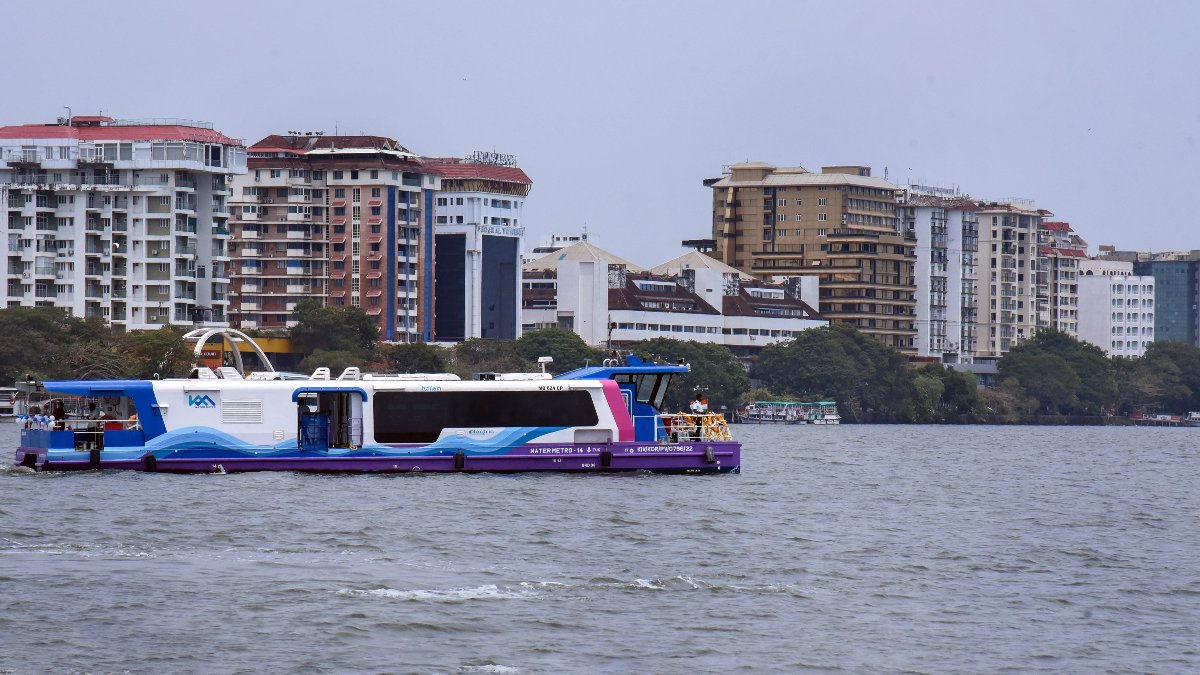
Kochi Water Metro Boosts Services For Summer Demand
The Kochi Water Metro — India’s pioneering integrated electric water transport network serving the Greater Kochi region — is ramping up its operations in response to unusually high passenger demand during the summer vacation period. Starting this weekend, service frequency on the busy High Court‑Fort Kochi corridor will move from a 20‑minute interval to every 10 minutes during peak times, reflecting a surge in usage that points to evolving patterns in urban connectivity and tourism‑oriented transit.
The adjustment follows record weekend patronage, with more than 12,000 riders on peak days — well above the system’s typical daily average of roughly 7,000 commuters — highlighting how waterborne mass transit can absorb seasonal mobility pressures in Kochi’s dense and island‑interlinked geography. Additional vessels will be deployed between 4 PM and 7 PM, a strategic run that targets both local commuters and tourist flows attending waterfront events and sightseeing routes in areas such as Fort Kochi and its historic precincts. Urban transport analysts say this temporary frequency boost is part of a broader learning curve for sustainable mobility in coastal cities, where water‑based transit offers a low‑emission alternative to congested road networks. The Water Metro’s hybrid‑electric fleet — developed as part of a project operated by Kochi Water Metro Limited and Kochi Metro Rail Limited — integrates with land‑based transport to provide a multimodal option that helps alleviate pressure on streets and supports climate‑aligned urban connectivity objectives. Officials involved in planning argue that this operational shift has implications beyond summer holidays. Deeper integration and adaptive scheduling — such as anticipatory increases in service during festival seasons, weekend peaks, and tourism events — can enhance rider confidence and broaden the system’s utility for everyday commuting.
Already, feasibility assessments have suggested expanding service into scenic coastal corridors and additional passenger routes in nearby districts such as Alappuzha and Kollam, positioning the Water Metro as a potentially replicable model for sustainable urban water mobility. For city planners and transport economists, the rising ridership also signals a broader shift in work‑and‑leisure travel patterns in India’s mid‑sized metropolitan regions. As urban populations grow and intra‑city travel demands diversify, water transit systems that leverage natural waterways — especially in polycentric or island‑fringe zones — can reduce reliance on fossil fuel‑based road transport and improve access equity for resident communities. Environmental benefits accrue not only from reduced road congestion but also from the electric propulsion systems that power Water Metro ferries, which produce lower carbon emissions compared with conventional diesel launches. Still, challenges remain. Operators will need to balance surge capacity with routine service reliability, invest in maintenance and safety systems, and strengthen feeder connections with local bus and metro links to maximise ridership benefits. Furthermore, equitable access — including fare affordability and last‑mile connectivity — will be essential if the Water Metro is to mature into a core component of Kochi’s sustainable urban mobility strategy rather than a seasonal novelty.
In the weeks ahead, expanded scheduling and route optimisation are expected to provide further evidence on how waterborne transit can integrate into urban transport networks in Indian cities, informing future metro‑water hybrid systems in other coastal and riverine urban contexts.