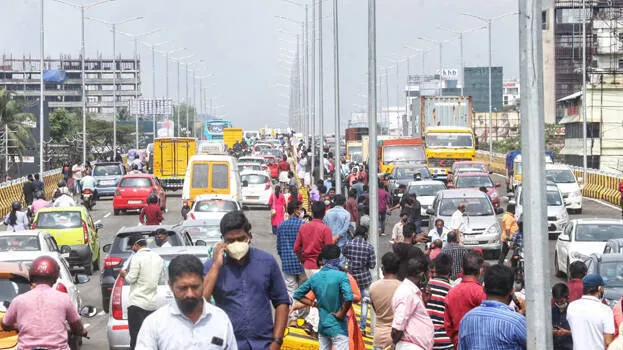
Kochi’s major flyovers, designed to streamline traffic along NH-66 and other arterial routes, are facing safety concerns due to uneven road surfaces caused by soil settlement. Incidents involving buses and two-wheelers highlight the risks posed by abrupt slopes where approach roads meet bridge decks. A recent accident, in which a passenger sustained serious head injuries after being jolted by an uneven section at Kumbalam bridge, has intensified scrutiny over long-standing geotechnical issues in the city’s elevated road infrastructure.
Officials from the National Highways Authority of India (NHAI) attribute the problem to the gradual compression and sinking of soil beneath flyover approaches, particularly in areas built on reclaimed land or soft coastal soils. While the bridges themselves remain stable, the approach roads settle unevenly over time, creating height differences that can be hazardous for moving vehicles. Similar concerns have been reported at Kundanoor, Vyttila, and Palarivattom flyovers, indicating a systemic challenge for Kochi’s elevated network.Civil engineering experts emphasise that soil settlement is a known phenomenon in geotechnical design, particularly in coastal regions like Ernakulam. The long-term stability of approach roads depends on adequate compaction, soil filling, and periodic maintenance. While temporary fixes such as resurfacing and slope filling can mitigate immediate risks, permanent solutions often require extended closures and comprehensive reconstruction — measures that can be difficult to implement in high-traffic corridors without significant disruption.
Commuters remain the primary sufferers. Two-wheelers and light vehicles are especially vulnerable, as minor height variations can destabilise riders, particularly at night. In buses, sudden jolts from uneven surfaces pose injury risks even when vehicles are moving at moderate speeds. Hospitals in the city report recurring cases of accident-related injuries at flyover junctions, underlining the urgent need for safety-oriented interventions.Former tollway officials note that maintenance practices over the years, such as regular filling and resurfacing, have provided temporary relief but do not address the underlying soil dynamics. Urban planners and transport authorities are now exploring more permanent solutions, including soil stabilization techniques and redesigning approach ramps to better accommodate settlement patterns.
From an urban resilience perspective, these incidents underscore the importance of integrating geotechnical foresight into infrastructure planning. As Kochi’s traffic volumes grow, elevated corridors must combine structural durability with user safety, particularly in reclaimed or soft-soil areas. Coordinated interventions, blending civil engineering solutions with phased traffic management, will be critical in reducing accidents while maintaining mobility along the city’s vital transport arteries.