


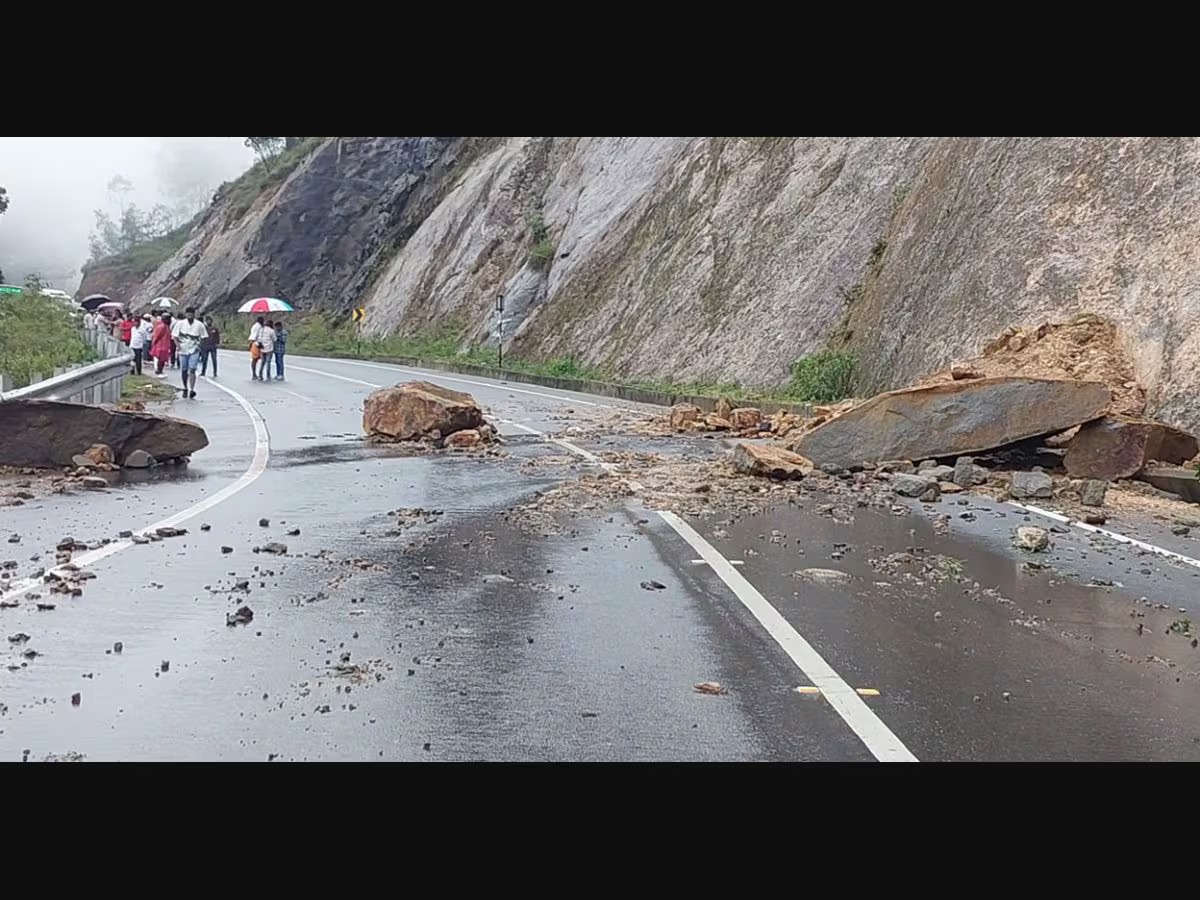
A 13-kilometre stretch of the Kochi–Dhanushkodi National Highway (NH 85), a vital arterial route connecting Kerala’s commercial capital to the hill station of Munnar, has been closed to traffic following extensive damage caused by a mudslide and soil erosion.
The highway closure, which affects the Neriyamangalam–Munnar section between Iruttukanam and Randam Mile, is expected to last up to a month, as per road infrastructure authorities overseeing the repair works. The collapse near Karadippara viewpoint in Pallivasal panchayat has rendered the road segment highly unsafe for vehicular movement. According to officials from the National Highways Authority of India (NHAI), the sudden slide of boulders and the undercutting of soil at nearby construction zones have further complicated restoration efforts, necessitating immediate and large-scale structural interventions. The instability of the terrain has not only disrupted travel but has also reignited concerns around environmental degradation and climate-related vulnerabilities in the region.
Traffic heading to Munnar from Thodupuzha is now being rerouted through Anachaal, reconnecting to the main highway at Randam Mile after a 9.8-kilometre detour. However, the alternate route, characterised by narrow lanes and treacherous curves, has become a bottleneck for private and public transport alike. Gridlocks have become frequent, especially during peak hours, with commuters voicing frustration over the lack of preparatory infrastructure to support the diverted flow. Despite the full closure of the affected highway stretch, limited access has been granted to residents from the local settlements of Kambiline, Kallar-Vattiyar, and Karadippara. In addition, vehicles travelling to Mankulam are permitted to use parts of the damaged route, under restricted conditions and with the support of traffic police.
Authorities are now racing against time to complete emergency stabilisation and restoration works before the reopening of schools and the onset of the southwest monsoon, which could further destabilise the hillside. Engineers on site have confirmed that excavation, slope correction, and re-tarring activities are ongoing under intense pressure, with daily updates being reviewed by regional officials. The disruption has also sparked wider discussions about the long-term sustainability of highway development projects that cut through ecologically sensitive zones like the Western Ghats. Experts have warned that increased construction without adequate drainage systems or environmental safeguards could trigger more frequent landslides in high-altitude areas, especially as extreme weather events become more common due to climate change.
“Infrastructure must be resilient, not just functional,” said an official from the highway planning department, noting that the recurring issues on NH85 demand a re-evaluation of design parameters in hilly terrains. There is now growing advocacy from within the planning and engineering community to adopt nature-based solutions, including slope vegetation, geotextile reinforcement, and bioengineering methods, to prevent soil loosening and surface runoff that destabilise road foundations. The closure of the Kochi–Munnar corridor also has economic ramifications. The highway is a key route for the movement of agricultural produce, tourist traffic, and inter-district commerce. Stakeholders in the tourism sector, already recovering from off-season slowdowns, have voiced concern that prolonged inaccessibility could dent visitor inflows to Munnar during the upcoming monsoon tourism window.
Environmental campaigners have also called for a moratorium on non-essential construction in landslide-prone belts, urging the implementation of disaster-resilient infrastructure policies under a climate adaptation framework. “We cannot afford to lose life and livelihood every time it rains heavily,” one local activist noted, adding that the region’s development must strike a balance between connectivity and ecological preservation. In the meantime, officials have urged motorists to exercise caution and avoid unnecessary travel to Munnar via NH85 until the section is declared safe. Government bodies are reportedly coordinating with local agencies to ensure uninterrupted supply of essential goods to communities along the affected corridor.
With repairs tentatively set for completion within two weeks, depending on weather stability, the focus now shifts to ensuring that the rebuilt stretch is not only usable but also sustainable. As Kerala continues to navigate the intersection of infrastructure expansion and environmental fragility, the Kochi highway closure serves as a stark reminder of the urgent need for climate-conscious planning in all road development initiatives.
Also Read : Phagwara Hoshiarpur Road Four-Laning Project Launched
