


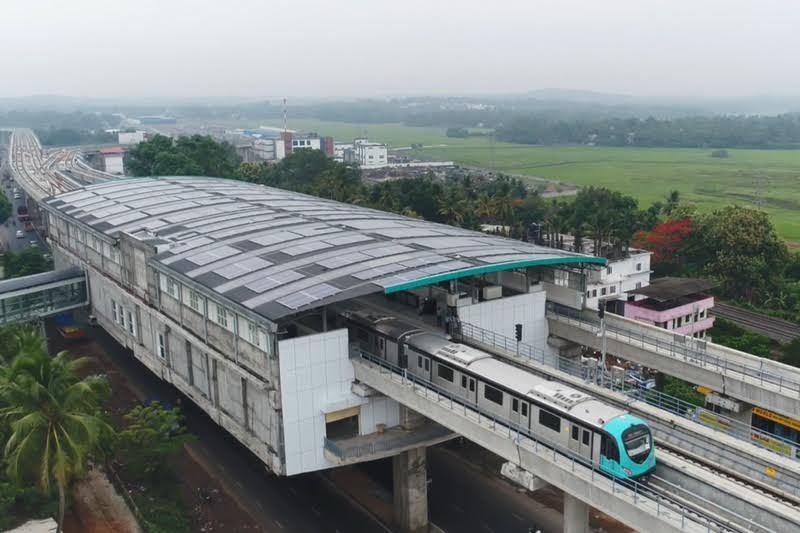
Kochi is rapidly emerging as one of India’s most forward-looking urban mobility laboratories, as the city expands its metro and water-based transit networks to ease congestion and support a climate-resilient future. With a population that has grown more than thirtyfold since the mid-20th century, the port city is under increasing pressure to build transport systems that are fast, inclusive, and low carbon needs the Kochi Metro and Water Metro now seek to address.
Urban planners note that Kochi’s growth has outpaced its road capacity for years, with rising private vehicle ownership overwhelming narrow streets across the central business district. This strain was highlighted recently when parts of Ernakulam ranked among the world’s most congested urban zones. According to an official associated with the city’s mobility strategy, “Kochi has reached a point where moving people, not vehicles, must become the core transport philosophy.” The Kochi Metro, developed and operated by Kochi Metro Rail Limited (KMRL), represents the city’s most ambitious response to these pressures. Its primary corridor—the Blue Line—now runs nearly 28 km from Aluva to Tripunithura, constructed in phases since 2013. The network, entirely elevated, connects dense residential clusters with key employment zones, offering a faster, cleaner alternative to road-based travel. Industry observers point out that the system has improved journey predictability for daily commuters while reducing peak-hour bottlenecks along major arterial roads.
Work on the second corridor, the 11.2 km Pink Line from JLN Stadium to Infopark II, is under way. Once operational, it is expected to strengthen last-mile connectivity to workplaces, supporting Kochi’s ambitions of becoming a more accessible and employment-friendly city. A third phase—extending the existing line to Angamaly via the Cochin International Airport—is also progressing, which experts believe will significantly improve regional connectivity while encouraging travellers to opt for public transport over private vehicles. Complementing the rail system is the pioneering Kochi Water Metro, India’s first integrated water-based urban mass transit project. Managed by Kochi Water Metro Limited, a joint venture between the Kerala government and KMRL, the network links ten islands through electric-hybrid ferries across 15 planned routes. Its fleet of modern boats offers safe, affordable, and gender-inclusive mobility for communities that have historically depended on slow or informal boat services.
Funded partly through Indo-German financial cooperation, the Water Metro blends climate-responsible engineering with commuter-centric design. Urban researchers suggest that such multimodal integration rail, road, and water is essential for coastal cities facing climate risks, particularly those vulnerable to flooding. As Kochi expands these systems, the city is laying groundwork not just for smoother travel but also for a more equitable and environmentally aligned future. While challenges remain in ensuring last-mile links and affordability for all income groups, the metro and water networks mark a clear shift towards transport planning that supports zero-carbon aspirations and inclusive access. For many mobility experts, Kochi is now a national case study in how Indian cities can rethink movement without compromising their ecological balance.
