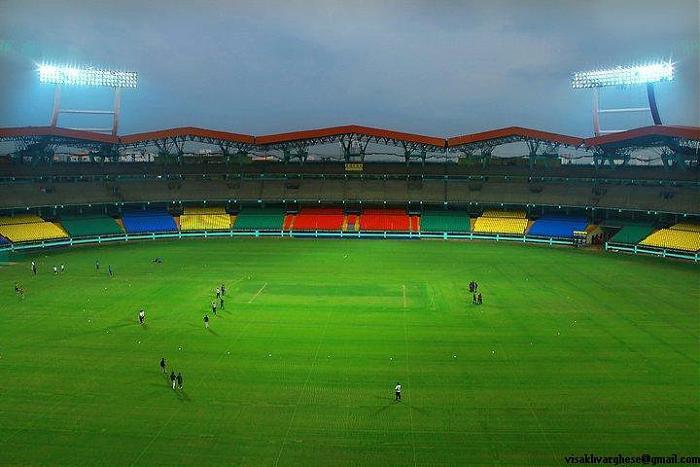
Kochi Stadium Upgrade Enters Final Stretch
As Kochi’s Jawaharlal Nehru International Stadium moves closer to a key December deadline, urban authorities are preparing to assess the status of long-pending renovation works and may publicly disclose the scale and cost of the upgrades for the first time, signalling a shift towards greater transparency in civic infrastructure management.
The Greater Cochin Development Authority (GCDA) is expected to review progress on renovation works next week, ahead of the December 20 cut-off granted to the event sponsor to complete outstanding commitments. The review follows the authority’s decision to retake possession of the stadium in late November after a high-profile international football fixture was deferred, bringing renewed scrutiny to how public sports infrastructure is temporarily commercialised and upgraded. Officials familiar with the matter said the GCDA is exploring the possibility of placing details of the renovation works and associated investments in the public domain. Such a move would mark a departure from conventional practice, where upgrades to publicly owned venues executed through short-term sponsorship arrangements often remain opaque. Urban policy experts argue that disclosure is increasingly essential, particularly as cities seek to balance commercial partnerships with long-term public value.
The stadium had been handed over to a state-level sports foundation acting as a special purpose vehicle, which in turn transferred operational control to the private sponsor for a defined period on an ‘as is where is’ basis. During this tenure, the sponsor was tasked with completing a set of identified renovation works, many of which are now approaching completion or remain partially unfinished. According to GCDA officials, 13 renovation components were flagged at the time the stadium was reclaimed. While progress has been reported on several fronts, including structural, aesthetic, and utility upgrades, a portion of the works remains ongoing. These include plastering and compound wall construction along extended stretches, tarring of parking areas, completion of toilet refurbishments, installation of architectural elements at entry points, and mounting of LED floodlights already procured and stored on-site.
The authority acknowledged that several critical improvements have been delivered. The playing turf has been upgraded to meet international specifications, seating in key spectator areas has been replaced, and most sanitation facilities are nearing completion. Officials also confirmed that the sponsor has committed to a multi-year defect liability period for interior painting, a measure aimed at reducing future maintenance burdens on the public exchequer. However, differing accounts have emerged regarding the functioning of oversight mechanisms. While GCDA representatives maintain that joint monitoring and technical committees remain active, sources within the sports foundation dispute this, raising questions about coordination and accountability during the execution phase. For Kochi, the episode underscores a broader urban challenge: how cities modernise large public venues while ensuring transparency, fiscal responsibility, and inclusive access. As Indian cities invest in climate-resilient, resource-efficient infrastructure, clearer disclosure norms around public-private collaborations could help build civic trust and ensure that urban assets serve long-term community goals rather than short-term spectacle.
Kochi Stadium Upgrade Enters Final Stretch