


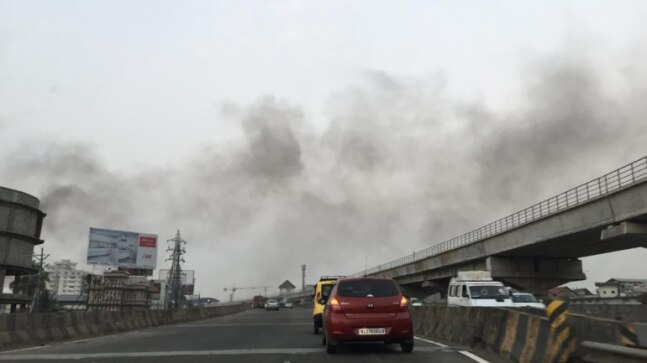
Kochi is witnessing a sharp deterioration in air quality this winter, with real-time Air Quality Index (AQI) readings frequently slipping into the “unhealthy” category. The city’s sudden smog-like conditions — once unusual for Kerala’s coast — have prompted mounting public anxiety and comparisons with Delhi’s chronic air pollution.
Environmental researchers say the rapid decline is the result of multiple overlapping triggers. The industrial belt spanning Eloor, Edayar, Karimugal and Ambalamugal continues to emit particulate matter and chemical pollutants, while large-scale construction and increasing vehicular density are adding fresh layers of dust and emissions to the atmosphere. The arrival of cooler December temperatures is trapping these pollutants near the ground, reducing dispersion and resulting in hazy air during early mornings and evenings. A senior air-quality scientist noted that the city now exhibits the classic mix for photochemical smog formation airborne pollutants interacting with nitrogen oxides and volatile organic compounds under sunlight. “Individually, each sector may claim compliance, but the cumulative impact is visibly choking the city,” the expert said, adding that the lack of tree cover in central Kochi has removed a natural buffer previously helping disperse pollutants. Residents are increasingly vocal about the civic risks. Parents worry about respiratory stress among children, and office-goers report eye irritation and fatigue during daily commutes. Street vendors and auto-drivers exposed outdoors for long hours — say symptoms worsen during the cooler hours of the day.
Health professionals warn that continuous exposure to “unhealthy” AQI levels could elevate risks of asthma and cardiovascular illnesses. Transport officials acknowledge that fake or outdated emission certificates for vehicles remain a major loophole, allowing high-polluting engines to ply without oversight. Industry associations, however, argue that blaming factories alone is simplistic and call for a coordinated city-wide emissions inventory to identify major sources scientifically. Urban planners say the issue underscores a deeper structural challenge: rapid urbanisation without environmental safeguards. Kochi’s infrastructure boom — metro expansion, flyovers, IT parks and housing projects has accelerated development, but enforcement of dust-control measures and pollution audits remains inconsistent.
“Growth cannot come at the cost of breathable air,” an urban developer said, warning that poor air quality could impact investment and livability in the long run. While government officials are reviewing emergency responses, experts urge long-term interventions including urban afforestation, stricter emissions testing, electrification of public transport, and construction-site dust monitoring. Cities such as Bengaluru and Pune have shown that economic growth and clean air can coexist when sustainability is embedded into planning practices. For Kochi, the coming months will be decisive. A proactive strategy could ensure the city continues its trajectory as a global logistics and knowledge hub without sacrificing public health. Without intervention, winter could become an annual season of smog a fate citizens hope to avoid.
