


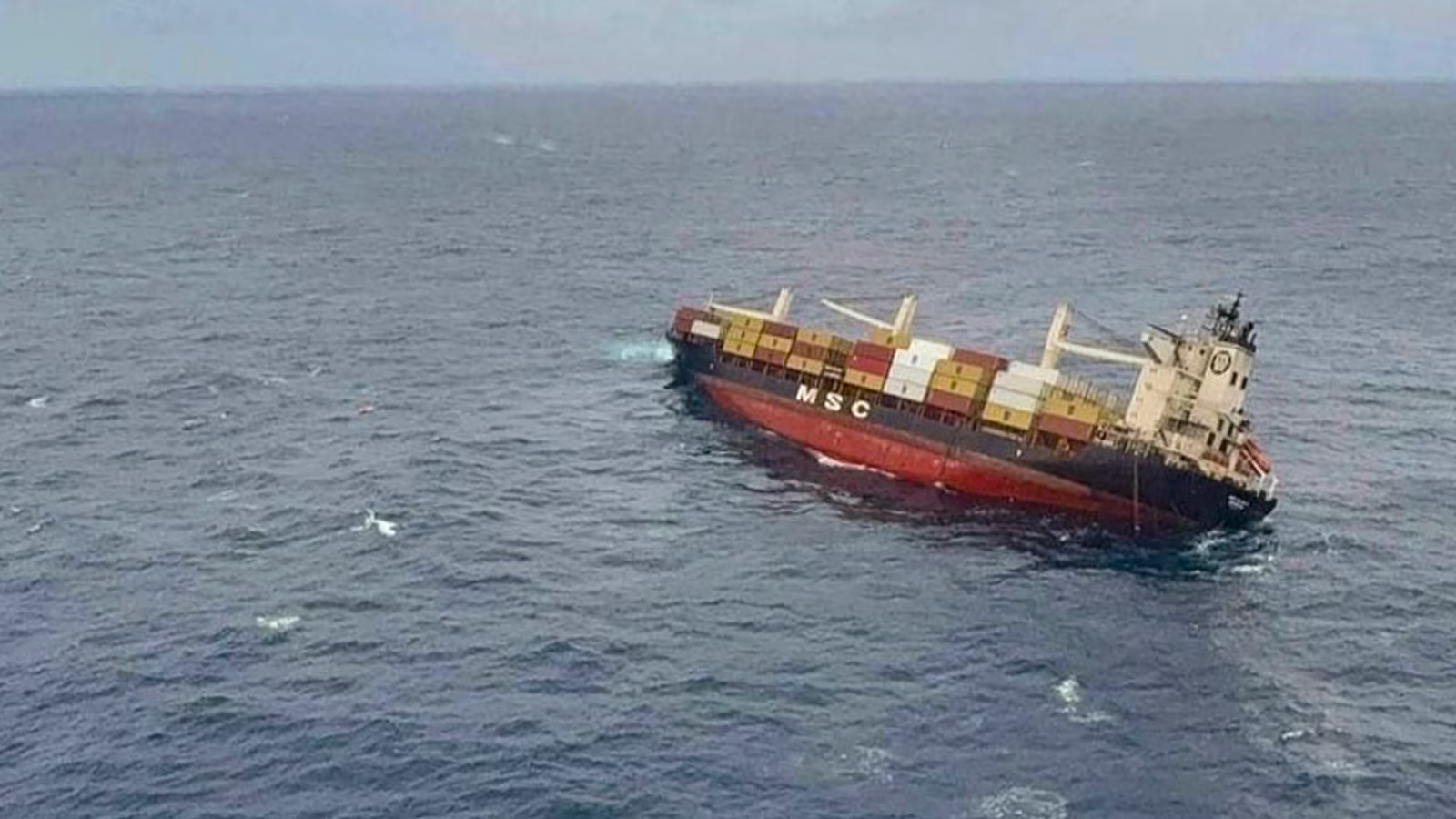
Maritime incident off the coast of Kochi, Kerala, the Liberian-flagged container vessel MSC ELSA 3 capsized on May 25, 2025, releasing substantial quantities of oil and hazardous materials into the Arabian Sea.
The ship, en route from Vizhinjam to Kochi, sank approximately 38 nautical miles from the coast, prompting immediate response efforts from Indian authorities. All 24 crew members aboard the vessel were safely rescued by the Indian Navy, with operations conducted by ships ICGS Arnvesh and ICGS Saksham. Despite the successful rescue, the sinking resulted in the release of 640 containers into the sea, including 13 containing hazardous materials and 12 with calcium carbide—a chemical that reacts with seawater to release flammable gas. Additionally, the vessel carried 84.44 metric tonnes of diesel and 367.1 metric tonnes of furnace oil, further exacerbating environmental concerns .
As containers began washing ashore in coastal districts such as Thiruvananthapuram, Kollam, and Alappuzha, Kerala’s Chief Minister Pinarayi Vijayan ordered the immediate deployment of civil defence volunteers for cleanup operations. An emergency meeting convened with district collectors emphasized centralized communication and coordination through the State Disaster Management Authority. Public advisories have been issued, urging residents to maintain a 200-meter distance from encountered containers and to report sightings immediately. Fishermen have been advised to avoid affected waters to ensure their safety . Environmental experts from the Central Marine Fisheries Research Institute (CMFRI) have expressed concerns over the potential impact on coastal marine habitats and the livelihoods of artisanal fishers, particularly during the monsoon season, which is vital for pelagic fish breeding. Dr. Grinson George emphasized that the extent of damage hinges on the severity of the spill and the effectiveness of containment measures. A comparison was drawn to a 2020 oil spill in Mauritius, highlighting that contamination can persist for years in ecosystems like mangroves, even after undergoing natural biodegradation .
In response to the unfolding crisis, the Indian Coast Guard has intensified pollution control measures, deploying ships and aircraft equipped with oil spill detection systems to survey the area. Containment efforts are underway to prevent further spread of the oil slick and to mitigate potential underwater contamination. The vessel’s cargo of hazardous materials, including calcium carbide, poses additional risks, as reactions with seawater can lead to the release of flammable gases, further complicating the response efforts. This incident underscores the vulnerabilities of Kerala’s coastline to oil spills and the importance of preparedness in managing such environmental hazards. The Kerala government, in collaboration with the Indian Coast Guard and other agencies, continues to monitor the situation closely and implement measures to safeguard public health, marine ecosystems, and coastal economies.
Also Read: Vaishavi Sinha Bhasin Transitions from Golfer to Sustainable Farmer
