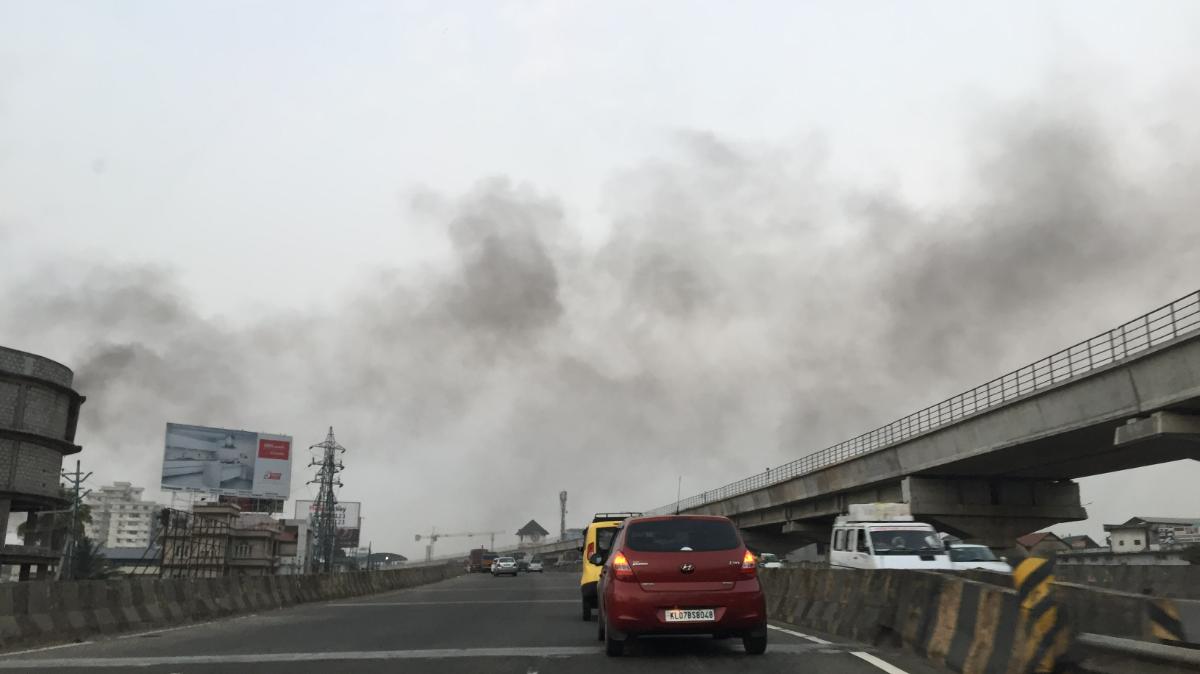
Air quality readings in Kochi remained within the ‘moderate’ range through December 2025, according to assessments released by the state pollution regulator. However, the absence of fully functional real-time monitoring stations across the city has raised questions about data reliability, transparency and the preparedness of urban environmental systems in one of Kerala’s fastest-growing metropolitan regions.
The Kerala pollution control authority relied on manual air sampling after its automated continuous monitoring stations in key city locations became non-operational. Based on these spot measurements conducted over several days, officials said pollutant concentrations stayed below thresholds associated with poor air quality. From an urban planning perspective, the findings are significant as Kochi balances rapid infrastructure growth with public health and climate resilience commitments.
Air quality experts note that Kochi’s coastal geography and wind patterns generally support pollutant dispersion. However, short-term weather events can reverse this advantage. Environmental officials attributed recent fluctuations in readings to temperature inversion, a condition in which cooler air remains trapped close to the ground under warmer layers, preventing emissions from dispersing. While commonly associated with north Indian cities during winter, such episodes are increasingly being observed in southern urban centres as climate variability intensifies.The credibility of the ‘moderate’ classification has been complicated by third-party digital platforms that indicated higher Air Quality Index readings for much of the month. Data sourced from satellite-linked mapping tools suggested AQI values frequently exceeded 150, crossing into the upper range of the moderate category and nearing levels that can affect sensitive populations. Urban health specialists caution that while such platforms are not regulatory tools, prolonged elevated readings deserve closer scrutiny.
A deeper concern lies in Kochi’s monitoring infrastructure itself. Of the three continuous air quality stations overseen by the state board, two are currently defunct, and the third has been offline for relocation for over two years. Maintenance contracts for at least one station have lapsed, reflecting systemic challenges in sustaining environmental monitoring assets. Urban governance analysts say such gaps undermine evidence-based policymaking and weaken early warning systems for pollution spikes.For residents, especially children, older adults and outdoor workers, inconsistent monitoring creates uncertainty around exposure risks. For investors and developers, credible environmental data increasingly influences project approvals, valuations and long-term city attractiveness. Clean air metrics are now integral to sustainable real estate planning, mobility strategies and climate-resilient urban design. As Kochi positions itself as a knowledge, logistics and tourism hub, strengthening air quality monitoring is no longer a technical afterthought but a civic necessity. Restoring continuous stations, aligning maintenance cycles and integrating independent data audits could help rebuild trust. The coming months will test whether Kochi can align its environmental governance with its ambitions for inclusive, low-carbon urban growth.
Kochi Pollution Monitoring Breakdown Draws Scrutiny