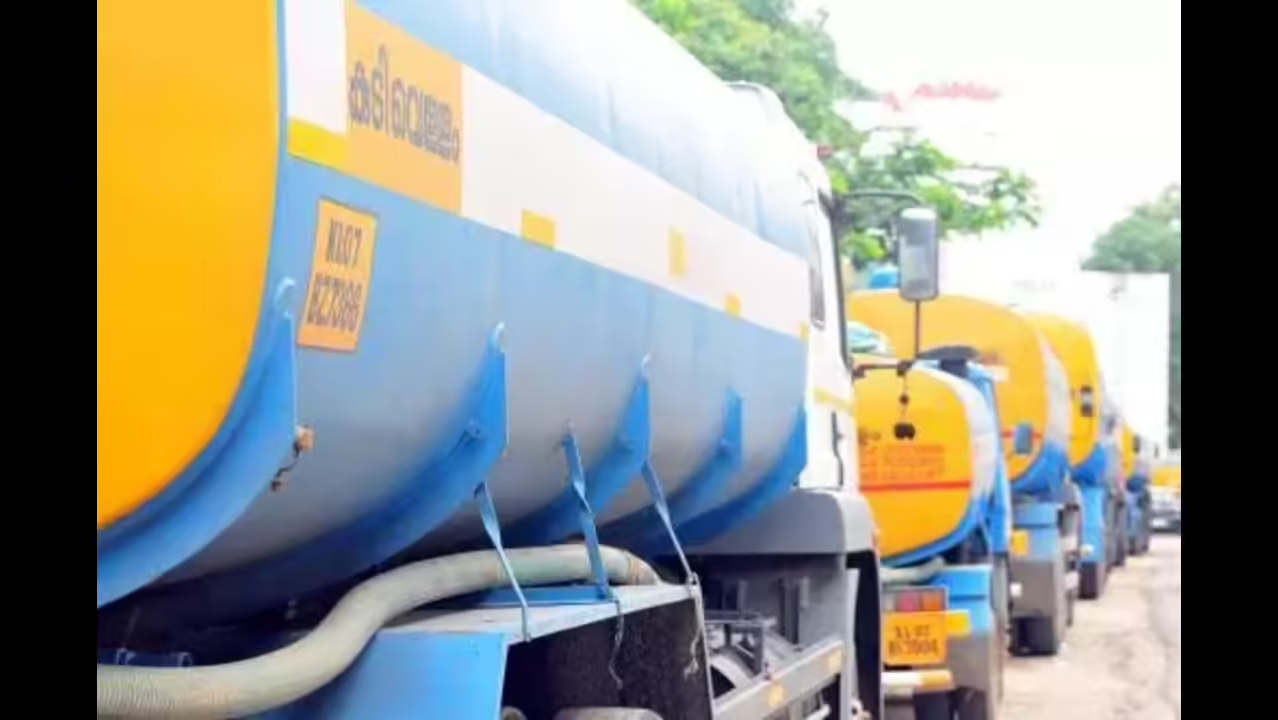
Kochi Pipe Burst Causes Water Supply Disruption Residents Turn To Private Tankers
Kochi residents are facing a major water supply disruption after a pipe burst in Kaloor linked to ongoing metro construction. Areas including Cheranalloor, Edappally, Palarivattom, Thammanam, and Kaloor North are experiencing interruptions, forcing households to depend on private water tankers. With district authorities promising but struggling to ensure emergency supply, community associations are scrambling to meet daily water needs while officials work to repair the damaged pipeline.
The recent pipe burst in Kaloor has brought water supply challenges to the forefront of urban planning in Kochi. Residents across several neighbourhoods report intermittent or halted access to potable water, a situation that has persisted despite initial repair efforts. The disruption has disproportionately affected dense residential pockets such as Pallath Road, Anandapuram Lane, and A and B lanes of Kaloor North, where households are scrambling to secure alternative water sources.Local residents’ associations have highlighted a lack of coordination between metro authorities and the municipal water department. “Although the district administration indicated that Kochi Metro could provide emergency tanker services, the response has been minimal,” said a community representative. Many families have now resorted to arranging private water tankers, incurring unplanned expenses for essential services.
Urban experts emphasise that such incidents illustrate the vulnerabilities of city infrastructure in rapidly expanding urban centres. The juxtaposition of large-scale construction projects with critical water pipelines can create cascading challenges for public utilities. “Proper mapping and real-time monitoring of pipeline networks alongside urban development projects are essential to prevent service interruptions,” noted a senior urban planner.The economic and social implications are also significant. Households forced to rely on paid water services face increased financial pressure, which can exacerbate inequalities in access to essential resources. Community associations have begun documenting supply gaps and seeking assurances from authorities that repairs will be expedited and service restored promptly.Authorities have pledged a multi-pronged approach, coordinating with metro officials to repair the damaged pipeline while exploring temporary emergency water supply measures. However, residents remain cautious, highlighting the need for more robust contingency planning and transparent communication channels during urban infrastructure emergencies.
The incident serves as a reminder of the broader challenges facing Indian cities striving for sustainable and resilient growth. As Kochi continues its metro expansion and urban densification, integrating resilient water management strategies will be critical to ensuring equitable access to resources. Experts suggest that embedding early-warning systems, coordinated infrastructure planning, and proactive engagement with community stakeholders can help mitigate future disruptions, aligning city development with sustainable and inclusive urban objectives.While immediate relief measures such as private tanker arrangements offer temporary solutions, the Kaloor pipe burst underscores the need for long-term investment in resilient urban water networks that support both daily life and sustainable growth ambitions.