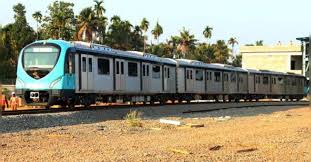
Services on the Kochi Metro service returned to normal on Tuesday after a technical fault forced a temporary suspension during peak morning hours, disrupting commuters travelling between Tripunithura and Aluva. The interruption, which lasted about an hour, slowed operations across the corridor and highlighted the operational sensitivities of high-frequency urban transit systems.
According to metro officials, the issue was detected on an early morning train before it reached the MG Road station. As a precautionary measure, services on adjacent tracks were regulated at reduced speeds while technical teams assessed the situation. Passengers were safely disembarked and transferred to alternative services before full operations resumed.The incident occurred during a high-demand window when office-goers and students rely heavily on the Kochi Metro service for predictable travel times. Normally operating at an average commercial speed of around 30 kmph, trains were temporarily restricted to lower speeds to maintain safety margins across the network.
Urban mobility experts say such short-term disruptions, while inconvenient, are not uncommon in expanding metro systems. What matters, they argue, is the speed of response, transparency of communication and the robustness of backup protocols. In this case, restoration within the morning period helped prevent wider network congestion spilling onto Kochi’s already burdened road corridors.Kochi Metro forms a critical spine in the city’s evolving transport ecosystem, linking residential neighbourhoods with commercial districts and emerging IT hubs. With further extensions planned and integration expected with feeder bus systems, reliability is central to encouraging a shift away from private vehicles.
Transport planners point out that dependable metro operations support climate goals by reducing per capita emissions from commuting. Even brief interruptions can push commuters towards personal cars or app-based taxis, increasing road congestion and urban air pollution. Ensuring operational resilience—through predictive maintenance, system redundancies and rapid response teams—is therefore integral to sustainable urban mobility.Metro authorities have invested in modern monitoring systems, including automated diagnostics and real-time train control, designed to detect anomalies before they escalate. Industry analysts note that as ridership grows and network complexity increases, asset management and periodic system upgrades become critical to maintaining service standards.
For commuters, Tuesday’s episode underscored both the vulnerability and the value of mass transit infrastructure. The swift restoration of the Kochi Metro service helped contain commuter disruption, but it also reinforces the need for continuous investment in reliability, safety systems and passenger communication.As Kochi expands eastward and densifies along transit corridors, the metro’s performance will increasingly influence property markets, commuting behaviour and urban liveability. Maintaining consistent service quality will be key to sustaining public confidence in the city’s low-carbon transport ambitions.