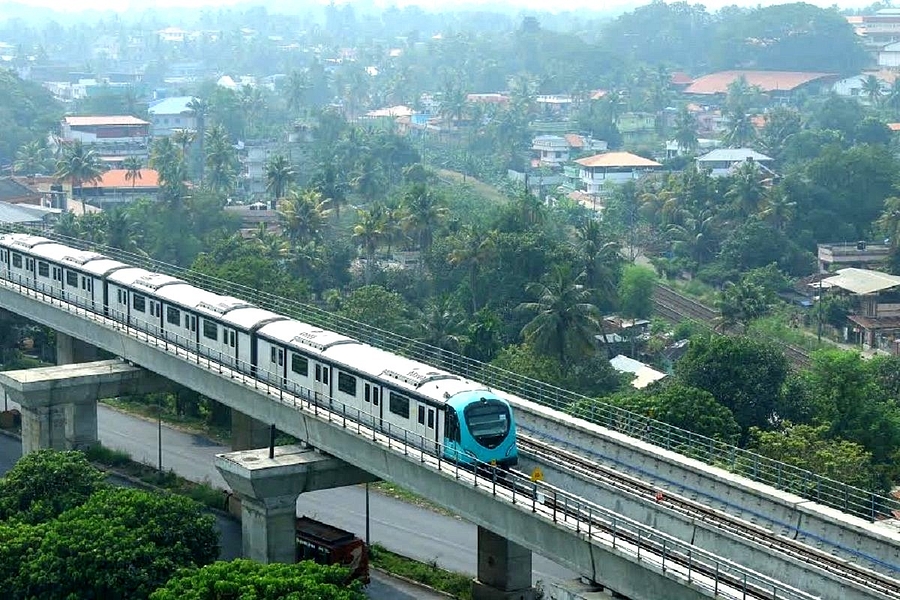
Kochi Metro Plans Light Freight Service to Ease Traffic and Aid Small Traders
Kochi Metro Rail Ltd (KMRL) has announced plans to introduce light freight transport services across the city.
The initiative is designed to support small businesses, reduce traffic congestion, and lower vehicular emissions by offering an efficient alternative to road freight during non-peak hours. The proposed service will allow goods movement early in the morning and late at night, without disrupting regular passenger operations. It marks a significant shift in how metro systems can be utilised to serve city logistics and was inspired by a central government advisory urging metro networks to explore freight solutions within city limits. While the launch date has not been confirmed, KMRL has begun feasibility studies to assess platform logistics, technical limitations, pricing models, and regulatory requirements. The key challenge lies in the infrastructure itself. Kochi Metro’s existing three-coach trains, each measuring 66.55 metres and accommodating up to 975 passengers, cannot be expanded to add extra wagons due to platform size constraints.
Instead, the metro authority is considering reserving a section at the rear of the train for small cargo consignments. However, short station stops, limited door access, and alignment issues will need to be resolved before implementation. Officials are currently drafting legal frameworks and safety guidelines for cargo dimensions and weight limits. Once operational, the service could significantly improve last-mile delivery and streamline urban supply chains for local vendors, traders, and e-commerce platforms. The move aligns with recent recommendations from Union Power Minister Manohar Lal, who suggested that Delhi Metro adopt similar freight features. The Ministry of Road Transport and Highways has also encouraged metro systems nationwide to transition a portion of freight traffic away from roads to reduce emissions and ease congestion in urban centres. If successful, Kochi’s model could set a precedent for other Indian cities, positioning metro systems as dual-use transit solutions for both commuters and cargo. The initiative has drawn attention from urban planners and sustainability experts for its potential to merge green mobility with economic efficiency.
KMRL has indicated that more clarity will emerge after the ongoing studies conclude. Until then, Kochi Metro’s light freight experiment represents a promising step toward cleaner, smarter urban transport.