


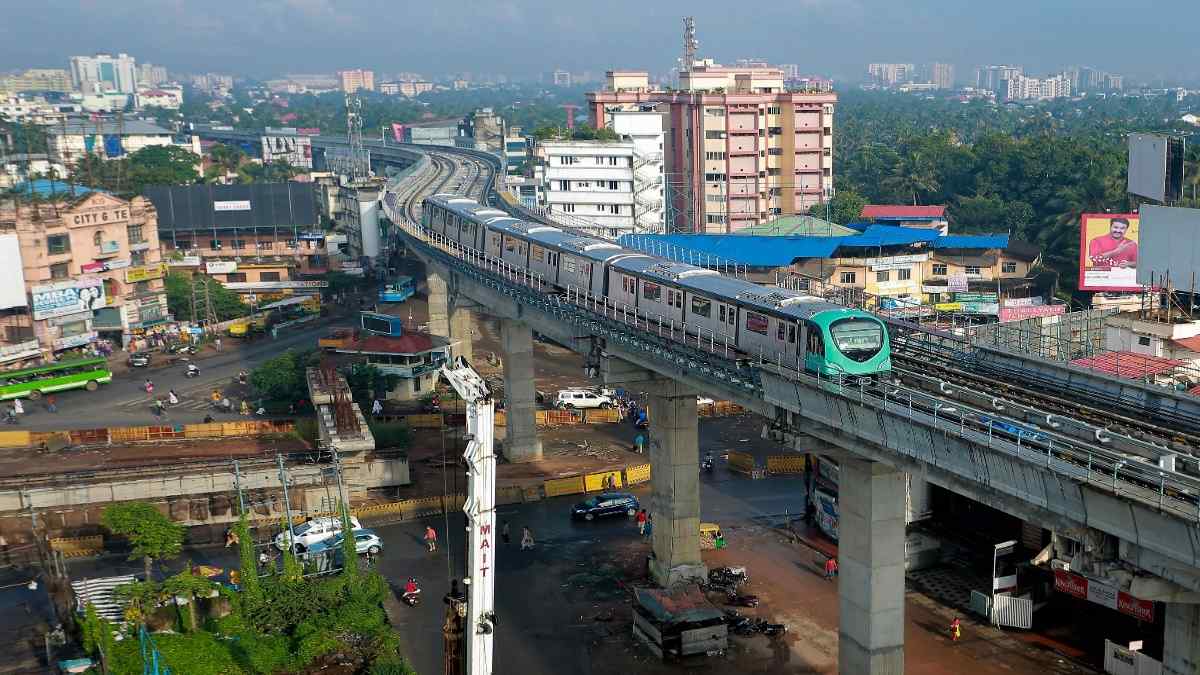
Civil construction on the Kochi Metro Pink Line has moved close to the halfway mark, marking a critical milestone for the city’s next major mass transit expansion. The progress comes after land-related hurdles at two key station sites were resolved, allowing full-scale structural works to begin along crucial stretches of the corridor.
The Pink Line, officially known as Kochi Metro Rail Ltd’s Phase 2 expansion, will extend the city’s rail network deeper into eastern Kochi, strengthening links between residential neighbourhoods, IT parks and commercial hubs. Urban planners say the line is central to easing road congestion along the Seaport-Airport corridor and reducing private vehicle dependence in one of Kerala’s fastest-growing urban clusters.Construction activity has intensified at Chembumukku after statutory land acquisition procedures were completed. Similarly, at Padamughal, authorities finalised an alternative station footprint following prolonged negotiations over a portion of the originally identified site. With notifications now in place for most required parcels, foundation and pier works have gathered pace.
Project officials indicate that structural works — including viaduct construction and piling operations — are progressing across multiple packages. Station construction is expected to accelerate in the coming quarters, subject to timely clearances for residual land segments. Industry observers note that resolving bottlenecks at dense urban nodes is often decisive in determining metro project timelines.The Kochi Metro Pink Line is designed not only as a mobility upgrade but also as an urban development lever. Transport economists point out that the corridor cuts through emerging residential belts where transit-oriented development could reshape land use patterns. Improved last-mile integration, pedestrian access and bus connectivity will be critical to ensure that the infrastructure translates into equitable mobility gains rather than isolated rail assets.
Kochi’s experience with its operational Phase 1 network has shown steady ridership recovery after the pandemic years, strengthening the case for network expansion. However, experts caution that long-term financial sustainability will depend on non-fare revenue streams, integrated ticketing and land value capture mechanisms around stations.Environmental considerations also frame the project’s relevance. By shifting commuters from private vehicles to electric-powered rail, the Kochi Metro Pink Line is expected to contribute to lower transport emissions over time. In a coastal city vulnerable to climate stress and flooding, reducing vehicular pollution and congestion has direct public health and resilience implications.With civil works nearing the 50 per cent threshold, attention will now shift to systems installation, rolling stock procurement and multimodal integration planning. For Kochi, the next phase of metro construction is no longer aspirational — it is steadily taking shape on the ground, redefining how the city plans to grow in a denser, more transit-linked future.
Kochi Metro Pink Line Civil Work Advances
