


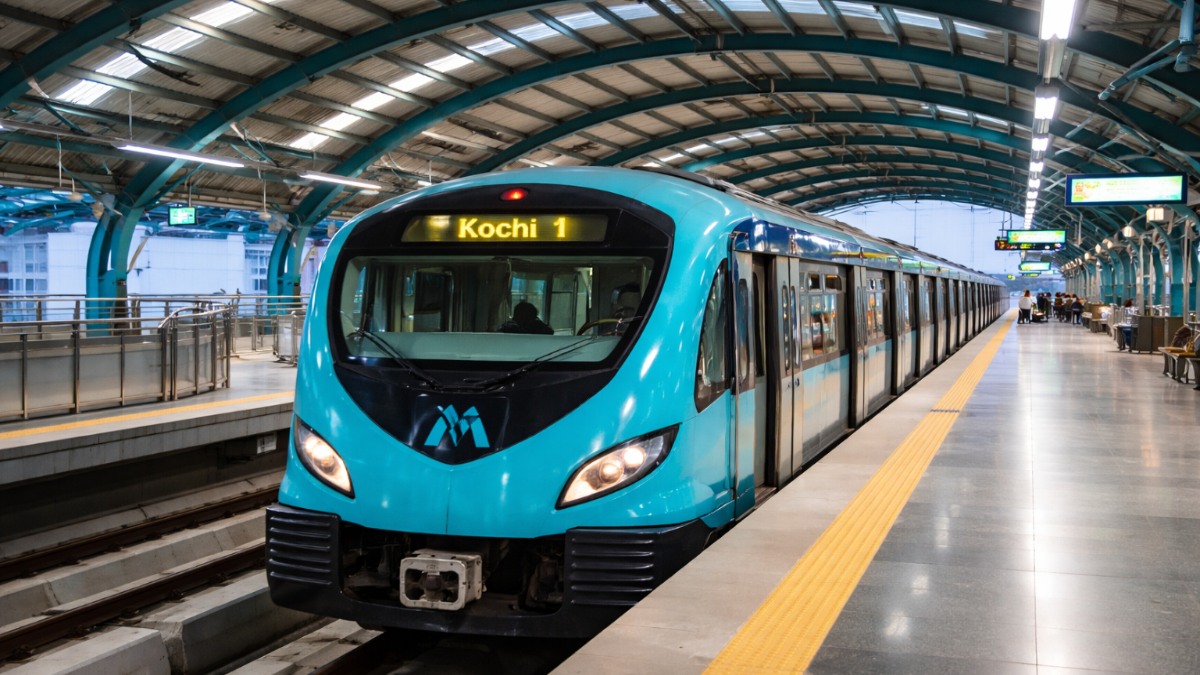
Kochi Metro Rail Limited has received state approval to raise ₹1,016 crore in debt to advance Kochi Metro Phase Two, marking a critical financial step in extending rapid transit towards the city’s northern growth corridor and airport region. The borrowing plan signals renewed momentum for a project seen as central to Kochi’s long-term mobility and climate transition strategy.
Officials confirmed that the proposed loan will support capital expenditure for civil works, systems installation and corridor development under Kochi Metro Phase Two. The expansion aims to strengthen connectivity between existing urban nodes and emerging residential and commercial zones, where population density and vehicular traffic have grown steadily over the past decade.Urban transport analysts note that Kochi Metro Phase Two is pivotal in reducing congestion along arterial roads linking Aluva and surrounding suburbs. With the city’s metropolitan footprint expanding, demand for reliable, high-capacity public transport has intensified, particularly for daily commuters and airport-bound passengers.
Financing infrastructure through a mix of equity, state support and long-term loans has become a common model for Indian metro systems. Experts say structured borrowing enables phased implementation while distributing financial risk over time. However, they caution that ridership projections and fare policies must remain realistic to ensure debt sustainability.The extended corridor is expected to unlock transit-oriented development opportunities along its alignment. Real estate consultants observe that metro-backed corridors often attract mixed-use projects, affordable housing clusters and commercial developments, reshaping land values and urban form. For Kochi, this could mean more compact, walkable neighbourhoods anchored around stations, reducing reliance on private vehicles.
From a climate perspective, Kochi Metro Phase Two aligns with broader decarbonisation goals. Shifting commuters from road to electric rail systems can significantly lower per capita emissions, particularly in cities vulnerable to flooding and air quality challenges. Transport planners argue that integrating metro services with feeder buses, non-motorised transport and water-based systems will be crucial to maximise environmental gains.Financial observers highlight that the ₹1,016 crore loan approval reflects institutional confidence in the project’s viability. Yet they stress the importance of cost discipline, timely execution and transparent governance to prevent overruns — challenges that have affected metro projects elsewhere in the country.
Kochi Metro Phase Two is also viewed as an economic catalyst. Improved connectivity to industrial zones and the airport can enhance labour mobility, strengthen tourism flows and support small businesses operating along transit corridors. Inclusive fare structures and station accessibility will determine how equitably these benefits are distributed.As the borrowing process moves forward, attention will shift to tendering timelines, construction sequencing and coordination with other urban infrastructure projects. For a city balancing rapid growth with environmental fragility, the success of Kochi Metro Phase Two may well define how effectively it delivers sustainable, people-first mobility over the next decade.
Also Read:Bengaluru apartment faces lift power risk
Kochi Metro Phase Two Loan Push
