


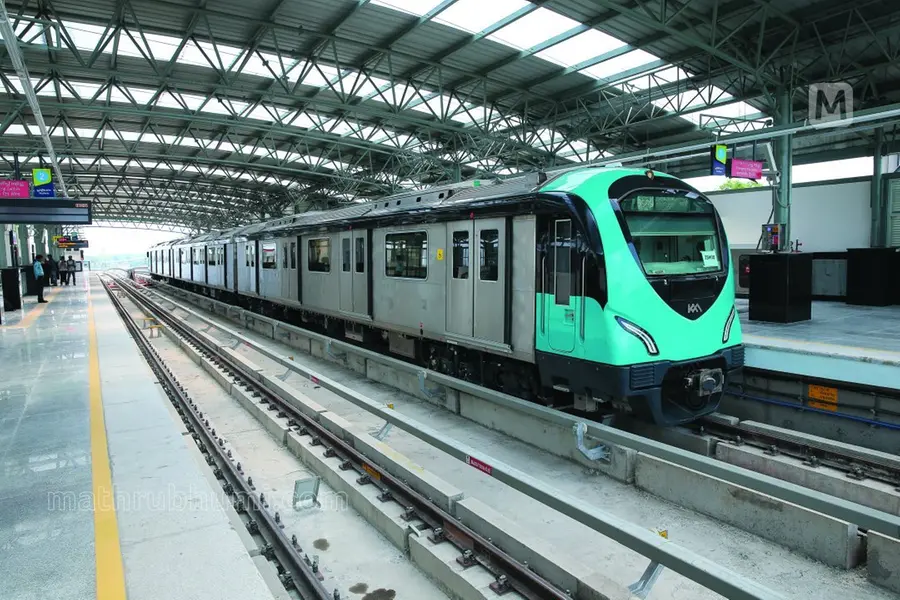
Plans for Kochi Metro Phase 3 are gathering momentum as authorities evaluate an underground extension linking Aluva to Cochin International Airport and further north to Angamaly. The proposed corridor, currently under detailed study, could introduce nearly 8 km of underground metro alignment — a first for the city’s transit system — reshaping regional connectivity in Kerala’s fastest-growing urban belt.
The expansion is being prepared by Kochi Metro Rail Limited, which is finalising a Detailed Project Report to determine route alignment, station locations and construction methodology. At the heart of the proposal is a multi-modal underground transit hub near the airport, designed to integrate metro services with rail connectivity and airport access within a single subterranean complex.If implemented, Kochi Metro Phase 3 would enable seamless interchange between air, rail and metro networks without requiring passengers to exit to surface level. Urban mobility planners describe such integrated hubs as critical to reducing private vehicle dependency and cutting last-mile congestion around airports, which are typically high-emission traffic zones.
Earlier expansion concepts had considered a shorter underground stretch. The revised plan explores a significantly longer tunnel segment in and around the airport precinct. Engineering experts note that underground construction in Kerala requires rigorous hydrological assessment due to high water tables and monsoon intensity. Flood-resilient design, waterproofing systems and emergency ventilation standards will be central to project viability.Officials involved in preliminary planning say cost optimisation remains under review. Alternatives such as elevated pedestrian corridors, automated walkways or electric buggy connections between a metro station and airport terminals are being studied as lower-cost options. Transport economists suggest that the final decision will hinge on balancing long-term operational efficiency with upfront capital expenditure.
From a real estate perspective, an airport-linked metro corridor could catalyse transit-oriented development along the Aluva–Angamaly stretch. Industrial parks, logistics hubs and residential clusters in Ernakulam district stand to benefit from improved accessibility. Property analysts observe that proximity to reliable public transport often strengthens land values while reducing reliance on road-based commuting.Environmental planners argue that expanding rail-based mobility aligns with Kerala’s climate commitments. Shifting airport access from private cars to electric metro services can reduce per-capita emissions, particularly for business and tourist travel. However, they caution that construction impacts — including excavation spoil and energy use — must be managed responsibly.
Kochi Metro Phase 3 represents a strategic inflection point for the city’s transport network. As aviation traffic grows and urban expansion extends northward, the integration of air and rail systems could determine whether Kochi evolves as a low-carbon mobility model or remains constrained by road congestion.The Detailed Project Report is expected to clarify technical and financial contours in the coming months. For now, Kochi Metro Phase 3 signals an ambition to position the region’s airport corridor at the centre of a more connected and climate-aware urban future.
Also Read:Maharashtra Faces Rising Heat With No Rain Forecast
Kochi Metro Phase 3 Targets Airport Link
