


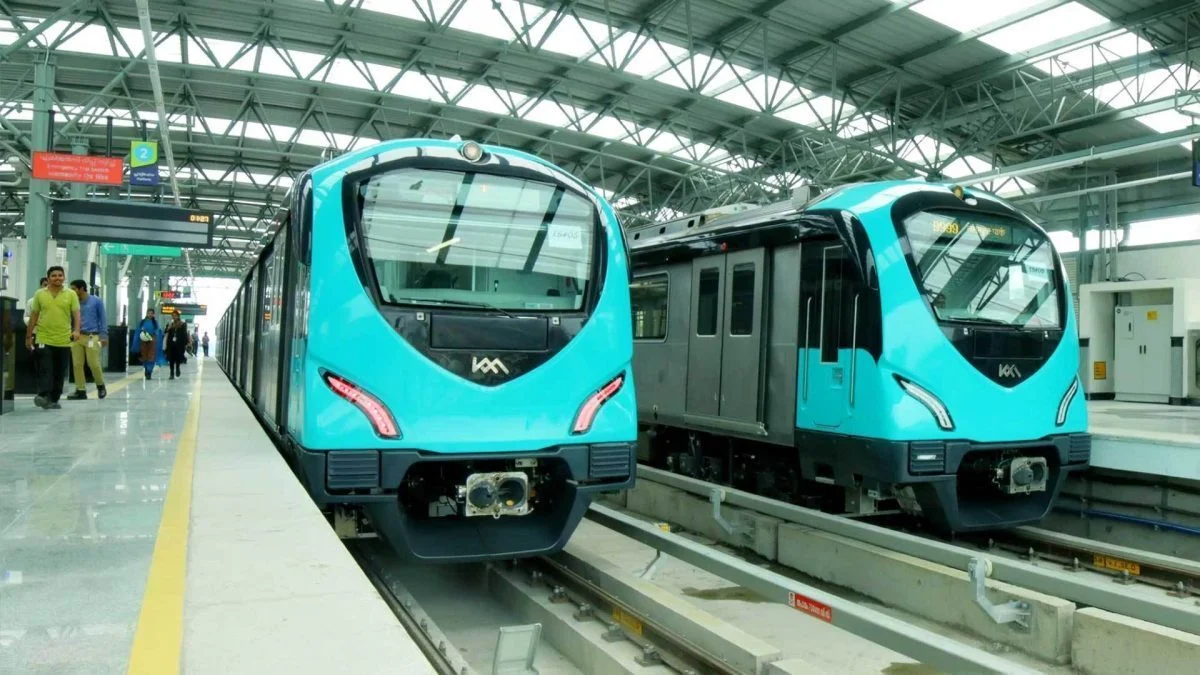
The Kochi Metro Phase 2 extension has taken a crucial step forward with the award of a ₹130.2 crore contract for track construction along the elevated corridor connecting Jawaharlal Nehru Stadium to Infopark. The contract, focused on implementing ballastless track systems, is expected to improve rail durability, reduce maintenance costs, and enhance commuter safety across the 11.2 km extension.
Officials indicated that the contract was awarded to the lowest bidder among several competing engineering firms, following a competitive tender process. The scope encompasses design, supply, installation, testing, and commissioning of standard-gauge ballastless tracks, reflecting the city’s commitment to modern, low-maintenance rail infrastructure. The elevated section passes through dense urban areas and key business hubs, making timely execution critical for integrating metro services with local commuting patterns.Urban transport analysts highlight that ballastless track systems are increasingly preferred in rapidly expanding cities for their ability to handle higher train speeds, reduce noise pollution, and minimise long-term carbon emissions. “Adopting this track technology aligns with broader sustainability goals and ensures resilient infrastructure capable of supporting growing ridership,” said a senior urban planner associated with rail projects in South India.
Civil construction for Phase 2 is reported to have reached approximately 50% completion, with stations, viaducts, and supporting structures well underway. The elevated corridor is expected to serve commuters in both residential and IT-focused sectors, offering efficient connectivity to Infopark and other employment clusters. According to transport experts, integrating modern track technology can also lower lifecycle maintenance costs, freeing municipal resources for additional urban mobility investments.The contract stipulates a 16-month completion timeline from the date of award. Project managers emphasised that coordination between civil works and track installation will be essential to avoid delays and cost overruns, particularly in congested areas. The award also reflects growing confidence in India’s capacity to deliver large-scale urban transit expansions with international-standard technologies, which is critical for reducing road congestion and improving air quality.
Urban economists note that metro infrastructure extensions contribute directly to economic opportunity by improving access to jobs, reducing travel time, and attracting real estate investment along the corridor. For Kochi, this project is part of a phased approach to develop a climate-resilient, inclusive transport network that can support both population growth and sustainable urban expansion.As Phase 2 progresses, authorities are expected to monitor construction quality, environmental compliance, and project timelines closely. Successful completion will not only enhance commuter experience but also set a precedent for further metro expansions in emerging urban centres across India.
Kochi Metro Phase 2 Awards Track Contract
