


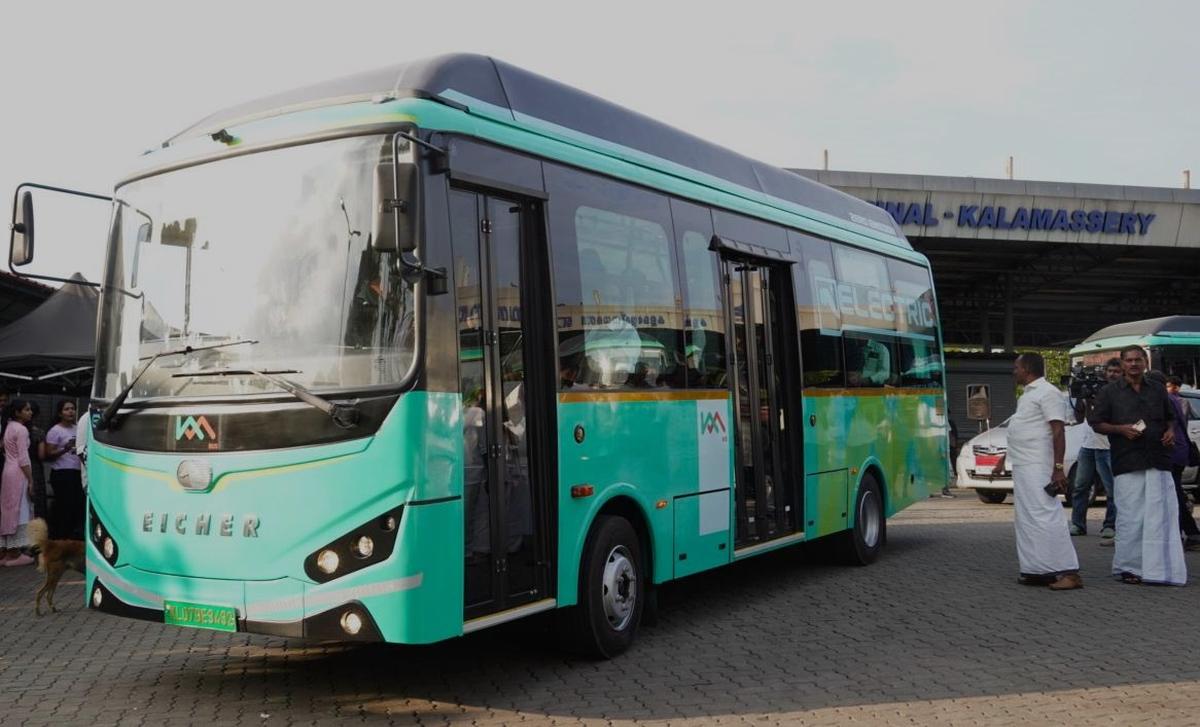
Kochi’s experiment with air-conditioned feeder buses has struck a chord with women commuters, with fresh survey findings indicating that over half of the riders on the service are women a rate nearly double the national average. The data highlights how sustainable and secure transport choices can directly improve inclusivity in rapidly growing urban centres.
According to a recent survey by the National Institute of Technology Calicut (NIT-C), 51 per cent of the passengers on feeder bus circular routes in the city are women. The average age of the passengers is 37, reflecting that the service is most attractive to working professionals, a demographic that demands both comfort and safety in daily travel.The survey findings reveal a significant departure from the national pattern, where only 20 to 30 per cent of passengers on similar metro feeder networks are women. Experts believe the success in Kochi lies in offering fully air-conditioned electric buses that directly connect key points such as the Water Metro, Metro rail stations, railway hubs, shopping districts, hospitals, and IT parks.
Also Watch: An Exclusive Interview with Sanjeev Jaiswal (IAS), CEO MHADA
This seamless connectivity has reduced dependence on private vehicles and offered women commuters a reliable, carbon-free option for daily mobility.Since the introduction of the feeder service, Kochi Metro Rail Ltd (KMRL) has recorded more than 1,34,000 passenger trips, with daily ridership averaging around 4,600. The routes cover critical corridors such as Aluva–Airport, Kalamassery–Medical College, Kakkanad–Infopark, and High Court–MG Road. On the MG Road circular service alone, introduced in March, an average of 818 passengers board each day, a number that continues to rise.
A closer look at the passenger profile shows that the largest segment is working professionals aged between 25 and 47, followed by students, business owners, homemakers and senior citizens. For women, particularly professionals, the feeder buses have emerged as a practical and secure mode of transit in a city that is steadily expanding its urban footprint.Travel frequency data further reveals changing commuter behaviour. About 12.6 per cent of passengers use the service at least once a week, 17.5 per cent travel occasionally, and 15.4 per cent were first-time users during the survey period. Transport officials believe these numbers indicate strong potential for retention, especially among women who are choosing public mobility options over private alternatives.
Urban mobility experts point out that the acceptance of these feeder e-buses underscores how clean and safe transport can not only reduce carbon emissions but also promote gender equity in city planning. Kochi’s model of integrating electric feeder buses with larger metro networks is being viewed as a benchmark for sustainable and inclusive transport across Indian cities.As Kochi expands its network further, the strong uptake by women may well define the city’s journey towards building a more gender-neutral, eco-friendly, and equitable urban transport ecosystem.
Also Read :Kochi Explores Water Metro Link To Airport For Seamless Connectivity
Kochi Metro feeder e buses witness rising demand from women
