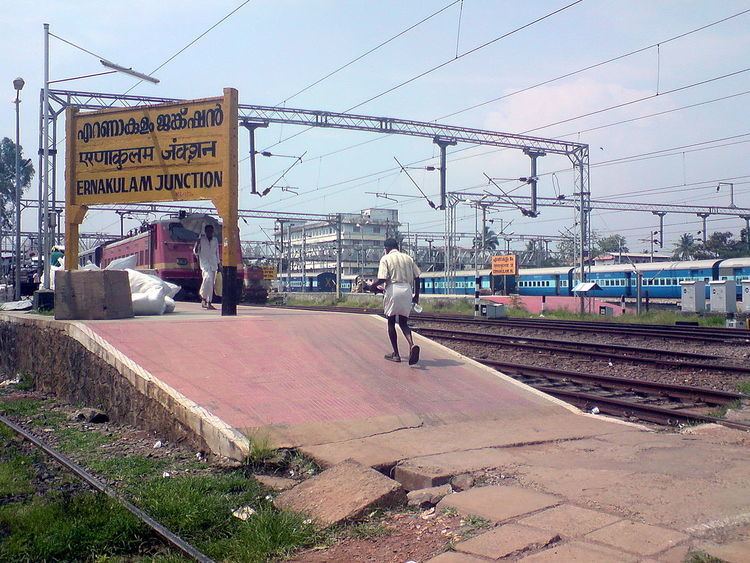
Kochi Kerala Set For 750 km Rail Expansion
Kerala is set for one of its most extensive railway upgrades in decades, with Indian Railways preparing a Detailed Project Report (DPR) for more than 750 kilometres of new lines and capacity additions across the state. The proposal aims to ease network congestion, enable higher train frequency, and strengthen inter-city connectivity changes that could significantly improve mobility for residents and businesses.
For the 2025–26 financial year, the Union government has allocated ₹3,042 crore towards ongoing railway works in Kerala. According to a written reply in Parliament earlier this month, authorities have sanctioned nine surveys over the past three years, covering three new lines and six doubling projects totalling 1,124 kilometres. Officials say the focus is on adding new tracks rather than only running new trains, a shift that reflects rising commuter demand and limitations of Kerala’s narrow linear transport corridor. The DPR currently in progress covers six stretches that form the backbone of Kerala’s coastal railway belt. These include new third or fourth lines between Kasaragod–Kozhikode–Shoranur (261 km), Shoranur–Ernakulam (106 km), Shoranur–Coimbatore (99 km), Ernakulam–Kayankulam (115 km), Kayankulam–Thiruvananthapuram (105 km) and Thiruvananthapuram–Nagercoil (71 km). Railway planners note that the new parallel tracks will allow express trains, suburban services, and freight movement to operate without competing for limited slots on the existing two-line system.
Alongside these initiatives, five additional projects spanning 232 kilometres are also under execution or planning: the Angamali–Sabarimala new line (111 km), doubling between Ernakulam–Kumbalam (8 km), Kumbalam–Thuravur (16 km), Trivandrum–Kanyakumari (87 km) and Shoranur–Vallathol (10 km). Combined, the railway programme is expected to improve access for coastal towns, pilgrimage destinations, and industrial hubs. A senior official said that land acquisition remains the most time-sensitive variable, noting that nearly ₹1,975 crore has already been transferred to the Kerala government. “Faster handover of land will determine whether major stretches can be completed within projected timelines,” the official added. Industry experts point out that improved rail capacity plays a wider role beyond transportation. Reduced dependence on road travel can lower emissions across the state, especially in highly urbanised coastal districts where road expansion is challenging. Better freight logistics could also shift cargo movement away from lorries, reducing traffic congestion and pollution on national highways.
Mobility researchers believe the long-term success of the programme will hinge on Kerala integrating rail upgrades with last-mile infrastructure—accessible stations, feeder buses, pedestrian pathways, and universal accessibility features. Without these, new tracks may not fully translate into inclusive mobility benefits for women, seniors, low-income travellers, and people with disabilities. If timely execution and sustainable planning align, the ongoing railway expansion could reshape travel patterns in Kerala—supporting cleaner transport, balanced regional growth, and more equitable access to jobs and public services.
Kochi Kerala Set For 750 km Rail Expansion