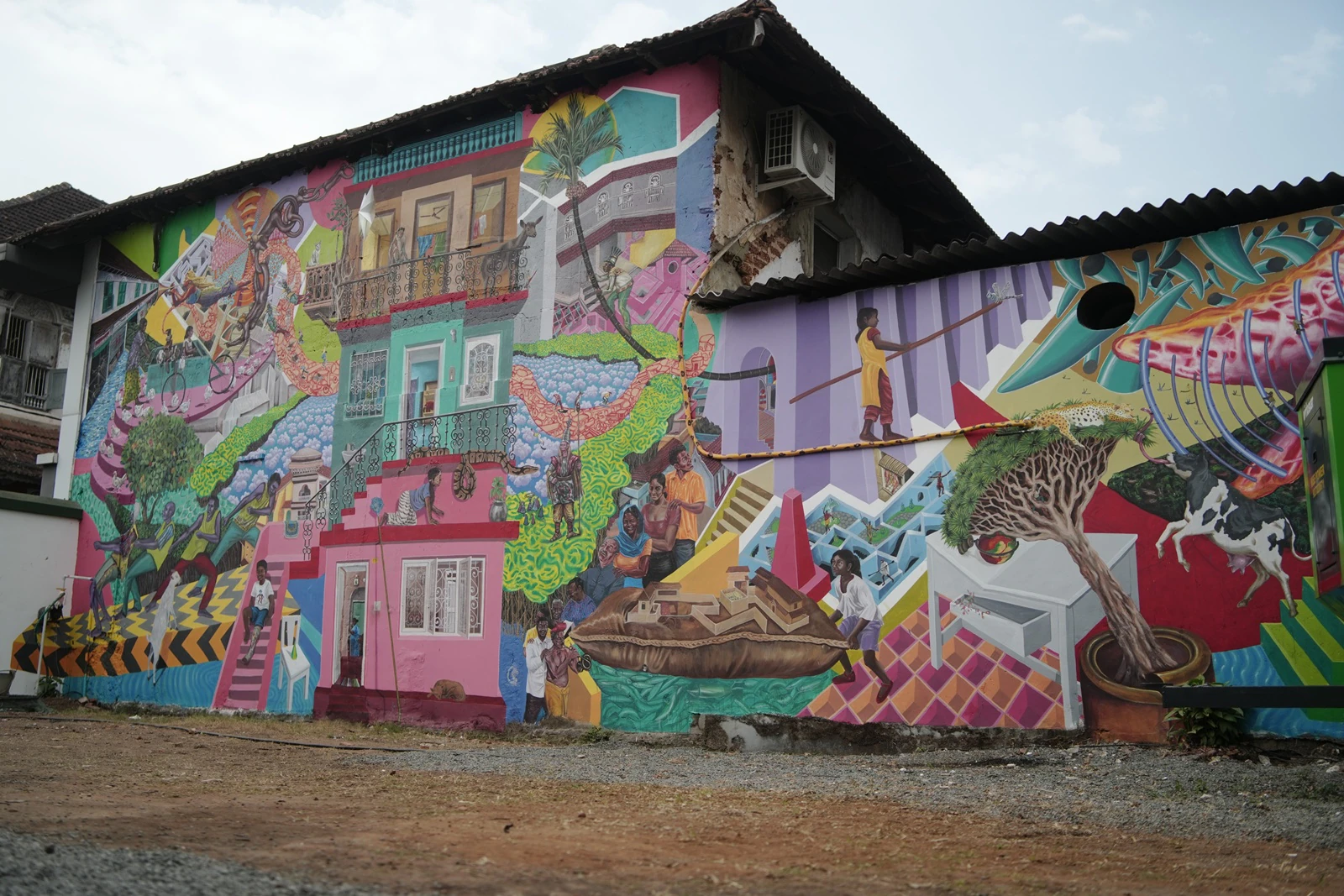
Kochi Island Mural Project Brings Contemporary Art To Streets And Neighbourhoods
Kochi’s streets are turning into vibrant public galleries as the Kochi-Muziris Biennale’s Island Mural Project transforms neighbourhood walls into contemporary art canvases. Across Fort Kochi and Mattancherry, artists and collectives including Aravani Art Project, Trespassers, Osheen Siva, and Munir Kabani are painting murals that reflect local culture, history, and daily life. By integrating art directly into public spaces, the initiative invites residents and visitors alike to experience the city’s streets in a new, engaging, and visually striking way.
Since its inception in 2012, the Kochi-Muziris Biennale (KMB) has been recognised as a ‘people’s biennale’, prioritising public participation at every level. Volunteers, many of them students from across the region, collaborate with local residents in Fort Kochi and Mattancherry, ensuring that art extends beyond traditional gallery spaces into the everyday life of the city.The Island Mural Project, a key component of the biennale, transforms public walls into dynamic canvases over the three-month event. The first series of murals has been completed by Aravani Art Project, Trespassers, and individual artists Osheen Siva and Munir Kabani, with interdisciplinary artist Pradip Das scheduled to begin work in February on the Simi Warehouse wall in Mattancherry. According to the Kochi Biennale Foundation, “The Island Mural Project, rooted in the Biennale’s engagement with place, invites everyone to see the neighbourhood in a new light. Artists in this project have created works that speak directly to the histories, textures, and living communities of the neighbourhood.”
At Cube Art Spaces on Bazaar Road, Trespassers—a collective of eight artists—painted a striking mural depicting everyday life interwoven with fantastical elements. Scenes include a young girl balancing on a ropeway, toiling workers, flying cows, and monkeys perched on balconies. Vishnupriyan K, a member of Trespassers, explains that their collaborative practice is layered, building visual memories from surroundings and inviting viewers to “trespass” into the work, which becomes etched in memory.Munir Kabani’s “Wall of Love” at Arthshila in Fort Kochi promotes warmth and positivity through simple yet powerful words in English and Malayalam. Kabani notes that such works create shared spaces for reflection, allowing contemporary art to be both accessible and intimately engaging for residents and visitors.The Aravani Art Project, acclaimed at the 2024 Venice Biennale, brings narratives of resistance, belonging, and inclusivity to Kochi. Their mural at the Government Women and Children’s Hospital on Bazaar Road reflects life through a language of social engagement, highlighting the experiences of transgender and cisgender individuals and fostering dialogue within the city.
Urban cultural analysts observe that initiatives like the Island Mural Project redefine public spaces, strengthen community engagement, and enhance urban aesthetics. By placing art directly within everyday environments, Kochi’s streets become living galleries, bridging the gap between local history, contemporary expression, and civic participation. This approach illustrates how creative interventions can make cities more vibrant, inclusive, and reflective of the communities that inhabit them.