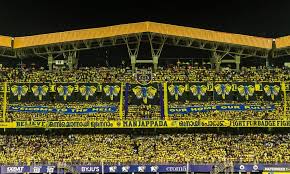
Top-flight football returned to Kochi under the banner of the Indian Super League, drawing supporters back to the stands after months of uncertainty. Yet the homecoming at the Jawaharlal Nehru International Stadium ended in defeat for Kerala Blasters FC, as a second-half strike handed victory to Mumbai City FC. Beyond the result, the evening underscored football’s economic and civic relevance to the city.
Attendance was lower than peak seasons, but the return of organised fan groups restored an atmosphere long associated with Kochi’s sporting identity. Stadium officials estimate that matchdays contribute significantly to local commerce, benefiting transport operators, street vendors and small businesses clustered around Kaloor.On the pitch, the decisive moment came shortly after the interval, when the visitors capitalised on defensive hesitation. The home side struggled to convert possession into clear chances, despite late pressure and a series of set pieces. A penalty save by the Kochi goalkeeper in the first half briefly lifted momentum, yet the breakthrough eluded the hosts.
Club management had faced an unsettled pre-season, with several senior players loaned out amid wider league uncertainties. Analysts say squad continuity remains a challenge for franchises balancing financial prudence with competitive ambition. For Kerala Blasters FC, rebuilding cohesion will be essential if the team is to translate strong fan backing into results.Urban economists argue that the revival of the Indian Super League calendar carries broader implications for Kochi’s event economy. Large sporting fixtures activate public transport networks, increase short-stay bookings and drive footfall in hospitality corridors. The stadium’s location within a dense residential and commercial district makes it a case study in mixed-use urban planning, where sports infrastructure intersects with everyday city life.
There are also sustainability considerations. City planners have previously explored measures such as staggered kick-off timings and enhanced bus connectivity to reduce congestion and emissions during high-attendance matches. As climate resilience becomes central to urban policy, integrating event management with low-carbon mobility will be critical.Despite the disappointing scoreline, the symbolic significance of the Indian Super League return was evident in the stands. Supporters remained vocal until the final whistle, signalling that football retains deep roots in Kochi’s civic culture.
For the club and the league, the weeks ahead will test whether sporting momentum can match fan enthusiasm. For the city, consistent fixtures offer not just entertainment, but a reminder of how cultural infrastructure can anchor economic activity and community identity in equal measure.