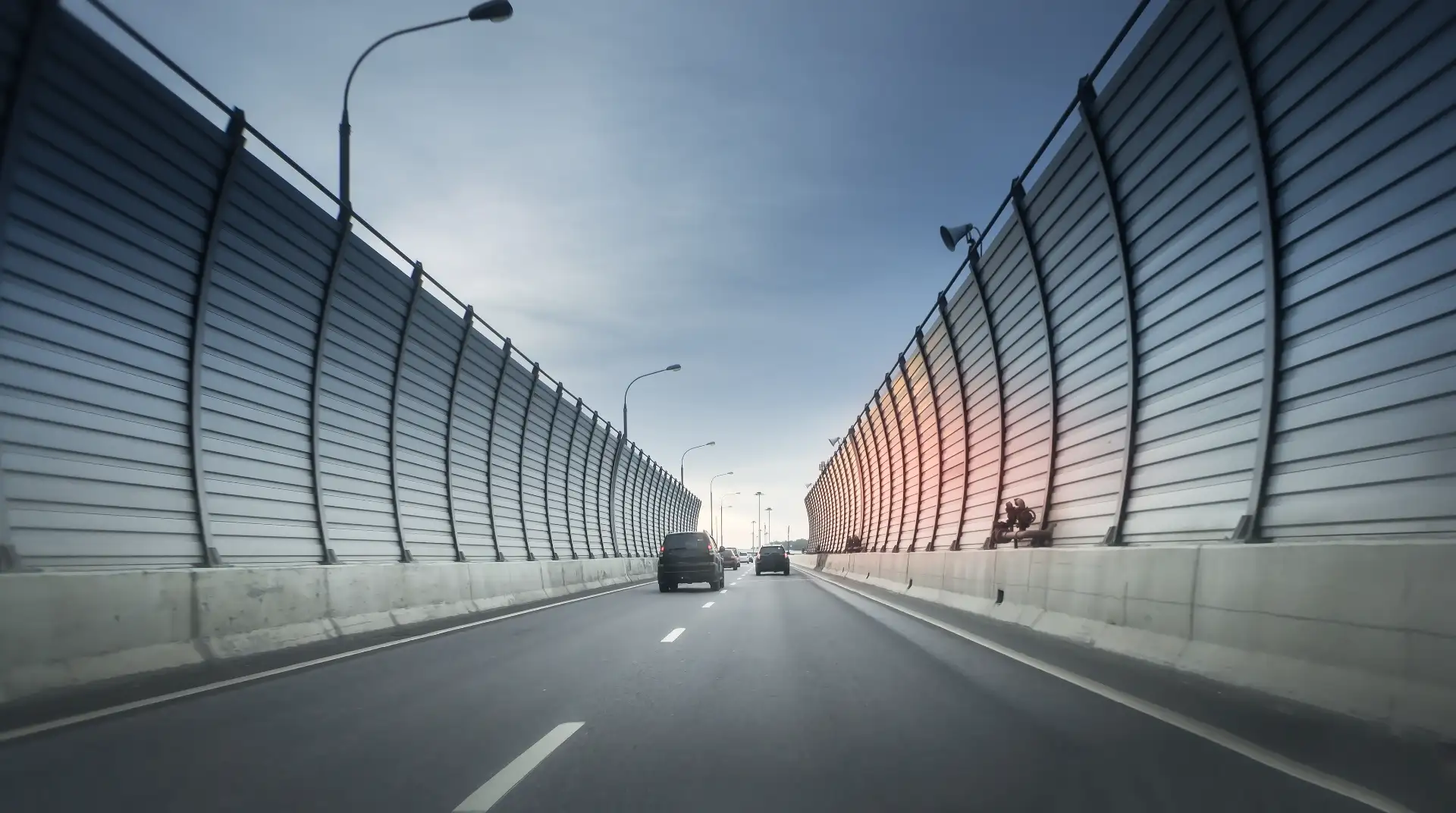
Kochi Elevated Highway Noise Barriers To Cut Urban Sound Pollution
Kochi is witnessing a novel urban infrastructure intervention as authorities install noise barriers along the 12.75 km Aroor–Thuravoor elevated highway to shield adjacent communities from rising traffic sound levels and safeguard public health in densely built-up zones of the city’s peri-urban belt. This initiative, part of the broader highway rollout, highlights growing attention to sound pollution mitigation in fast‑urbanising Indian cities and underscores the need for climate‑responsive, inclusive transport planning.
The National Highways Authority of India (NHAI) has begun fitting translucent, high‑performance polycarbonate panels atop existing boundary walls on both sides of the elevated deck, which runs above a four‑lane arterial road without additional land take. Transport planners say such barriers can cut engine and honking noise by 10–15 decibels, potentially easing stress for people living near busy junctions, schools, hospitals and residential clusters. Positioned on walls already about 4 m tall, the new screens add nearly 1.8 m of separation between road traffic and urban soundscapes, a key design consideration when infrastructure borders sensitive receptors. Urban sound pollution is increasingly recognised as a public health and quality‑of‑life issue in Indian cities, linked with sleep disturbance, cardiovascular strain and cognitive impacts. Urban planners and environmental health experts note that integrating noise‑attenuation into major corridors not only improves livability but also aligns with citizen expectations for people‑centred mobility infrastructure — especially where highways traverse residential and commercial precincts. Installation is already progressing in the Thuravoor–Kuthiathode stretch, with full highway commissioning projected by June this year.
In parallel, the highway project incorporates a dedicated cycle track beneath the elevated structure — a first for major National Highway projects in Kerala. This reflects a broader shift toward multimodal transport planning, encouraging low‑carbon mobility options adjacent to high‑capacity road networks. A senior regional transport planner said that providing safe, segregated space for cyclists can reduce dependence on motor vehicles for short trips and support equitable access to urban opportunities. However, the construction phase has raised concerns among local residents and commuter groups, who welcome noise mitigation but urge faster restoration of local surface roads and clear traffic management as works progress. Past redevelopment efforts on key corridors in Kerala have prompted debate over delays, bottlenecks and the balance between large infrastructure rollout and day‑to‑day urban mobility.
With a partial section between the Aroor and Chandiroor ramps slated to open by March, the project illustrates the trade‑offs inherent in metropolitan infrastructure expansion: boosting long‑distance connectivity while managing environmental impact and urban disruption. As Kochi continues to grow, the integration of noise control and active transport facilities in highway design could serve as a model for other Indian cities seeking climate‑resilient, inclusive transport corridors that minimise harm to adjacent communities.