Kochi Edappally Upgrade Reshapes Urban Travel
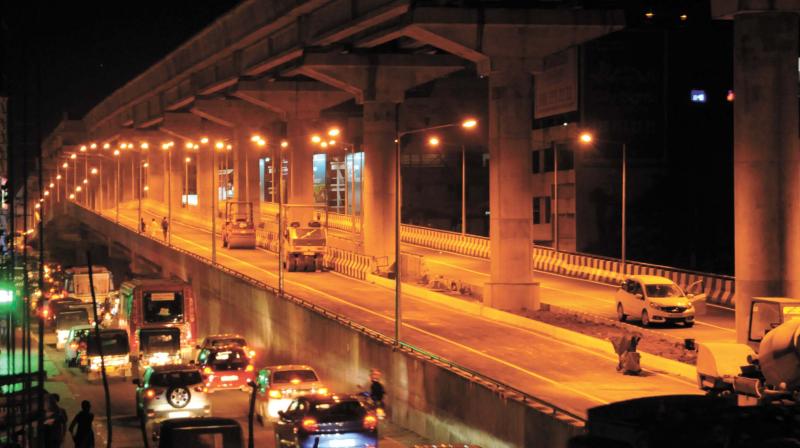
Kochi’s most congested road junction is set for a significant transformation, with the Union government reaffirming that two major flyovers at Edappally will be completed by May 2026. The project, located at the intersection of two critical national highways, is positioned as a long-term solution to chronic traffic delays that affect daily commuters, regional trade, and the city’s economic efficiency.
Responding to questions in Parliament, the Union road transport ministry acknowledged that Edappally Junction where NH 66 and NH 544 converge has become a major bottleneck within Kerala’s urban road network. The junction carries heavy inter-city traffic alongside intense local movement, placing pressure on surrounding residential and commercial areas. Officials said the flyovers form part of the ongoing widening of NH 66, one of India’s key coastal corridors. The project involves two grade-separated structures, each around 650 metres long, designed as flyover-cum-underpass systems to segregate through traffic from local flows. One structure is being developed near a large commercial complex to the south of the junction, while the other is located close to a major retail hub on the northern side. Together, the design aims to reduce signal dependency and minimise stop-start driving patterns that contribute to congestion and vehicle emissions.
According to the ministry, structural work on both flyovers has been completed, with construction activity now focused on approach roads and integration with existing carriageways. An official said revised timelines were introduced to address land, utility, and coordination challenges typical of dense urban construction zones. “The emphasis now is on completing access roads safely without disrupting everyday mobility,” the official noted. Beyond concrete infrastructure, the project includes the introduction of an intelligent traffic management system at key junctions. Industry experts view this as a critical addition, enabling real-time monitoring, adaptive signalling, and quicker incident response. Such systems, they argue, are essential for cities like Kochi, where road expansion alone cannot keep pace with rising vehicle ownership.
Urban planners point out that while flyovers can improve traffic flow, their long-term success depends on complementary measures such as public transport integration, pedestrian safety, and last-mile connectivity. Edappally, surrounded by residential neighbourhoods, schools, and retail centres, requires careful balancing of speed, accessibility, and safety. The road ministry clarified that similar grade-separated structures will be considered elsewhere in Ernakulam only after site-specific assessments of traffic demand, urban form, and investment viability. This signals a more calibrated approach to urban road building, rather than uniform replication. As Kochi continues to grow as a commercial and logistics hub, the Edappally flyovers represent more than a traffic project. They reflect the challenge Indian cities face in modernising infrastructure while striving for cleaner air, inclusive mobility, and efficient land use goals that will increasingly define sustainable urban development in the years ahead.
Kochi Edappally Upgrade Reshapes Urban Travel