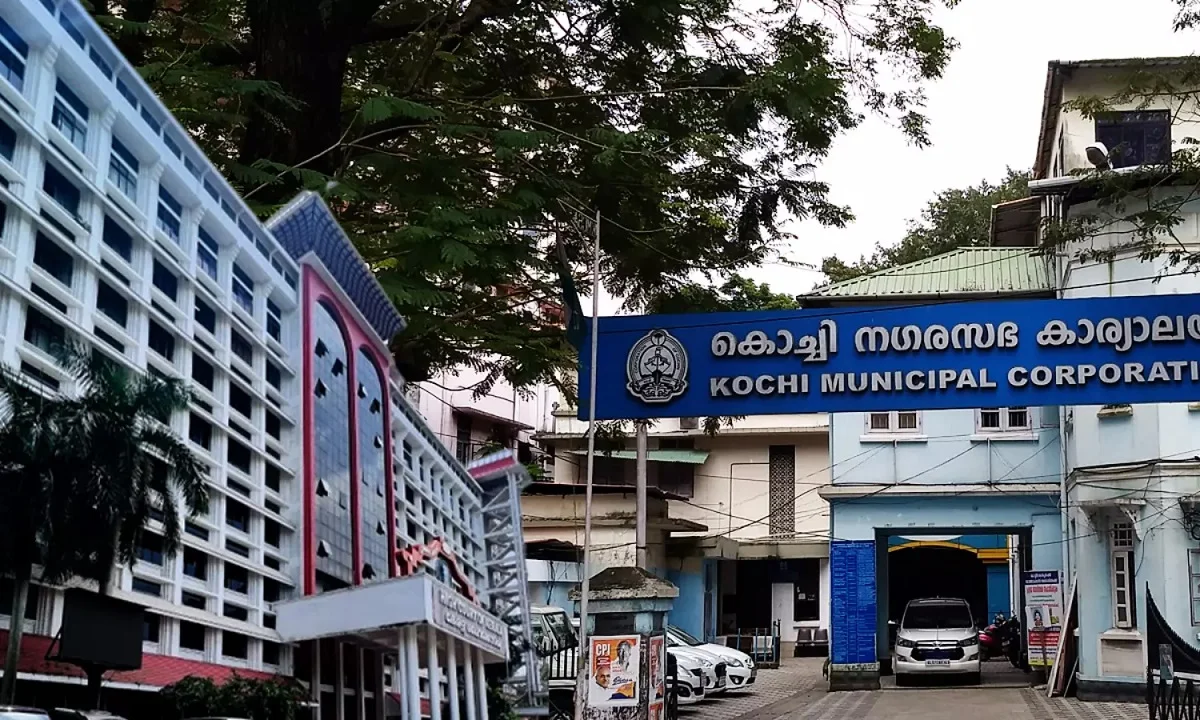
The Kochi Municipal Corporation will present its first full-year budget under the new governing council this week, outlining a financial roadmap that blends senior citizen welfare with long-term urban development. With projected revenues of ₹1,388.14 crore and estimated expenditure of ₹1,255.17 crore, the Kochi Corporation Budget is expected to set the tone for how Kerala’s commercial capital plans to manage growth, ageing demographics and civic stress.
Officials indicate that the Kochi Corporation Budget will include targeted schemes aimed at improving the health, safety and social inclusion of elderly residents. Kochi, like several coastal Indian cities, is witnessing demographic shifts, with a rising proportion of older citizens living independently in urban neighbourhoods. Urban planners argue that municipal budgets must now account for age-friendly infrastructure — from accessible public spaces to reliable primary healthcare and community support systems.Beyond welfare, the Kochi Corporation Budget is expected to integrate a 25-year development outlook. Senior administrators suggest the document will align short-term allocations with long-term spatial planning, particularly in areas vulnerable to flooding and environmental degradation. For a city shaped by waterways and monsoon cycles, climate resilience is no longer an abstract concept but a fiscal necessity.
Civic management issues are also likely to feature prominently. Stray animal control, vector-borne disease mitigation and scientific waste management remain pressing concerns in densely populated wards. Waste segregation, decentralised treatment and improved collection systems are seen as essential not only for public health but also for maintaining Kochi’s attractiveness as a tourism and investment destination. Urban governance experts note that such “everyday infrastructure” often determines investor confidence as much as large transport projects.The corporation has been implementing a 50-day action plan to address immediate service gaps, and elements of that plan are expected to receive structured funding. Budget discussions are scheduled to follow the presentation, with formal approval anticipated later this week.
Financially, the revenue-expenditure gap appears manageable on paper, but analysts caution that real performance will depend on property tax efficiency, state transfers and the pace of capital project execution. Kerala’s urban local bodies have historically faced constraints in expanding non-tax revenue streams, making fiscal discipline critical.For residents and businesses alike, the Kochi Corporation Budget represents more than an annual accounting exercise. It signals how the city intends to reconcile welfare commitments with infrastructure upgrades in a period of political transition and economic uncertainty. As Kochi positions itself within a competitive network of southern metros, the effectiveness of this budget will hinge on whether allocations translate into measurable improvements in liveability, environmental performance and inclusive growth.