


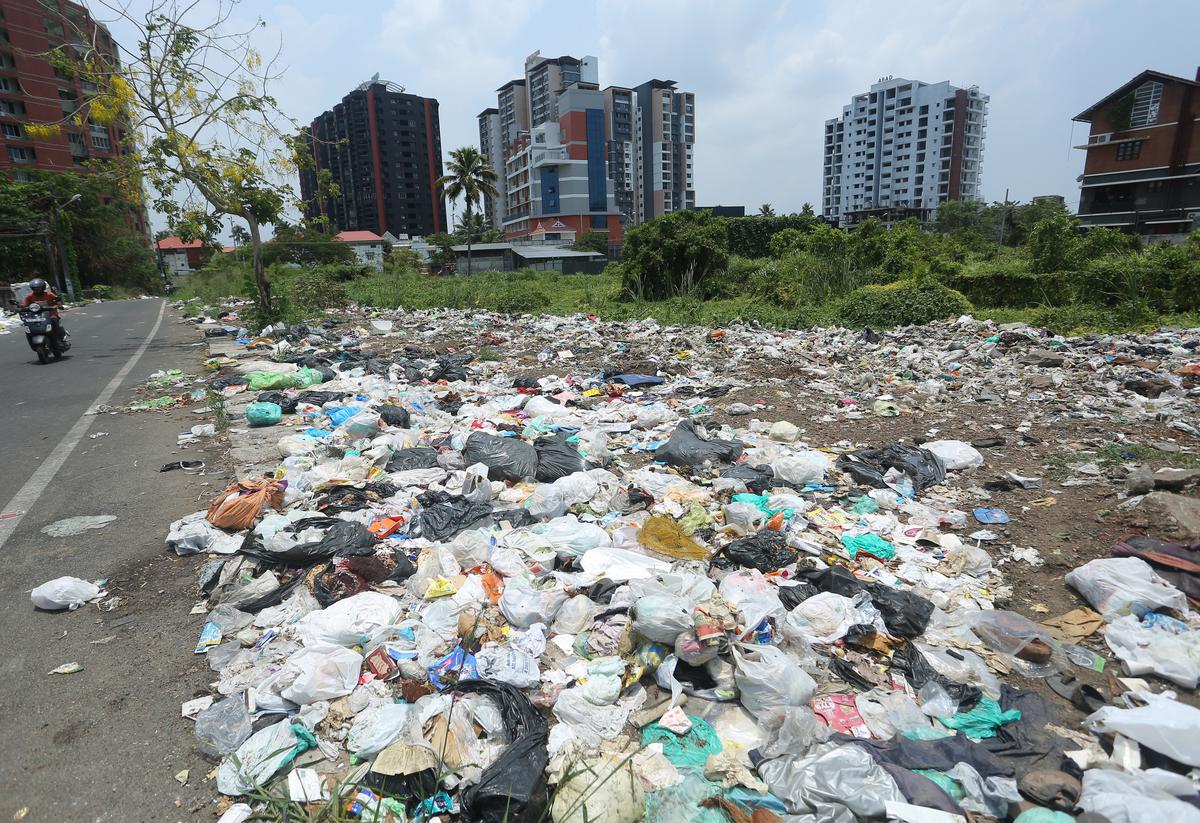
Kochi has commissioned a compressed biogas facility designed to convert municipal biodegradable waste into clean fuel and organic manure, marking a significant shift in how the city manages its solid waste stream. The plant, developed by Bharat Petroleum Corporation Limited at Brahmapuram, positions Kochi as the first city in Kerala to operationalise a dedicated compressed biogas unit for urban waste treatment.
With a processing capacity of 150 tonnes per day, the facility is expected to handle source-segregated biodegradable municipal solid waste collected across the city. At full scale, it will produce an estimated 5.6 tonnes of compressed biogas daily, alongside around 28 tonnes of organic manure. The output is intended to supplement cleaner transport fuels while supporting agricultural soil health.The plant operates on an anaerobic digestion model. Incoming waste is first screened to remove plastics, metals and other non-biodegradable material. The organic fraction is shredded and mixed with water to form slurry before entering sealed digesters. In oxygen-free conditions, microorganisms break down the material, releasing biogas and leaving behind nutrient-rich digestate. The gas is then purified and compressed, while the residue is processed into marketable manure.For Kochi, which has faced recurring scrutiny over waste disposal practices at Brahmapuram, the project represents a strategic pivot towards decentralised and scientific waste management. Urban infrastructure analysts note that integrating energy recovery within municipal waste systems can significantly reduce landfill dependency and methane emissions — a potent greenhouse gas.
The initiative reflects growing alignment between public sector energy companies and urban local bodies. Through collaboration with the city corporation, Bharat Petroleum Corporation Limited strengthens its renewable fuel portfolio while the municipality secures a long-term processing solution. Such models are increasingly viewed as viable pathways to implement circular economy principles within Indian cities.State authorities have indicated plans to replicate similar compressed biogas plants in Kozhikode, Kollam, Palakkad, Thrissur and Kottayam. If executed effectively, this network could substantially reduce Kerala’s biodegradable waste burden and diversify its clean energy mix.Environmental planners caution that consistent source segregation and supply chain management will determine the plant’s performance. Without disciplined waste sorting at household and commercial levels, contamination can compromise digestion efficiency and output quality.
Nevertheless, the Brahmapuram facility underscores a broader transition in urban India: moving from landfill-centric disposal towards resource recovery infrastructure. For a rapidly urbanising state with high population density, embedding waste-to-energy solutions within city planning could improve air quality, cut emissions and create green jobs.As Kochi expands its residential and commercial footprint, the success of this plant will be closely monitored as a test case in sustainable urban infrastructure — where waste is no longer treated as a liability, but as an input for renewable growth.
Kochi commissions municipal waste biogas plant
