


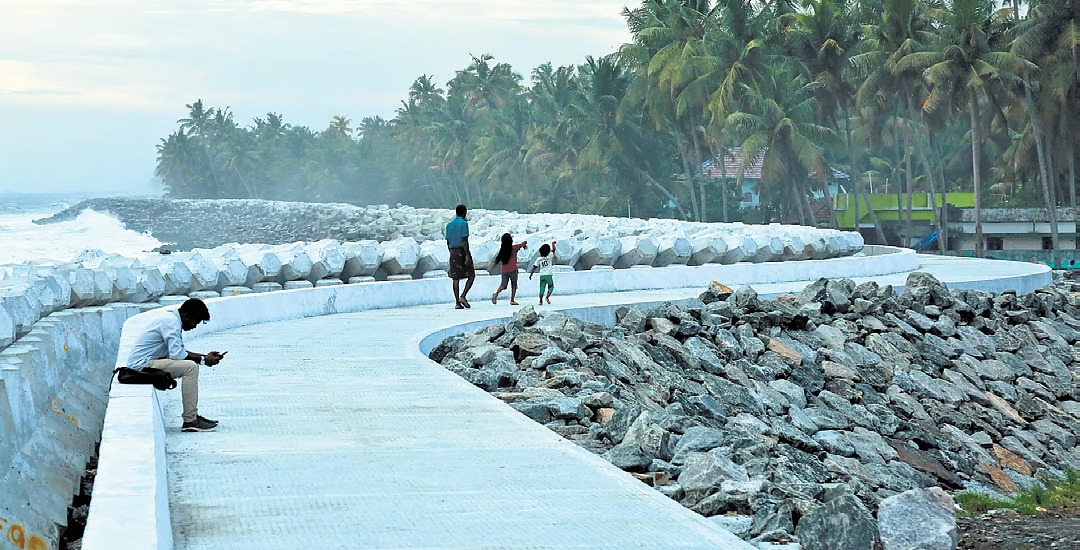
Kochi residents have been granted a major boost as the state cabinet approved a ₹306 crore second phase of the tetrapod seawall project along the Kannamali‑Chellanam stretch. This 3.6 km extension from Puthenthodu to Cheriyakadavu comes after a spate of severe sea surges over the past four years threatened hundreds of homes. The move follows residents’ protests and rising demands for more robust coastal protection.
The initial 7.3 km seawall from Chellanam to Puthenthodu, completed in 2023 at ₹347 crore, has withstood recent high tides. However, the unshielded Puthenthodu‑Kannamali‑Cheriyakadavu region suffered its worst sea surge in years during the monsoon, inundating over 500 homes and sweeping away geobags that had been temporarily installed. One household was fully destroyed and many coastal families were relocated. Irrigation Department reports had identified Chellanam as one of ten coastal hotspots, with escalating erosion exacerbated by rising sea levels. Following over ten protest marches led by civic societies, including a demonstration to the district collectorate on April 11, local representatives and coastal advocacy groups urged officials to secure a permanent coastal defence solution.
State Industry Minister and KIIFB project overseer confirmed that administrative sanction for the second phase is imminent, with formal financial nod expected by week’s end. Plans stem from a revised detailed project report that reevaluates the initial blueprint, reduced to 7.3 km because of escalating costs. Officials are designing the second phase with cutting-edge resilience in mind. As construction begins, KIIFB will deploy monitored tetrapod structures along vulnerable shorelines, reinforced by breakwater installations. Engineering experts stress the importance of durability amid intensifying weather patterns and sea‑level rise; analysts caution that static defences must be part of a broader ecological counter‑erosion strategy.
Coastal engineers argue that tetrapod breakwaters dissipate wave energy more effectively than standard seawalls, but emphasise that restoration of native mangroves and sustainable shoreline management add critical long‑term protection. One coastal protection expert noted that absent such supporting measures, hard infrastructure may merely shift erosion elsewhere. Social organisations in Chellanam highlight the human toll. Anecdotes from affected residents recount how seaside dwellings were damaged overnight, with families losing livelihoods tied to fishing and small local businesses. One area community leader shared, “More than 25 homes have washed away in recent years. The seawall isn’t just concrete—it’s the difference between safety and disaster for our families.”
Environmental NGOs have raised concerns about construction impacts, advocating for environmental assessments and mangrove reinstatement as part of broader adaptation strategies. They argue that communities must be included in planning wind‑breaks, dune rehabilitation, and coastal greening projects. The ₹653 crore combined investment for both seawall phases reflects state acknowledgment of coastal vulnerabilities. But it also raises questions about funding priorities amid competing infrastructure needs, urbanisation pressures, and climate resilience obligations.
Construction is slated to begin later this monsoon, with phased completion over the next 18 months to safeguard residential zones ahead of future tide cycles. Coastal division officers confirm that once materials and contractors are mobilised, monitoring systems will be implemented to evaluate erosion rates and structural integrity. Annual performance audits will inform subsequent maintenance or expansion phases. This development marks a pivotal stage in Kochi’s broader climate adaptation agenda. While Rajasthan Ltd. and other state jurisdictions are exploring hybrid green‑grey coastal defences, Kerala’s first major tetrapod expansion signals a shift towards proactive infrastructure. Cities like Mumbai and Chennai are also studying tetrapod deployments in high‑risk zones.
Also Read : Kochi Under Yellow Alert As IMD Predicts Rain And Winds Till July 8
