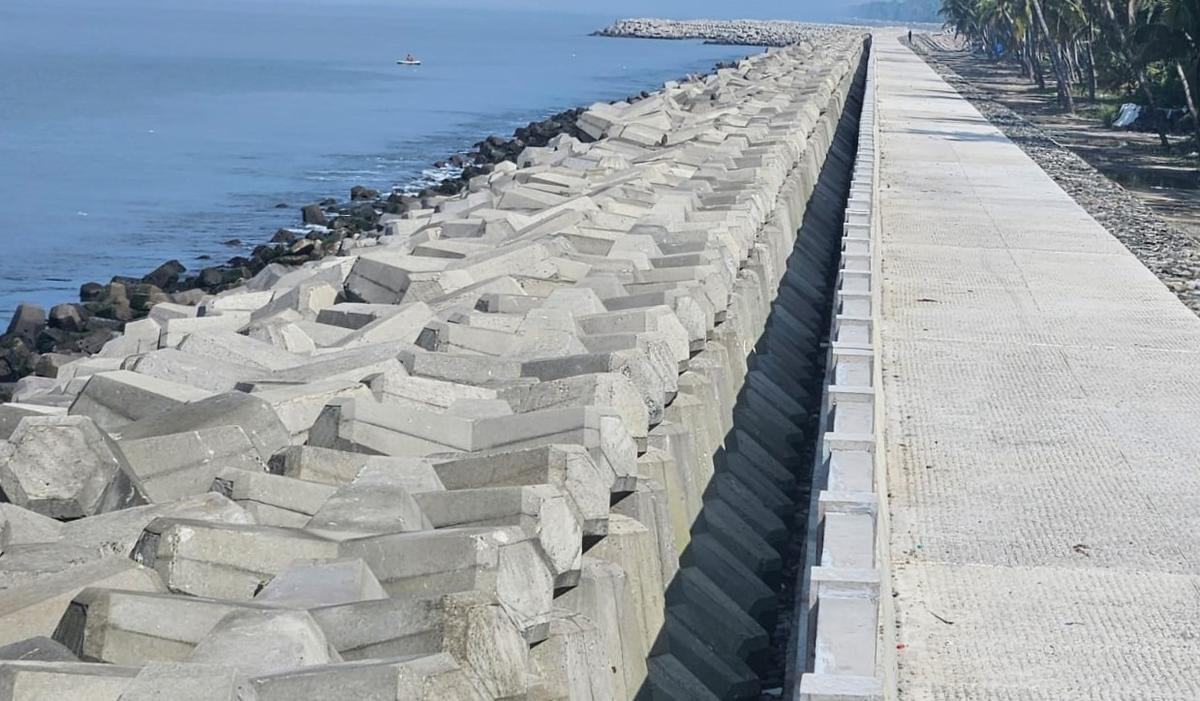
Kochi Chellanam Residents Demand Expanded Seawall for Coastal Protection
Kochi’s coastal community of Chellanam is intensifying its calls for an additional three kilometers to be added to the ongoing tetrapod seawall project, as authorities prepare to launch Phase II construction. Residents, severely impacted by relentless sea erosion, are urging the government to extend the proposed 3.6-kilometer seawall to cover a total of 6.6 kilometers. This demand comes amidst continued vulnerability, with recent sea surges washing away geobags and threatening hundreds of homes in an area identified as one of Kerala’s most severe erosion hotspots.
The state government recently granted approval for Phase II of the Chellanam tetrapod seawall project, allocating ₹306 crore for a 3.6-kilometer stretch from Puthanthodu to the CMS area in Cheriyakadavu. This section is crucial as it directly impacts numerous residential properties. However, local residents, organized under the Kochi-Chellanam People’s Forum, are advocating for the project to extend a further 3 kilometers from the CMS area to Beach Road. They have raised this demand with the local MLA and industries minister and plan to meet with the Chief Minister to press their case.
Phase I of the seawall project, covering a 7.3-kilometer stretch from Chellanam to Puthenthodu, was successfully completed in 2023 at a cost of ₹347 crore. Despite this, the unprotected segments continue to face severe erosion, exacerbated by monsoon weather. The People’s Forum’s general convener has specifically called on the government to utilize Asian Development Bank (ADB) funds to finance the proposed extension of Phase II, highlighting the critical need for a more comprehensive and continuous protective barrier along the vulnerable coastline.
Chellanam remains one of ten hotspots identified by the irrigation department in Kerala as facing the most severe sea erosion. The community’s proactive stance underscores the urgent need for robust coastal management strategies in the face of changing climatic conditions and increasing sea surge events. The ongoing efforts reflect a broader challenge for coastal cities and communities in India, where development and climate resilience must be intricately balanced to protect lives and livelihoods.
The persistent demands from Chellanam residents for a more extensive seawall highlight the critical need for integrated and adaptive coastal protection measures in highly vulnerable areas to safeguard lives and infrastructure.