


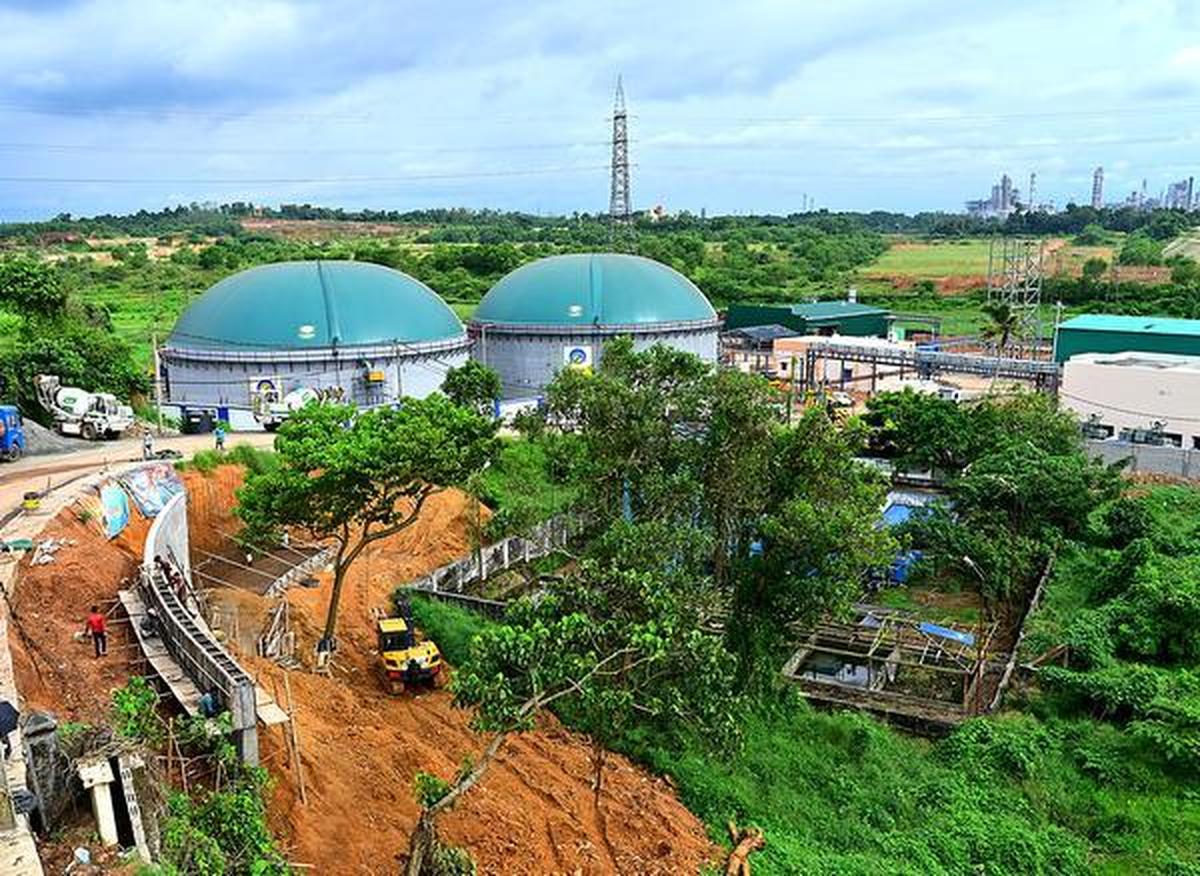
Kochi has commissioned a large-scale compressed biogas facility designed to convert municipal organic waste into clean fuel and soil nutrients, marking a decisive shift in how the city manages its growing waste burden. The Kochi CBG Plant, located at Brahmapuram, is positioned as a long-term response to landfill pressures and a test case for decentralised, climate-aligned urban infrastructure in Kerala.
The facility can process 150 tonnes of biodegradable waste daily. From this, it is expected to generate over five tonnes of compressed biogas and close to 30 tonnes of organic manure every day. Urban planners say the scale is significant for a city that has struggled with landfill fires, public health concerns and rising waste transport costs.The Kochi CBG Plant has been developed by a public sector energy major in partnership with the state government and the municipal corporation. Officials describe it as part of a broader transition towards a circular economy model, where waste is treated as a resource rather than a liability.
Compressed biogas is purified methane derived from organic waste. Once processed, it can be used as a transport fuel or industrial energy source, reducing dependence on fossil fuels. Experts note that such facilities not only cut landfill emissions but also help lower methane leakage — a potent greenhouse gas contributing to climate change.Urban economists point out that cities like Kochi face a dual challenge: rising consumption and shrinking landfill capacity. Infrastructure that integrates waste management with clean energy production offers fiscal and environmental returns. The organic manure produced at the plant is expected to support peri-urban agriculture, creating secondary economic value.
The state administration has framed the project as part of its wider urban modernisation strategy. Industry observers suggest that if operational stability is maintained, similar CBG plants could be replicated in other dense municipalities across Kerala. The financial viability will depend on steady waste segregation at source and assured offtake agreements for biogas.Beyond energy generation, the project may also improve public trust in civic systems. Residents in neighbourhoods near Brahmapuram have long demanded sustainable alternatives to open dumping. Integrating technology-driven waste processing could reduce local pollution and improve liveability indicators.
As Indian cities confront mounting climate risks and infrastructure deficits, the Kochi CBG Plant represents a pragmatic intervention. Its success will likely hinge on governance discipline, citizen participation in waste segregation, and transparent performance monitoring. If these align, Kochi may offer a blueprint for mid-sized cities seeking cleaner growth without expanding their environmental footprint.
Kochi CBG Plant Anchors Urban Waste Shift
