


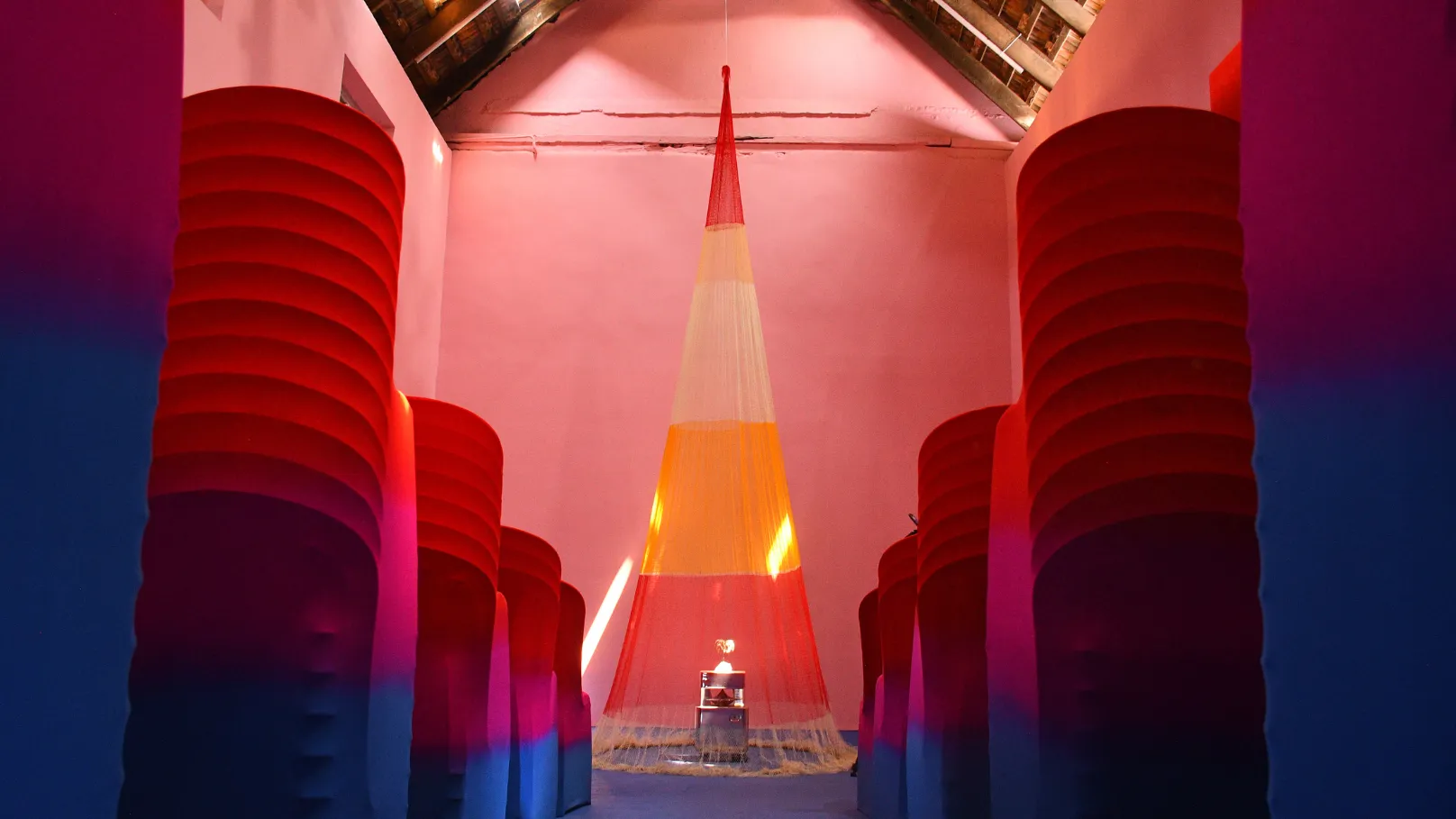
A New Delhi-based textile and design collective has unveiled a large-scale installation at the Kochi-Muziris Biennale, marking its formal shift from fashion-led practice to immersive spatial art. The debut, staged in Kochi, reflects how India’s creative industries are increasingly intersecting with architecture, urban identity and sustainable material culture.
Presented at a city venue participating in the Biennale, the installation titled Church of Palm draws inspiration from Kerala’s coconut tree — a species embedded in the state’s ecology, economy and everyday life. By transforming common materials into a contemplative environment, the project positions craft not merely as product, but as spatial experience.The collective, known for long-standing collaborations with artisan communities across India, has over the years worked with handwoven and naturally dyed textiles rooted in regional traditions. With this new studio format, the founders expand into installation design, combining fabric, found materials and sound to create what urban designers describe as “temporary civic architecture” — spaces that invite pause and shared reflection.
At the heart of the installation is repetition. Rows of chairs are arranged to form a geometric landscape, turning an object of daily utility into a structural element. Fishing nets, draped textiles and suspended forms further shape the environment. The approach blurs distinctions between furniture, sculpture and building components — a technique increasingly visible in adaptive reuse projects and cultural placemaking efforts across Indian cities.Sound design plays a central role, incorporating immersive audio and reflective speaker technology developed in collaboration with independent artists. Cultural commentators note that such interdisciplinary formats are reshaping how festivals like the Kochi-Muziris Biennale engage audiences — moving from static display toward participatory and sensory encounters.
Kerala’s coastal ecology subtly frames the work. The coconut palm, often taken for granted in the region’s skyline, becomes both metaphor and material reference. In a state confronting climate risks such as flooding and coastal erosion, the emphasis on local, renewable materials carries symbolic weight. Sustainable textiles, biodegradable fibres and repurposed objects signal a broader shift within the creative economy toward lower-impact production.Urban economists point out that cultural events like the Biennale generate measurable spillovers — from tourism and hospitality demand to adaptive reuse of heritage buildings. Kochi’s transformation into a global art destination has revitalised warehouses, courtyards and waterfront precincts, reinforcing the city’s identity as a cultural port.
The emergence of multidisciplinary studios from fashion backgrounds also mirrors a wider rethinking of value chains in India’s craft sector. By situating artisan knowledge within contemporary art contexts, such initiatives create new markets while preserving endangered skills.As the installation remains open through late March, it underscores a growing recognition that culture and city-building are intertwined. In Kochi, where heritage, trade and ecology converge, the Biennale continues to function not just as an exhibition platform but as a laboratory for sustainable urban imagination.
Also Read:East Kolkata Wetlands Face Demolition Push
Kochi Biennale hosts AMMA Studios debut
