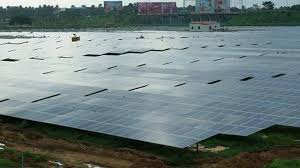
A new Solar Barrack Complex has been commissioned at Cochin International Airport in Kochi, strengthening residential infrastructure for airport security personnel while advancing on-site renewable energy use. The first phase of the integrated facility for the Central Industrial Security Force marks a significant investment in workforce welfare at one of India’s busiest aviation hubs.
Spread across more than five acres within the airport campus, the complex offers accommodation for over 650 personnel. With a built-up area exceeding one lakh square feet, the development combines residential quarters with shared amenities, including a large assembly hall, dining facilities and improved ventilation systems designed to enhance indoor comfort in Kerala’s humid climate.Airport authorities confirmed that the project has been financed with institutional support from Cochin International Airport Limited, aligning with the airport’s long-standing focus on renewable energy adoption. CIAL is globally recognised for operating one of the world’s first fully solar-powered airports, and the addition of a Solar Barrack Complex extends that clean-energy approach to staff housing and operational facilities.
Security experts say improved on-campus housing contributes directly to operational readiness. Proximity to terminals and cargo areas reduces response times while ensuring personnel have stable living conditions. For aviation infrastructure, where safety protocols demand round-the-clock vigilance, integrated residential planning has become an essential component of airport expansion strategies.Urban planners point out that the Solar Barrack Complex also reflects a broader shift in public infrastructure design. Instead of treating staff accommodation as a secondary utility, recent projects increasingly incorporate energy efficiency, natural lighting and community spaces. Such features not only reduce electricity consumption but also promote mental well-being in high-stress professions.
At a time when airports are expanding capacity to meet rising passenger demand, the question of sustainable support infrastructure is gaining prominence. Residential blocks, logistics zones and security installations consume substantial energy. Embedding solar generation and passive design principles into these facilities lowers long-term operational costs and reduces carbon intensity.Kochi’s airport, located in a region vulnerable to flooding and extreme rainfall, has often been cited as a case study in climate-adaptive infrastructure. Integrating renewable energy systems into auxiliary buildings such as the Solar Barrack Complex helps build resilience against grid disruptions and peak demand fluctuations.
As the next phases of development unfold, aviation analysts will watch whether similar sustainability standards are replicated across other airport-linked housing projects in India. For Kochi, the new facility demonstrates that strengthening security preparedness and advancing climate-conscious construction can move forward together — setting a benchmark for responsible infrastructure growth.