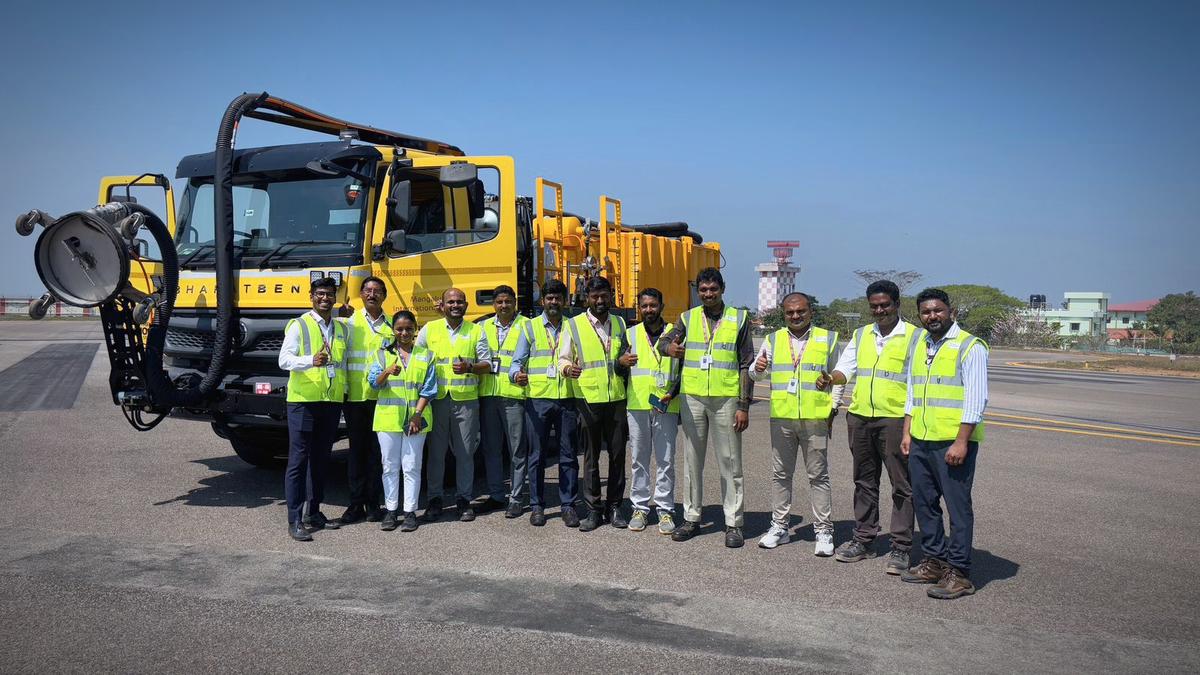
Cochin International Airport Limited has commissioned a high-capacity runway rubber removal system at its facility in Kochi, reinforcing airside safety protocols as aircraft movements continue to rise. The upgrade is aimed at preserving runway friction levels, a critical factor in ensuring safe landings, particularly during heavy rainfall — a frequent occurrence in Kerala’s monsoon climate.
Airport engineers explain that every aircraft touchdown leaves behind traces of tyre rubber in the landing zone. Over time, these deposits accumulate within the surface grooves of the runway, reducing texture depth and compromising skid resistance. If not addressed periodically, this can increase the braking distance required by aircraft, especially on wet surfaces, affecting operational margins.The newly inducted runway rubber removal machine uses ultra-high-pressure water jets to dislodge embedded rubber without damaging the asphalt or concrete base. The system combines pressurised jets with rotating mechanical assemblies to break down deposits and simultaneously extract the residue into an onboard containment unit. This prevents debris or wastewater from remaining on the runway, allowing faster reopening after maintenance cycles.
A senior airport operations official noted that maintaining runway friction is central to international aviation compliance standards. Runway condition monitoring, including friction testing and surface inspections, is part of routine safety audits. The deployment of a modern runway rubber removal machine enhances preventive maintenance, reducing the likelihood of unscheduled closures.From an infrastructure perspective, timely rubber removal extends the life of runway pavements. Repeated exposure to high loads, temperature fluctuations and moisture can accelerate surface wear. By restoring surface texture, airports can avoid premature resurfacing — a capital-intensive process that disrupts flight schedules and adds to lifecycle costs.
Aviation analysts point out that airports in high rainfall zones must invest more aggressively in friction management systems. Kochi’s coastal setting and intense monsoon spells make surface drainage and skid resistance particularly important. Enhanced runway maintenance contributes not only to passenger safety but also to airline efficiency, as predictable braking performance enables smoother turnaround planning.The move also reflects a broader trend among Indian airports to modernise ground infrastructure in line with traffic growth and international certification norms. As regional aviation expands and secondary cities see higher aircraft frequency, airside safety investments are becoming a core component of sustainable airport operations.For Kochi, which positions itself as a gateway to Kerala’s tourism and expatriate corridors, uninterrupted and safe runway performance under varying weather conditions is essential. Continued upgrades in runway maintenance technology will likely play a key role in supporting long-term operational resilience and passenger confidence.