


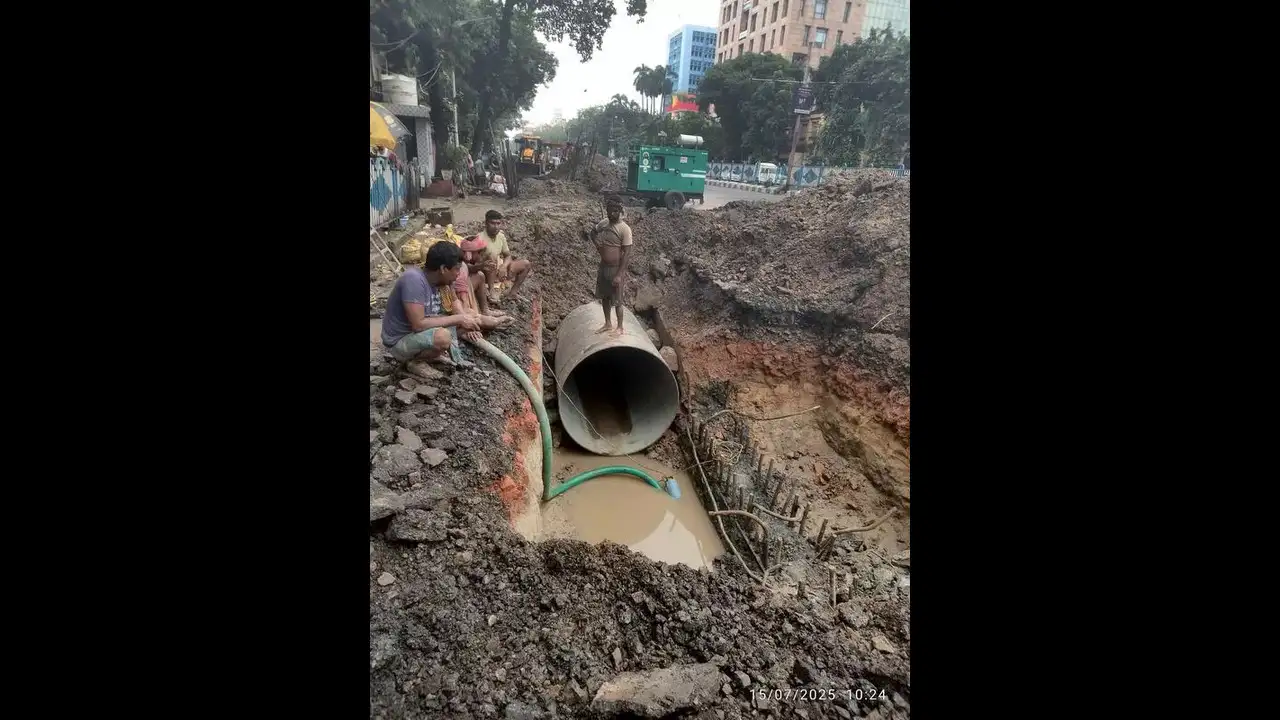
A section of the North–South Metro’s diaphragm wall along SP Mukherjee Road in Kolkata was compromised during a KMC-led pipeline installation, prompting Metro Rail authorities to demand urgent structural remediation and a revised alignment. The incident occurred as KMC workers installed a 1,400 mm diameter mild steel water pipeline at SP Mukherjee Road, near Mudiali. Metro engineering teams inspecting the site discovered that approximately a 3‑metre section of the D‑wall—essential for tunnel stability—had been removed during excavation.
In response, Metro Rail issued formal instructions to KMC’s water supply directorate to restore the damaged segment and relocate the pipeline along the eastern flank of the road, away from the Metro alignment. Officials emphasised that the current western alignment, utilising welded joints, presents substantial risk. “Should a pipeline leak, water infiltration into the tunnel will be inevitable,” a Metro source warned, citing past flooding events between Central and Chandni Chowk stations due to heavy rain. “We have demanded not only realignment but also structural repair of the wall.”
A senior KMC water supply official acknowledged the request, assuring that a technical team will undertake a comprehensive assessment before proceeding. The North–South Blue Line—spanning 31 kilometres between Kavi Subhas and Dakshineswar—is Kolkata’s transit backbone, ferrying more than 600,000 passengers daily. However, the underground sections have faced recurring track and structural problems, prompting a RITES study and ongoing maintenance upgrades. The latest warning from Metro Rail underscores the tunnel’s vulnerability and the critical need for coordinated infrastructure management.
Given the tunnel’s dependency on the diaphragm wall’s integrity, any compromise poses not only operational hazards but also passenger safety risks. Experts emphasise that comprehensive planning is required when utilities traverse tunnel infrastructure. Without due diligence, even routine works risk triggering service disruptions and costly repairs, extending beyond the local scope to potentially impact the wider Metro network. This incident illustrates the broader challenges faced in urban transit expansion—where civic agencies, municipal departments, and Metro authorities must align technical standards and construction protocols. Failure to do so may result in tunnel leaks, unexpected service suspensions, or expensive structural rectifications.
City planners and commuter advocates argue that the episode highlights weaknesses in inter-agency coordination. As urban infrastructure grows denser, expert voices emphasise adopting integrated utility planning frameworks and transparent workflows. All stakeholders—Metro Rail, KMC, and utility departments—must establish formal communication channels and risk evaluation protocols before initiating works in sensitive transit corridors. As Metro Rail seeks verification of KMC’s remedial actions and new pipeline routing, the civic body faces pressure to better integrate infrastructure diversity. The resilience of the North–South Metro corridor—and by extension, Kolkata’s urban mobility—hinges on systematic planning, stringent oversight, and proactive engagement among all agencies involved in underground asset management.
Also Read : Chennai Metro Takeover of MRTS Nears Final Rail Board Approval
