


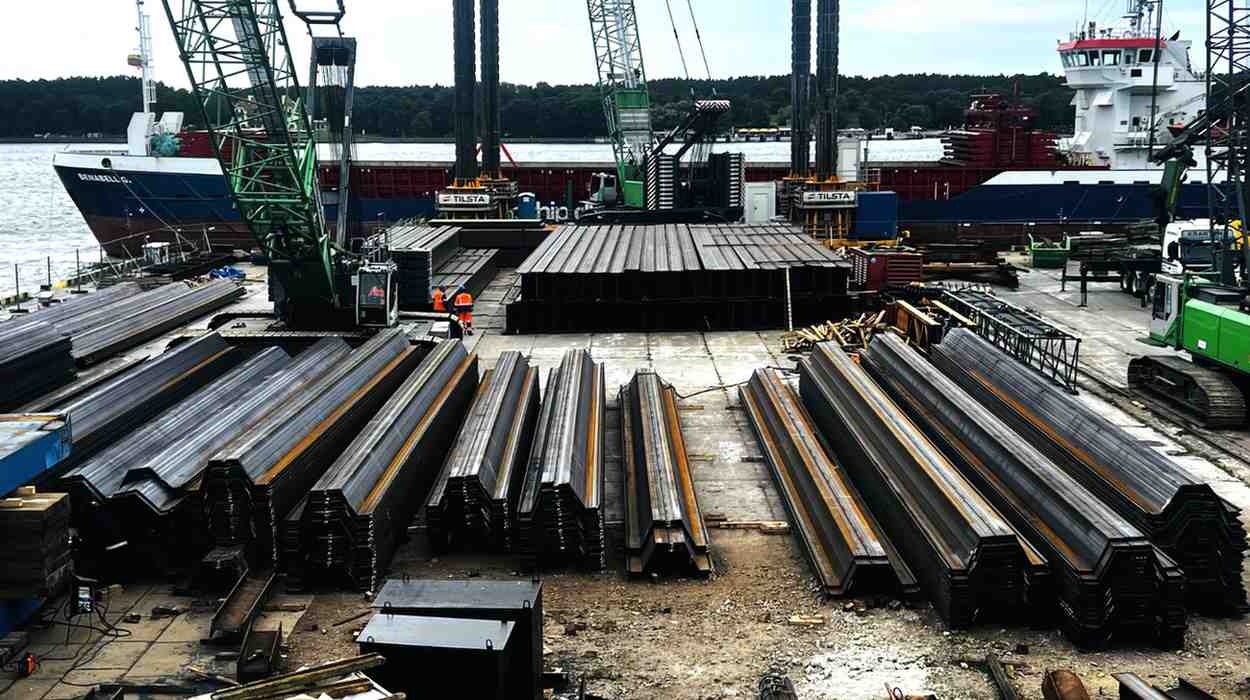
The ancient port city of Klaipėda is embarking on a significant infrastructure project, commencing construction of its state-of-the-art Cruise Ship Terminal. This ambitious undertaking, which recently saw the arrival of the initial 1.9 thousand tonnes of crucial metal piles from Antwerp, represents a pivotal moment for Lithuania’s maritime sector. Beyond merely enhancing cruise tourism, the terminal is envisioned as a transformative urban space, fostering a deeper connection between residents and the Baltic Sea while championing sustainable development principles crucial for creating a zero-net-carbon, eco-friendly, and equitable urban landscape.
The project, entrusted to the experienced firm Tilsta, is anticipated to be completed within three years, reshaping Klaipėda’s waterfront into a vibrant economic and social hub. The arrival of the first shipment of metal piles by sea, a deliberate choice to minimise disruption to the city’s daily rhythm, underscores a commitment to thoughtful urban integration. These piles, constituting approximately 40% of the total required for quay construction, are fundamental to the structural integrity of the future terminal. As the foundational elements, they will provide the necessary support and resilience against environmental forces, ensuring the longevity and stability of the new quays. This initial phase follows extensive dredging operations, preparing the seabed for the complex construction ahead. The Klaipėda State Seaport Authority, the custodian of this visionary project, has laid a robust groundwork, ensuring meticulous planning precedes execution.
The strategic importance of this new terminal extends far beyond its immediate physical presence. Algis Latakas, CEO of Klaipėda State Seaport Authority, articulated this vision, stating that the terminal would become a “new gateway between the city and the sea.” This sentiment resonates deeply with the broader ambition of fostering vibrant, accessible public spaces within urban environments. The design blueprint for the terminal includes an amphitheatre oriented towards the water, dedicated pedestrian and bicycle paths, expansive leisure zones, and flexible event areas. Such features are critical in transforming traditional port infrastructure into dynamic community assets, encouraging active lifestyles and offering diverse recreational opportunities for both local inhabitants and international visitors. This integrated approach ensures the terminal contributes not only economically but also socially and environmentally to Klaipėda’s fabric.
From a commercial standpoint, the new terminal is poised to significantly bolster Klaipėda’s position as a prominent cruise destination in the Baltic Sea region. The burgeoning global cruise tourism market, projected to reach significant valuation by 2031, presents substantial opportunities for ports capable of accommodating modern vessels and offering compelling onshore experiences. By enhancing its capacity and visitor amenities, Klaipėda aims to attract an increased number of cruise calls, translating into tangible economic benefits through increased tourist expenditure on local businesses, hospitality services, and cultural attractions. This influx of visitors will create employment opportunities across various sectors, contributing to the city’s economic diversification and resilience.
Moreover, the development aligns seamlessly with the broader global imperative for sustainable port operations. Klaipėda Port has already demonstrated its commitment to environmental stewardship, evidenced by its certification under the Port Environmental Review System (PERS) and initiatives such as green hydrogen production and the electrification of quays. The new cruise terminal’s integration of pedestrian and cycling infrastructure promotes eco-friendly transit options, reducing reliance on carbon-intensive modes of transport within the city. Future considerations for the terminal’s operation will undoubtedly include shore power capabilities, allowing docked cruise ships to switch off their engines and connect to the local electricity grid, thereby significantly reducing emissions and improving air quality in the immediate vicinity – a crucial step towards achieving a zero-net-carbon urban footprint.
The selection of Tilsta as the contractor, a company with a proven track record in complex infrastructure projects including other quay constructions within Klaipėda Port, provides assurance regarding the technical expertise driving this development. The three-year completion timeline, set after the contract was inked in 2024, reflects a carefully phased approach to minimise disruption while ensuring high-quality execution. Beyond the technical aspects, the project’s ownership by the Klaipėda Port Authority underscores a long-term strategic investment in public infrastructure, designed to deliver enduring value to the community.
As Klaipėda progresses with this significant maritime investment, the project serves as a compelling case study for cities worldwide seeking to balance economic growth with environmental responsibility and social inclusion. The transformation of a traditional port space into a multi-functional, aesthetically pleasing, and sustainably oriented waterfront is a testament to forward-thinking urban planning. This modern cruise terminal is not just a point of embarkation and disembarkation; it is a symbol of Klaipėda’s commitment to building a more connected, prosperous, and environmentally conscious future, where the sea is not merely a boundary but a vibrant, accessible extension of the urban experience.
Also Read :Assam Receives Rs 300 Cr to Build Tourism & Cargo Jetties on Key Rivers
