


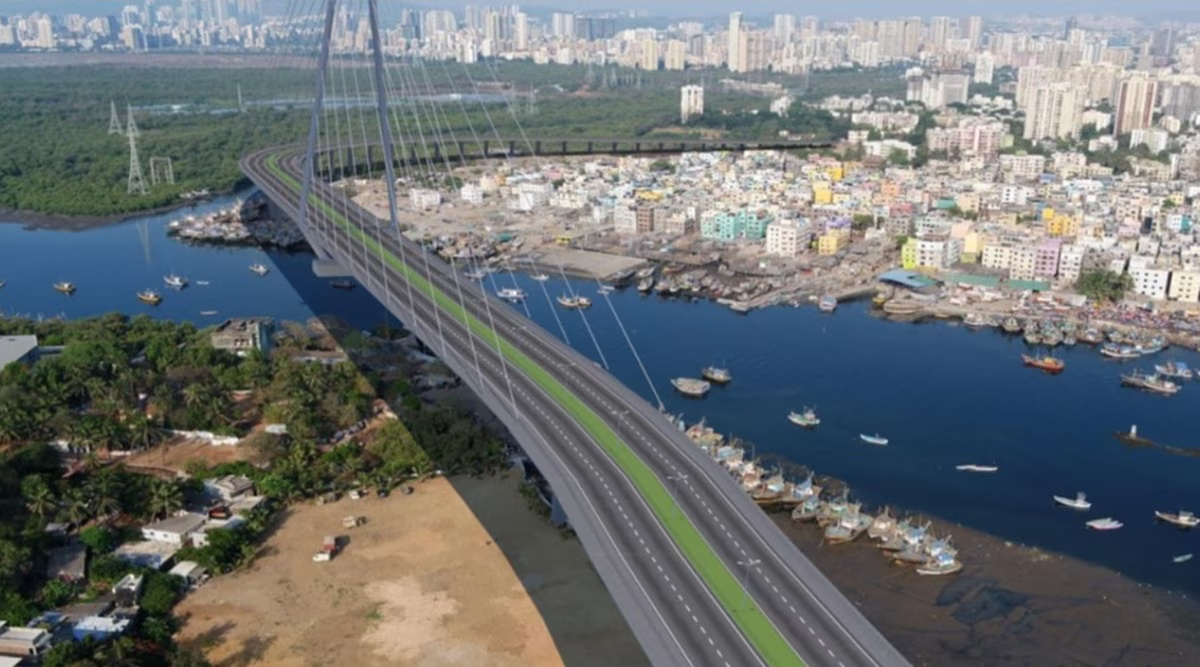
The Brihanmumbai Municipal Corporation (BMC) has initiated the process of acquiring 346 hectares of land to advance major infrastructure works in the city’s western suburbs, including the Mumbai Coastal Road Project (MCRP) North and the proposed Madh–Versova Bridge. The move marks a critical step in expanding the city’s coastal mobility corridor and improving inter-suburban connectivity.
According to civic officials, the acquired land will be used for key project components such as road alignments, interchanges, access roads, workspaces and development plan roads. The BMC has floated tenders to appoint a consultant to manage the complex land acquisition process, which also involves obtaining statutory and environmental clearances across multiple jurisdictions. The northern phase of the Mumbai Coastal Road Project, extending from Versova to Dahisar, is expected to cost ₹16,621 crore. This 20-kilometre corridor will connect seamlessly with the existing coastal road phase between Marine Drive and the Bandra–Worli Sea Link, effectively creating a continuous coastal spine along Mumbai’s western waterfront. Civic officials said nearly 200 hectares of the total required land area would be needed for this phase alone.
In parallel, a 5.6-kilometre elevated road between Dahisar and Bhayandar, costing ₹3,304 crore, is slated for completion by December 2028. Once operational, it is expected to reduce current travel time from nearly two hours to under 20 minutes and lower vehicular emissions by more than half. Officials said this would significantly cut traffic volumes on internal roads while improving air quality in residential pockets. The Madh–Versova Bridge, estimated at ₹3,990 crore, will serve as another vital connector between the western suburbs. Planned as a 2.06-kilometre cable-stayed link between Versova Koliwada and Madh Jetty, the bridge aims to decongest the existing ferry route and integrate isolated coastal zones. Additionally, new linkages between Andheri and Malad, and the proposed Marve–Manori Bridge, are expected to transform commuting patterns across the coastal belt, reducing distances and fuel use.
While these projects promise transformative benefits, officials acknowledge that land acquisition remains one of the most challenging stages. “We are appointing a consultant to help expedite acquisition and streamline clearances for all 346 hectares required,” a senior civic official said. Urban planners note that better integration of transport corridors such as these can promote balanced development across Mumbai’s suburbs, reduce congestion, and strengthen climate resilience by encouraging efficient, low-emission mobility.
Also Read: BMC Recovers Rs 25 Crore From Defaulters, Postpones Property Auction To Revise List
