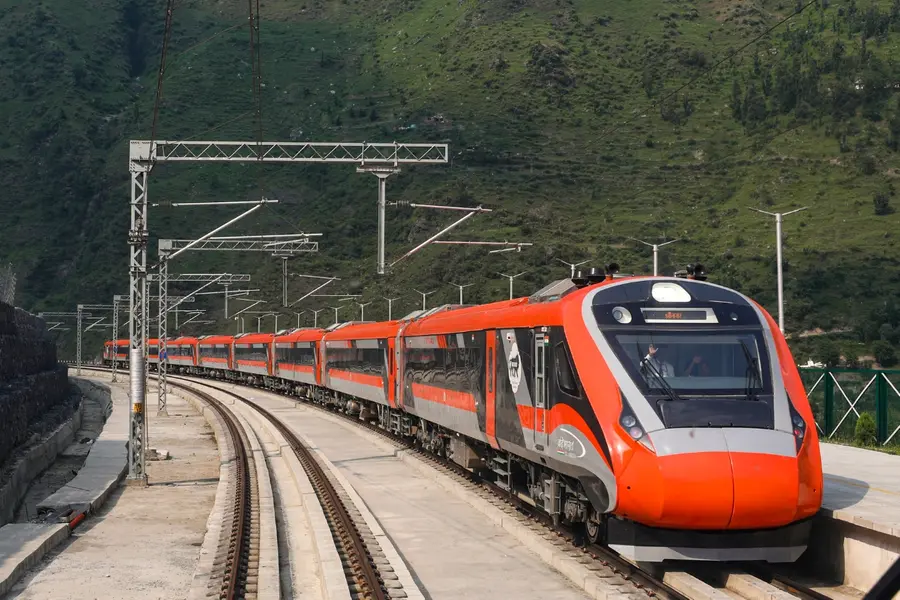
Kerala’s long-distance rail travel is set for a significant transition as Indian Railways prepares to introduce a new category of overnight passenger trains on key inter-state corridors. The move signals a strategic shift in how long-haul mobility is being planned for densely populated, climate-sensitive regions where rail remains the backbone of everyday travel.
The upcoming sleeper-enabled semi-high-speed services are expected to operate on routes linking Thiruvananthapuram with major southern and eastern economic centres, including Chennai, Bengaluru and Mangaluru. These corridors collectively serve a mix of technology professionals, migrant workers, students and tourists, making them among the busiest long-distance rail routes originating from Kerala.
Railway planners involved in the rollout say the new trains are designed to address a persistent gap between premium day services and conventional overnight express trains. Unlike older sleeper services, the new-generation rakes are fully air-conditioned and use modern coach designs that prioritise ride stability, noise reduction and energy efficiency. With a limited number of berths and an all-confirmed booking system, the focus is on predictability rather than maximum passenger volume.
From an urban mobility perspective, the change matters beyond the railway network itself. Kerala’s linear settlement pattern and limited road expansion capacity mean faster, more reliable overnight rail travel can reduce dependence on short-haul flights and long-distance buses. Transport experts point out that even modest reductions in rail journey times can shift travel behaviour at scale, particularly when comfort and certainty improve simultaneously. Preliminary scheduling assessments indicate that travel times on routes exceeding 600 kilometres could be cut by several hours. This has implications for business travel between Kerala and southern manufacturing and technology hubs, while also supporting overnight tourism flows that reduce pressure on daytime infrastructure in destination cities.
The fare structure is expected to sit above traditional express trains but below airline pricing on comparable sectors. According to industry analysts, this pricing band reflects a broader policy direction: encouraging rail as a lower-emission alternative for inter-city travel without positioning it as a luxury product. The absence of unreserved or waitlisted travel also aligns with safety and operational efficiency goals as railways push for tighter timetable adherence. Kerala’s experience with earlier semi-high-speed day services has informed the current expansion. High occupancy levels on those routes demonstrated latent demand for faster rail options, particularly among passengers travelling between state capitals and regional employment centres. Urban planners note that improved long-distance rail connectivity can influence real estate patterns near major stations, increasing demand for mixed-use development and transit-oriented housing.
The introduction of sleeper-enabled modern trains also dovetails with ongoing station redevelopment across Kerala. Upgraded platforms, improved pedestrian access and better integration with metro, bus and ferry systems are expected to play a role in maximising the benefits of faster overnight services.
As Indian Railways continues to recalibrate its long-distance passenger strategy, Kerala’s inclusion in the first wave of sleeper semi-high-speed routes reflects both demand and geography. The next phase will depend on operational performance, affordability and how well station-area planning keeps pace with rising passenger expectations.
Kerala Rail Network Upgrades With Sleeper Trains