


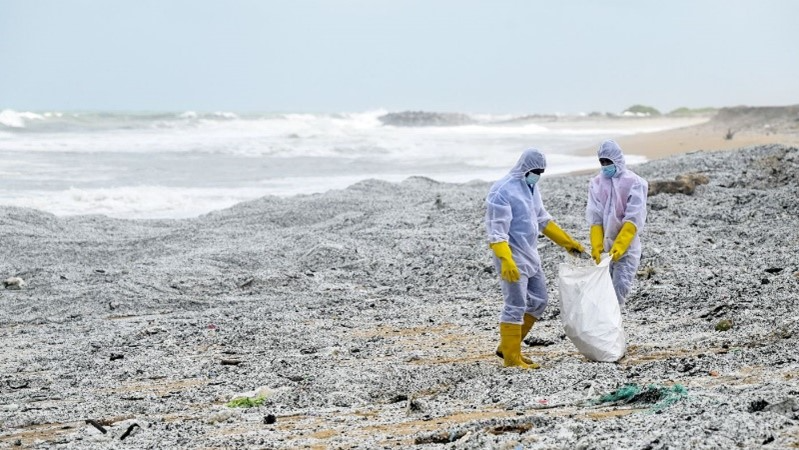
A mounting environmental emergency is unfolding across the southern coast of Kerala as toxic plastic nurdles—small, lentil-sized pellets used in plastic production—have washed ashore in vast numbers following the sinking of the container ship MSC ELSA 3.
The incident is triggering widespread alarm among ecologists, marine biologists, and coastal communities, as the state confronts one of its worst-ever marine pollution episodes.The Liberian-flagged cargo vessel, which capsized on May 25 approximately 38 nautical miles off the coast between Vizhinjam and Kochi, was reportedly carrying 640 containers, including 13 filled with hazardous substances like calcium carbide, as well as large volumes of diesel and furnace oil. Though all 24 crew members were rescued, the environmental fallout has been severe. Nearly 100 containers have broken loose, many reaching the coastline, releasing a chaotic mix of cargo—from tea and textiles to nurdles.
Plastic nurdles, also known as pre-production pellets, are the building blocks of most plastic goods. Typically measuring between 1 and 5 millimetres, they are composed of polymers such as LDPE (Low-Density Polyethylene) and HDPE (High-Density Polyethylene), and are widely used in packaging, piping, containers, and films. Though not immediately toxic, their ecological impact is deeply harmful. Due to their small size and buoyancy, nurdles can drift for thousands of kilometres, absorbing oil-based pollutants, pesticides, and heavy metals along the way.
“What we are seeing on the beaches of Kochu Veli, Thumba, and Vettukad is not just plastic—it is poison in disguise,” warned Dr A Biju Kumar, a leading marine biologist at the University of Kerala. “These pellets mimic fish eggs and are readily swallowed by fish, seabirds, and turtles. Once ingested, they can cause fatal blockages, starvation, and long-term contamination of marine food chains.”The pellets discovered along the Kerala coastline bear a striking resemblance to earlier global spill events—in 2012 in Hong Kong and in 2017 at Durban Port in South Africa—where nurdle leaks had catastrophic environmental and economic consequences. In each case, cleanup operations lasted months, with severe damage to fisheries, tourism, and local biodiversity.
Manual beach cleanups have already commenced in some affected areas, though experts warn that the effort may be too little too late. Nurdles, once mixed with wet sand, are notoriously difficult to recover. Floating booms and fine-mesh nets can only be effective if deployed immediately after a spill. Given the time lag between the sinking and the arrival of the pellets ashore, much of the material has already dispersed into the surf zone and estuaries.Adding to the concern is the potential for these nurdles to disintegrate into micro- and nano-plastics, allowing them to infiltrate aquatic food systems and potentially enter human diets. Over time, their impact is not only ecological but also public health-oriented.
“This is a wake-up call for India’s maritime logistics and plastic transport sectors,” said K V Thomas, former head of the Marine Sciences Division at the National Centre for Earth Science Studies. “We urgently need stringent international protocols on how nurdles are packaged, transported, and monitored. What we have on our beaches now is not just an environmental issue—it is a governance failure.”Environmentalists are urging the central and state governments to treat the incident as a high-priority disaster and initiate a coordinated response involving pollution control boards, the Coast Guard, and the shipping industry. In the longer term, India must revisit its plastic economy and embrace stricter controls on microplastic flows within its trade and waste systems.
With Kerala’s southern coastline home to diverse marine species and dependent coastal livelihoods, the stakes could not be higher. For residents and researchers alike, the nurdle spill is more than an inconvenience—it is a stark warning of the invisible threats floating silently in global trade routes, waiting to land on unsuspecting shores.
Also Read : Gujarat Gets Rs 53400 Cr Boost for Green Energy
