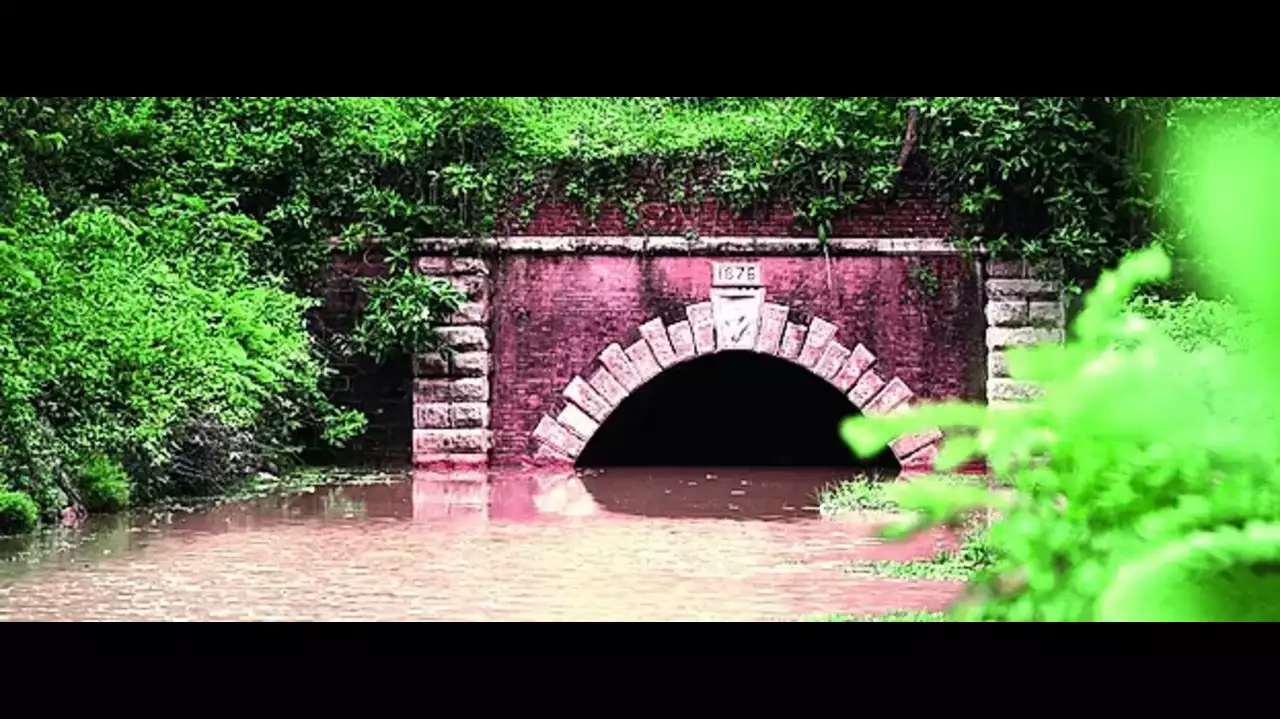
The restored Chilakoor Tunnel in Varkala is set to reopen as part of Kerala’s broader inland water transport revival, marking a fresh phase in the 280-km Akkulam–Chettuva canal corridor upgrade. The reopening positions the historic structure not only as a tourism draw but also as a functioning link in a climate-resilient mobility network along the state’s coast.
Located in Varkala within Thiruvananthapuram district, the 350-metre tunnel dates back to the Travancore era, when it facilitated passenger and cargo movement through inland waterways. Over time, siltation and neglect rendered it non-navigable. Its restoration is being presented as a key milestone under the state’s canal modernisation efforts.The renovation has been undertaken by Kerala Waterways Infrastructure Limited, a joint venture between the state government and Cochin International Airport Limited. Project officials say structural conservation was prioritised to retain the tunnel’s original character while enabling modern navigation standards.
As part of the reopening, electric boat services will operate through the tunnel, integrating low-emission transport into the tourism experience. The 20-seater vessels, developed by a Kochi-based startup, run on battery power and are equipped with onboard audio-visual systems. A light-and-sound installation inside the tunnel, developed at an estimated cost of ₹4.5 crore, aims to enhance visitor engagement through projection-based storytelling.Urban mobility experts note that canal restoration can serve multiple objectives beyond leisure. Reviving navigable waterways offers an alternative to road-based transport in densely populated coastal belts, where highway expansion is often constrained by land availability and ecological sensitivity. Inland water transport, when maintained properly, consumes less energy per tonne-kilometre compared to road freight, contributing to lower carbon emissions.
The Chilakoor Tunnel restoration forms part of the larger West Coast Canal modernisation initiative. Planners argue that reconnecting fragmented canal stretches can unlock last-mile logistics potential for small traders and fisheries, particularly in peri-urban settlements. For tourism-dependent regions such as Varkala, integrated water routes can diversify visitor experiences while distributing footfall more evenly.However, environmental analysts caution that sustained dredging, water quality monitoring and shoreline management will be critical to ensure long-term viability. Without continuous maintenance, restored canals risk reverting to disuse due to sedimentation and encroachment.
For Kerala, where recurrent flooding and extreme rainfall events have intensified discussions on resilient infrastructure, investing in inland waterways also aligns with adaptive urban planning. Diversified transport networks reduce over-reliance on road corridors vulnerable to disruption.As the Chilakoor Tunnel reopens to navigation, the success of the project will depend not only on tourist uptake but on whether the canal system can evolve into a reliable, low-impact mobility spine along the coast — balancing heritage preservation with future-ready infrastructure.