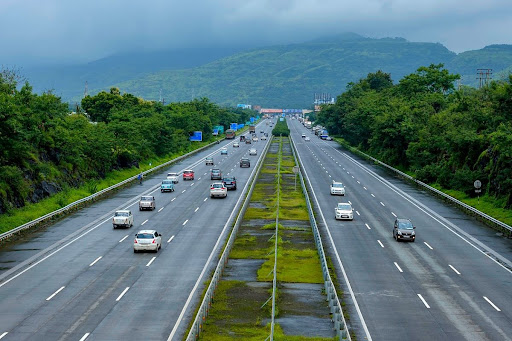
The Kashmir Valley is poised for a transformational infrastructure overhaul as the Union Government greenlights ₹10637 crore for 19 key road and tunnel projects, aimed at sustainable mobility and equitable regional growth. The Union Ministry of Road Transport and Highways (MoRTH), under the leadership of Nitin Gadkari, has approved a sweeping road infrastructure package for Jammu and Kashmir.
The ambitious proposal includes the construction of all-weather tunnels, flyovers, and critical bypass roads—primarily in the Kashmir Valley—intended to end decades of logistical isolation, seasonal disconnection, and underdevelopment. At the core of this initiative are two pivotal projects that not only promise year-round connectivity but also underline India’s new infrastructure philosophy of blending strategic utility with sustainable development. The ₹3830 crore Peer Ki Gali tunnel on the Mughal Road and the ₹3330 crore Sadna tunnel on National Highway-701 will create robust alternate road corridors for border and mountainous regions chronically cut off by snowfall and landslides.
The Mughal Road, linking Rajouri and Poonch with Shopian, currently remains inaccessible for nearly four months during the winter season. Once the Peer Ki Gali tunnel is completed, the route will serve as a climate-resilient alternative to the frequently disrupted Jammu-Srinagar National Highway. For an eco-sensitive and climate-affected region like Kashmir, this project is more than infrastructure—it’s lifeline engineering. Similarly, the Sadna tunnel, slicing through treacherous Himalayan terrain to connect Rafiabad with the Karnah Valley via Kupwara and Chamkote, holds both strategic and social significance. Border villages like Karnah remain completely isolated for months, impacting access to healthcare, education, and economic opportunities. With this project, the geography of exclusion may finally change.
Urban Kashmir, too, is seeing an injection of modernity and mobility. In Srinagar, a ₹700 crore four-lane flyover from Lal Chowk to Parimpora will help decongest the city’s busiest arteries, offering a leap forward in sustainable urban transport. In a city historically plagued by traffic bottlenecks and poor last-mile connectivity, the flyover is expected to halve daily travel time between south and north Srinagar. In what signals a more decentralised developmental blueprint, the government is also investing in a series of smaller but critical stretches across the region: the ₹852 crore Zaznar-Shopian section, the ₹966 crore Trehgam-Chamkote stretch, and the ₹445 crore Magam flyover between Narbal and Gulmarg—each essential for tourist inflow, logistics support, and agrarian connectivity.
Beyond mobility, these projects are aligned with the government’s agenda of zero-net carbon cities and sustainable construction. The new designs incorporate eco-friendly materials, natural ventilation systems for tunnels, and solar-powered lighting for flyovers and bridges. The two-lane bridge approved for ₹71 crore over the Rambiara River in Shopian, for instance, will be constructed using green concrete and will be designed to withstand high discharge from climate-driven glacial melts. Also notable are the Detailed Project Reports (DPRs) sanctioned by MoRTH for upcoming works over the next three years. These include the widening of National Highway-444 from Srinagar to Qazigund, a proposed 75-km Shopian-Magam road to ease movement between horticulture belts, and the planned 10.8-km Panjtarni tunnel with a 31-km approach road—meant to link both Baltal and Pahalgam routes to the sacred Amarnath cave shrine, while ensuring ecological conservation.
According to MoRTH officials, the infrastructure push will create over 60,000 direct and indirect jobs in the region, especially in construction, logistics, and ancillary services. This is crucial for Kashmir, where youth unemployment is over 17 percent and opportunities are largely centralised around government employment. Politically too, the announcement drew attention. Former Chief Minister Omar Abdullah thanked Prime Minister Narendra Modi and Minister Nitin Gadkari on social media, calling the funding “a vote of confidence in the resilience and potential of the people of Jammu and Kashmir.” His comments also signal a rare consensus across the political spectrum on the need for improved infrastructure in the region. Experts believe that while the ₹10637 crore may be seen as an economic package, it has long-term socio-political implications. A researcher observes, “These road projects will decentralise growth away from Srinagar, integrate peripheral communities into mainstream economic life, and enable green tourism to expand responsibly.
But the test will be in the quality of implementation.” Indeed, green audits, public consultations, and impact assessments will be key to ensure that these mega-projects do not end up disrupting local ecosystems or heritage corridors. As several of these corridors pass through forest areas and high-altitude zones, balancing growth and ecology will be critical. With the Katra-Srinagar rail corridor recently operational and this round of high-impact road connectivity underway, Kashmir is not merely being connected—it is being redefined. Its new roads may lead to tourism, trade, and tactical mobility, but they also symbolise the broader shift towards a more integrated, equitable, and environmentally conscious urban planning strategy in India’s border states.
Whether these promises translate into progress will depend not just on asphalt and concrete, but on policy that listens, adapts, and builds with the people it seeks to serve.