


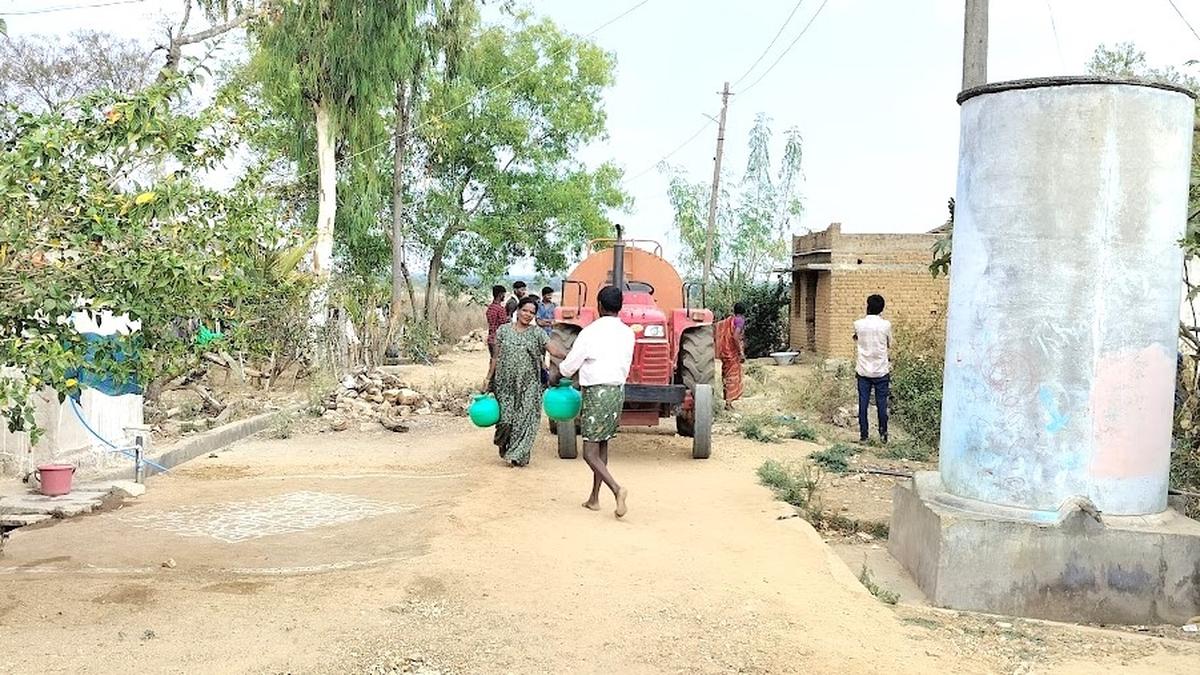
A deepening water shortage across parts of Karnataka has triggered emergency supply measures, with tanker services deployed to support hundreds of affected villages, highlighting the growing stress on regional water systems linked to Bengaluru’s expanding urban footprint.
Officials report that several settlements are facing acute shortages of drinking water, prompting reliance on tanker deliveries as a stopgap solution. The situation, reflected in the Karnataka water crisis villages trend, underscores the vulnerability of rural and peri-urban areas during peak summer months.Water resource experts attribute the crisis to a combination of factors, including below-normal rainfall, depleting groundwater levels, and rising demand. Rapid urbanisation around Bengaluru has intensified pressure on shared water sources, often leaving surrounding villages with reduced access.The Karnataka water crisis villages scenario illustrates the widening urban-rural divide in resource allocation. As cities expand, water demand for residential, industrial, and commercial use increases, frequently drawing from the same aquifers and reservoirs that rural communities depend on.From an infrastructure standpoint, tanker deployment is seen as a short-term response rather than a sustainable solution. While it helps address immediate needs, it is logistically intensive, costly, and environmentally inefficient. Experts argue that long-term resilience requires investment in decentralised water management systems, including rainwater harvesting, local storage, and groundwater recharge.
The crisis also has economic implications.Water scarcity can disrupt agricultural activity, reduce income for rural households, and increase living costs as communities depend on purchased water. In peri-urban zones, where livelihoods are closely tied to both rural and urban economies, the impact can be particularly severe.Urban planners highlight that the Karnataka water crisis villages issue reflects broader challenges in integrated regional planning.Managing water resources across administrative boundaries is critical to ensuring equitable distribution and long-term sustainability.There are also public health concerns. Limited access to clean water can increase the risk of waterborne diseases, particularly in areas where supply is irregular or storage conditions are inadequate.Climate variability is further exacerbating the situation. Changing rainfall patterns and rising temperatures are making water availability less predictable, increasing the frequency and severity of such crises.Experts suggest that addressing the issue will require coordinated action across government agencies, communities, and the private sector.Measures such as improving water-use efficiency, regulating extraction, and investing in alternative sources like treated wastewater could help reduce dependence on stressed resources.
As the summer intensifies, the reliance on tanker supply in the Karnataka water crisis villages highlights the urgent need for systemic solutions. Balancing urban growth with sustainable resource management will be essential to prevent recurring shortages and ensure water security for both cities and their surrounding regions.
Also Read:Bengaluru Civic Body Logos Reflect Governance Changes
