


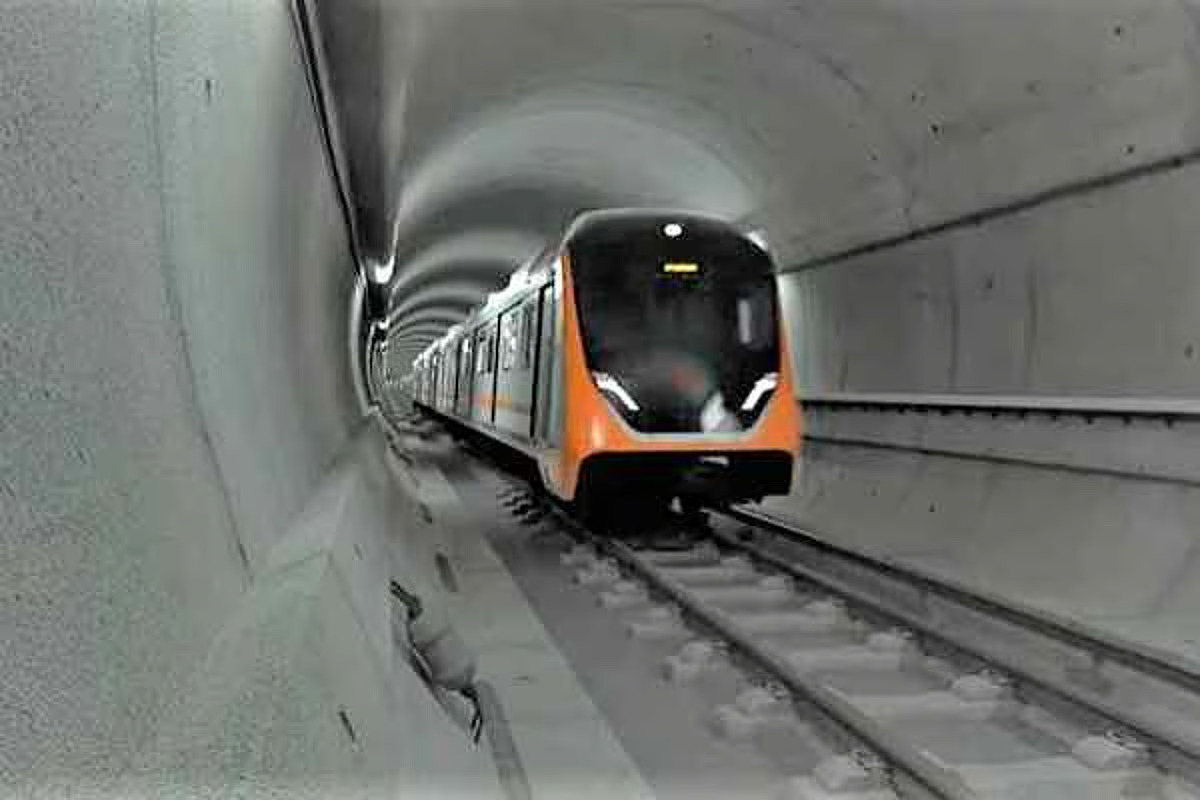
Kanpur Metro on Friday officially launched its maiden underground journey, extending its operational reach into the heart of the city.
The much-awaited expansion — from Motijheel to Kanpur Central — promises faster, cleaner and more inclusive connectivity, aligning with broader goals of sustainable urban development. The inaugural underground service, which begins at Nayaganj station and concludes at Kanpur Central, was ceremoniously flagged off from a specially set-up venue at the CSA University grounds. A vibrantly decorated metro train entered the Nayaganj tunnel as schoolchildren aboard waved national flags and chanted patriotic slogans, highlighting the momentous civic celebration around the infrastructure milestone. The launch was broadcast live on LED displays installed at station platforms and in public spaces, underlining the city’s collective anticipation.
This newly commissioned section comprises five underground stations — Chunniganj, Naveen Market, Bada Chauraha, Nayaganj, and Kanpur Central. It marks the Kanpur Metro’s shift from exclusively elevated corridors to a blended model that integrates subterranean infrastructure to better serve the city’s congested commercial and institutional areas. According to officials from the Uttar Pradesh Metro Rail Corporation (UPMRC), the line has been strategically engineered to navigate beneath densely populated zones without disrupting surface-level activities. “The underground route travels below the city’s busiest stretches, allowing for much faster and more reliable transit,” stated a senior UPMRC official. “Passengers commuting from IIT Kanpur to Motijheel will now be able to complete their journey in under 30 minutes.” This drastically reduces travel times that previously extended over an hour during peak road traffic.
Urban planners and transit experts view this expansion as a significant stride in India’s push for zero-carbon urban mobility. By diverting thousands of commuters daily from fossil-fuel-powered road transport to the electrified metro network, the Kanpur Metro project is expected to help lower the city’s per capita transport emissions while easing congestion on critical arterial roads. The new underground line is poised to improve access to several of Kanpur’s most vital social, commercial, and educational landmarks, including Lal Imli, Naveen Market, BNSD and GIC Colleges, Z Square Mall, Green Park International Cricket Stadium, Baba Anandeshwar Temple, Parade Chauraha, Pustak Bazaar, and Somdutt Plaza. This is expected to support inclusive mobility for students, working professionals, traders, and daily wage earners alike, ensuring public infrastructure serves all demographics equitably.
Beyond reducing commute times and pollution levels, the underground section is designed with an emphasis on passenger safety and comfort. Officials confirmed that the entire route has been built using advanced tunnel boring machines and vibration control technology, ensuring structural safety while minimising disturbances to existing heritage structures and utilities above ground. Station interiors are fitted with energy-efficient lighting, smart ticketing systems, and modern ventilation solutions, enhancing user experience and operating efficiency. The underground expansion is not only a technical milestone but a socio-economic enabler. It opens up opportunities for small businesses and local markets by increasing footfall around metro stations, while also improving last-mile accessibility. Officials said feeder services, e-rickshaw stands, and pedestrian pathways have been designed in coordination with local authorities to ensure seamless integration.
Transit economists note that the investment in underground infrastructure reflects a long-term vision for Kanpur — a city that continues to urbanise at a rapid pace but has historically lacked integrated mass transit solutions. With the current addition, the Kanpur Metro network becomes a more resilient, inclusive system that is better equipped to accommodate projected urban population growth and climate resilience challenges. The Kanpur Metro, being executed and operated by the UPMRC, is part of the larger vision to modernise public transport systems across Tier-2 cities in India. Experts emphasise that such projects are pivotal not just for easing daily commutes but also for improving air quality, reducing dependency on personal vehicles, and promoting gender-neutral and safer travel environments.
With this launch, Kanpur joins the ranks of Indian cities like Delhi, Bengaluru, and Chennai that operate both elevated and underground metro corridors. For citizens of Kanpur, the introduction of the tunnel section is more than just a transit upgrade — it is a statement of aspiration toward building a modern, green, and equitable urban future. While the Metro service continues to expand in phases, officials remain optimistic that continued investments in urban rail will deliver long-term dividends in mobility equity, sustainability, and economic upliftment for the city. As Kanpur Metro’s underground operations commence, the city moves closer to realising a comprehensive and climate-conscious transit ecosystem.
Also Read : Pune Metro Plans New Routes for Better Airport Access
