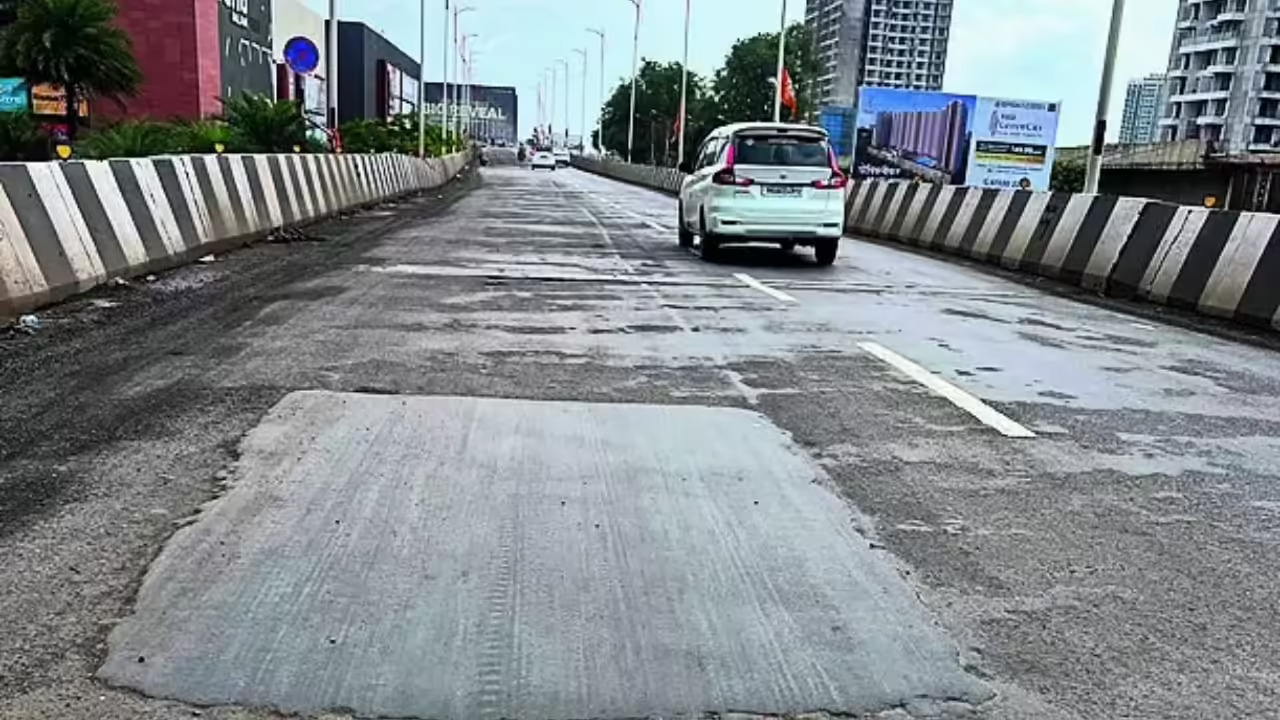
Kalyan-Shil Bridge Audit Ordered After Potholes Appear Just One Day Later
A newly inaugurated bridge on the crucial Kalyan-Shil road has come under intense scrutiny after a one-day opening turned into a major civic embarrassment. The state government has now ordered a structural audit by the prestigious Veermata Jijabai Technological Institute (VJTI) after potholes and loose gravel emerged on the surface, raising serious questions about the quality of workmanship and public safety. This incident, which has led to outrage and widespread concern, highlights a critical gap in urban planning and execution. The quick failure of this infrastructure project is not just a matter of inconvenience; it is a clear dereliction of duty that jeopardizes commuter safety and undermines the public’s trust in governance. The need for a robust and transparent process for infrastructure development is paramount for creating a truly equitable and sustainable city.
The bridge, a component of a larger road widening project initiated by the Mumbai Metropolitan Region Development Authority (MMRDA) in 2018, was hailed as a solution to the chronic traffic congestion that plagues the Kalyan-Shil route. However, the six-year-long wait and ballooning costs have now culminated in a structure whose integrity is being questioned a day after its partial opening. Initial reports and eyewitness accounts from commuters suggest that the road surface was poorly laid, with some describing it as a “skidding zone.” This led to incidents involving two-wheelers, forcing a swift but temporary closure for “additional filling work.” The subsequent appearance of large potholes, a predictable outcome with the onset of the monsoon, has further exposed the shoddy construction. Such negligence not only endangers lives but also contradicts the vision of eco-friendly cities, as flawed infrastructure often necessitates costly and carbon-intensive repairs.
The public outcry was amplified by videos of the bridge’s deplorable condition going viral, attracting significant attention from political figures and the public alike. A former parliamentarian was particularly vocal, demanding a comprehensive structural audit to hold the responsible parties accountable. The government’s swift response, directing the Public Works Department to engage a reputed institution like VJTI, is a reactive but necessary step. It signals an official acknowledgement of the gravity of the situation and the public demand for transparency. However, it also raises a more fundamental question about the oversight mechanisms in place. If a bridge can be cleared for opening and fail so spectacularly in a matter of hours, what does this say about the quality checks and balances during the construction phase?
The controversy surrounding the Kalyan-Shil road bridge is a case study in how flawed planning and execution can derail a well-intentioned project. It serves as a stern reminder to urban planners and governing bodies that the true measure of infrastructure is not just its inauguration but its long-term durability and safety. The citizens of this region have endured years of traffic jams and delays, and they deserve better than a half-finished, unsafe structure. This incident is a wake-up call for a paradigm shift toward a model of governance that prioritizes quality and accountability, ensuring that every public project contributes genuinely to building a safer, more sustainable, and equitable urban future for all.