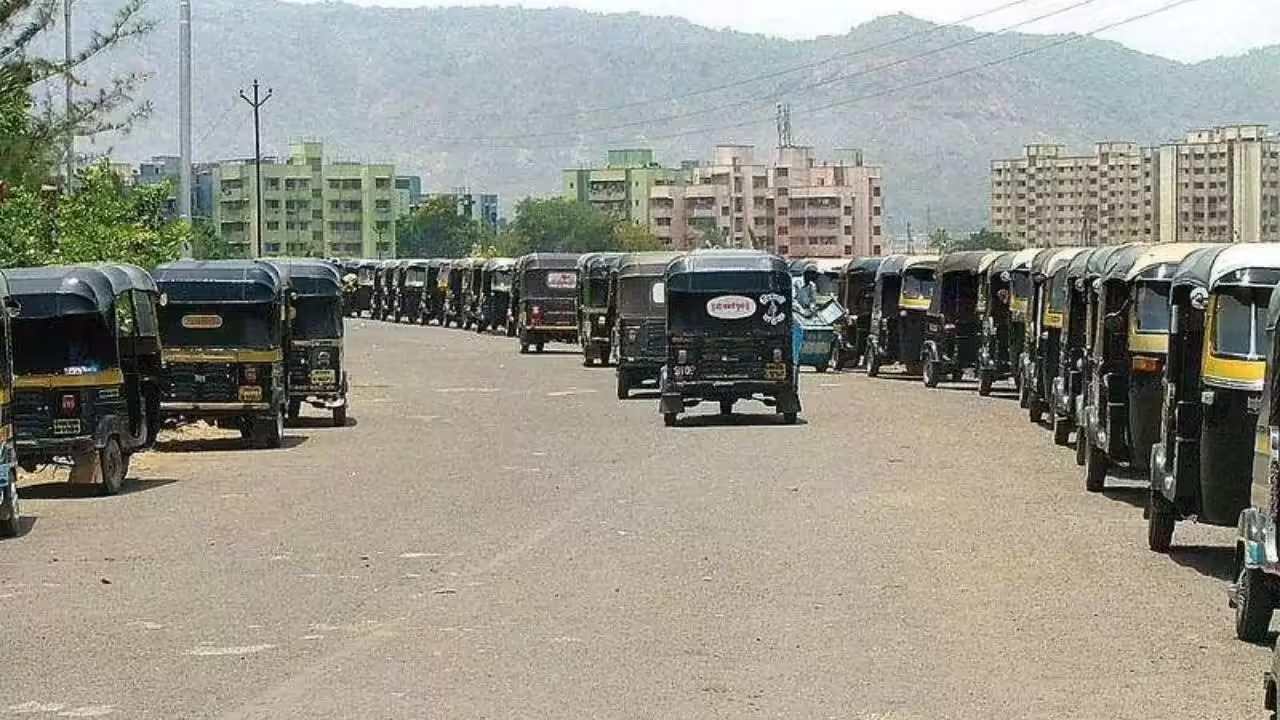
The transport administration in Kalyan has formally notified a comprehensive network of authorised autorickshaw stands, marking a significant shift in how last-mile mobility will be managed across the extended urban region. The move brings 446 locations under official recognition, covering multiple municipal and suburban pockets, and is aimed at improving traffic discipline, commuter safety, and operational clarity for thousands of daily riders.
Urban transport officials said the decision follows sustained representations from driver collectives seeking formal recognition for long-standing pick-up points as well as new locations emerging alongside residential growth corridors. With Kalyan-Dombivli and its neighbouring towns witnessing rapid densification, informal rickshaw halts had increasingly become friction points for traffic congestion, pedestrian safety, and enforcement agencies. The newly notified framework is the outcome of a multi-agency ground assessment involving transport inspectors, municipal engineers, traffic personnel, and representatives of the autorickshaw ecosystem. Based on these surveys, the regional transport planning authority granted conditional approvals, ensuring that stand locations align with road width, pedestrian movement, and public transport integration norms.
According to transport department guidelines, both metered and shared autorickshaw services must now operate strictly from the approved stands listed under the notification. Officials clarified that rickshaws will not be permitted to queue in ways that block carriageways or footpaths, and double parking at stands has been explicitly prohibited. Any location found to be causing future congestion or safety risks may be shifted or withdrawn after review. From a city-planning perspective, the regulation of Kalyan rickshaw stands is expected to play a quiet but critical role in improving last-mile connectivity, particularly for women commuters, senior citizens, and residents of high-density housing clusters who depend on autorickshaws for short trips to rail stations, bus stops, and local markets. Urban mobility experts note that clearly demarcated stands reduce roadside chaos, lower idling time, and indirectly cut emissions by limiting unnecessary circulation.
Officials also reiterated compliance requirements for drivers, including mandatory display of identity credentials, use of prescribed uniforms, and strict adherence to fare structures notified by the regional transport authority. Enforcement teams are expected to focus on standardisation rather than punitive action in the initial phase. The distribution of the authorised Kalyan rickshaw stands reflects population spread and travel demand, with a higher concentration in western Kalyan, followed by Badlapur, eastern Kalyan, Ulhasnagar, and Ambernath. Transport planners say this mirrors commuter dependence on intermediate public transport in areas where bus frequencies and walkability remain limited.
As the Mumbai Metropolitan Region continues to expand eastward, the notification signals a broader shift towards structured, people-first mobility management. The real test, urban analysts caution, will lie in consistent enforcement, coordination with local traffic planning, and periodic updates as new housing and commercial nodes come online.
Kalyan RTO Clears 446 Rickshaw Stands